Choosing a PE Tape supplier is not just a price comparison. The right partner must deliver consistent film, dependable adhesion, and clear technical information. A roll may look perfect on a sample bench, then behave differently on a cold warehouse floor. Small details matter.
Dr. David Satas, an authority on pressure-sensitive adhesives and author of a leading technical reference, offers a useful lens for evaluating tape performance. A buyer-focused paraphrase of his expertise is: “Test the adhesive system under the conditions it will actually face.” This is a paraphrase, not a verified direct quotation. It points to a practical habit. Ask suppliers about adhesive type, backing thickness, temperature range, and aging performance. Request samples. Compare them on the real surfaces and production lines where the tape will be used. Then review technical data, quality controls, lead times, and order flexibility. These checks help reveal whether a supplier can support repeat orders, not just one successful shipment.
The suppliers in this guide serve different needs, from routine packaging to more demanding industrial applications. Some may offer broader customization; others may compete through availability or focused product ranges. No supplier is best for every buyer. That is worth remembering. The following comparison highlights seven options and the questions global buyers should ask before making a choice.
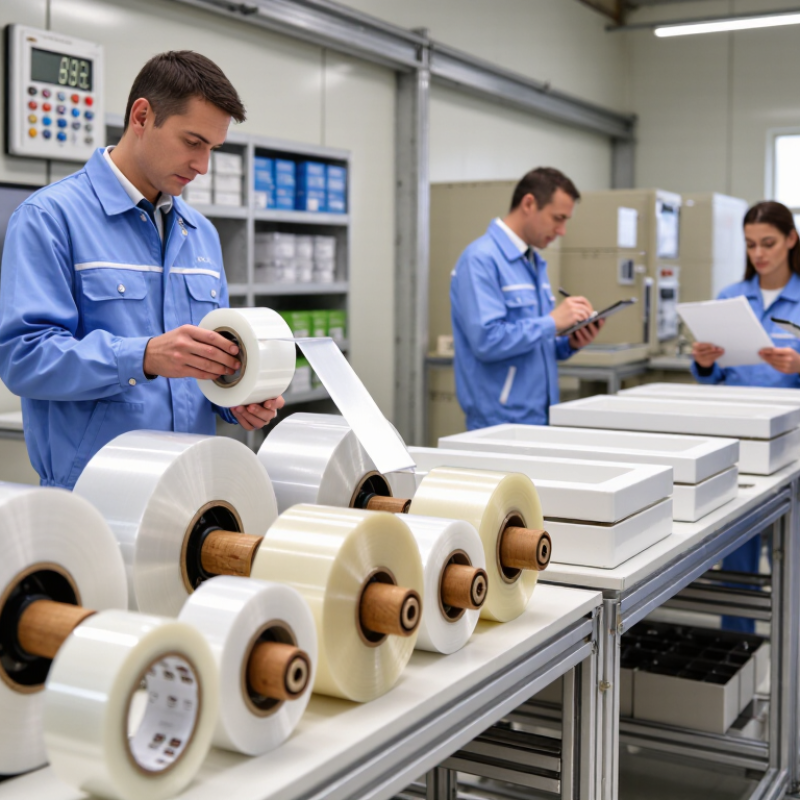
Polyethylene (PE) tape uses a flexible plastic film as its backing, paired with an adhesive suited to the job. The film can resist moisture and many common chemicals, while bending around corners, pipes, or uneven surfaces. Buyers use it for surface protection, bundling, temporary masking, and packaging. Performance still depends on film thickness, adhesive type, temperature, and how long the tape stays in place.
The scale of PE production helps explain its broad availability, but it does not guarantee every tape performs alike. Plastics Europe’s Plastics—The Fast Facts 2024 reports global plastics production of 413.8 million tonnes in 2023; this figure covers plastics overall, not PE tape specifically. For a real application, test adhesion on the actual surface. Dusty concrete and painted metal behave differently. That matters. “Water-resistant” also does not mean suitable for prolonged outdoor exposure; UV light and heat can weaken some constructions.
Tips: Ask suppliers for backing thickness, adhesive type, recommended temperature range, and removal conditions. Run a small trial first. Check for residue after removal, especially on painted or coated surfaces. I would not choose by color or price alone; those details can hide important differences.
A reliable PE tape supplier should prove performance with test data, not broad claims. Ask for peel adhesion, tensile strength, elongation, and temperature-resistance results for the exact tape grade. ASTM D3330 and D3654 provide recognized methods for measuring peel adhesion and shear adhesion. Compare samples on the same surface, under the same conditions. A neat lab result may not predict performance on a dusty carton or a cold warehouse floor.
Material transparency matters, too. PlasticsEurope’s Plastics—the Fast Facts 2024 reports 413.8 million tonnes of plastics produced worldwide in 2023. This is not a tape-specific figure, but it highlights the scale of the material supply chain. Ask suppliers to identify film thickness, adhesive type, and any recycled content, then verify that specifications remain consistent between batches. UNCTAD’s Review of Maritime Transport 2024 reports that seaborne trade grew 2.4% in 2023. Freight delays can still disrupt delivery, so check stock locations, lead-time history, and backup capacity. No forecast is perfect.
Tips: Request a trial roll and apply it to your real packaging. Record unwind feel, edge lift, and adhesion after storage. Then review defect handling and replacement terms in writing. Small details matter. A low quote is less useful when roll quality varies.
Comparing PE tape suppliers requires more than checking price per roll. Ask for a technical data sheet showing backing thickness, total thickness, adhesive type, and recommended application temperature. Then request samples from the production grade you plan to buy, not a substitute. Test them on your actual cartons or surfaces. A tape that grips well on clean cardboard may peel from dusty, recycled fiberboard.
Use consistent test conditions. ASTM D3330 measures peel adhesion, while ASTM D3654 evaluates holding power; results are meaningful only when substrate and test setup match. The World Bank’s 2023 Logistics Performance Index assessed 139 economies across areas including customs, tracking, and timeliness. UNCTAD’s Review of Maritime Transport 2024 reported that seaborne trade grew 2.4% in 2023. These reports describe logistics conditions, not tape quality, but they show why delivery reliability deserves its own scorecard. Check quoted lead times, shipment records, minimum order quantities, and packaging protection.
Compare landed cost, not just unit price. Include freight, duties, inspection, and the cost of slow or inconsistent batches. Ask suppliers to document lot numbers and retain samples for later comparison. A small trial order can expose weak carton sealing or adhesive residue. It is not perfect evidence. Record the test date, room conditions, and results, then repeat when the production season or substrate changes.
Supplier 1 offers standard PE film tapes for carton sealing and surface protection, with common widths and roll lengths.
Supplier 2 focuses on custom slitting, useful when machinery accepts narrow rolls or specific cores. Its strength is flexibility.
Supplier 3 supplies printed PE tape for identification and basic branding, but buyers should confirm ink adhesion on textured film.
Supplier 4 targets construction and insulation work, where moisture resistance and clean unwinding matter on site.
Supplier 5 handles industrial orders with several adhesive options; sample testing is wise because PE surfaces and substrates vary.
Supplier 6 serves distributors through export-ready packing and repeat production. Ask for carton dimensions, pallet details, and lead-time ranges.
Supplier 7 emphasizes smaller trial runs and application guidance. That can help new buyers. Still, stated capabilities may not reflect every production batch, so verify current specifications.
Tips: Compare adhesive performance on the actual surface, not just a data sheet. Request samples, technical sheets, and a recent production reference. Check roll thickness, unwind feel, and residue after removal. A quick test saves surprises.
For global buyers, assess PE tape suppliers through samples and measurable specifications, not polished catalogs. Check backing thickness, adhesive coat weight, peel strength, and unwind force against the surface and application temperature. Tape that grips clean metal may lift from dusty cartons or textured plastic. Ask for test conditions and batch inspection records; figures without methods are hard to compare. Customization may include width, length, color, core size, and adhesive formulation, where technically feasible. Request a trial roll. It can reveal edge curl, residue, or difficult hand tearing before a full order. One detail is easy to miss: custom printing can affect lead times and minimum order quantities.
Logistics deserves equal scrutiny. Confirm carton dimensions, pallet patterns, moisture protection, and whether shipping labels match the purchase order. For long sea routes, ask how rolls are packed to limit heat exposure and telescoping during transit. Get a written production schedule covering sample approval, inspection, and dispatch, with room for port delays. Supplier replies may sound confident; vague answers about tolerances or replacement handling deserve follow-up. No process is perfect. A documented defect procedure and clear shipment updates make setbacks easier to manage.
„Thanks to the LUVIR technology, the solder resist process could be switched directly from the previously used mask exposure to direct exposure. As an outstanding digital solution on the market, this technology has been able to demonstrate fast process times and superior quality on our certified conventional ink in production. This allowed us to fully digitize the solder mask process at low cost – without process or ink adjustments. An excellent benefit to our production in Rot am See.“
Ralf Göhringer (Head of Production WE Rot am See)
I would definitely recommend the Limata machine and team for a future company purchase
Michael Greenaway
Compunetics Inc.
“The Limata ldi has been amazing!! Best thing we did was buy this machine”
Richard Brady
GM
Circuitlabs
“Since 2019, we have been running the Limata X1000 LDI system (including LUVIR for solder mask imaging) in daily production as an addition to our current process with film. The machine was capable of properly exposing Taiyo PSR-4000 BN (DI) solder mask types on normal to high-copper boards using a new and unique direct imaging process. The machine operating interface is very user friendly which allowed for a quick technical training curve. The pre-registration processing reduced several seconds of production time at every print. Limata support and service staff is incomparable. They supported our team every step of the way at basically any time of the day or night, with literally, an immediate response time, customizing the software interface to best fit our Operations and needs.
We have exposed more than 8,000 prints since end of October, on various solder mask colors and some resist film panels. Limata, has proven to be very capable and innovative. They are a strong contender in the industry.
We have very much enjoyed this project, and working with the team!
Thank you Limata for the continued support and being a part of our growth.”
Bill Sezate
Vice President, GM
Summit Interconnect
As a replacement to our current contact exposure process with film, the LIMATA X2000 system including LUVIR-Technology was capable of properly exposing non-LDI solder mask types using a direct imaging process. The machine offers cutting edge software with a very intuitive operating interface which allowed for quick technician training curve. The dual drawer system combined with pre-registration processing reduced several seconds of production time at every machine cycle. Limata support and service staff is world class. They added software patches to keep production running at shortest possible response times, customized the software interface to best fit our in-house Operations system, and even wrote a step-by-step machine processing manual. As a result of the project, we have exposed more than 16,000 times on various product types and solder mask brands/colors. Limata, in a very short timeframe as a company, has definitely shown they are truly innovative and will be challenging the industry of direct imaging for the top spot.
Kevin Beattie
Process Engineer
TTM Technologies
Forest Grove Division
