In the construction industry, Piling Equipment plays a critical role. Buyers often face challenges in selecting the right tools. The effectiveness and durability of these machines greatly affect project success.
Understanding different types of piling equipment is essential. Each type serves distinct purposes, from foundation creation to soil stabilization. It's important to consider factors like project scale and soil conditions. Some equipment might not perform well in specific environments.
Buyers should weigh their options carefully. Quality and reliability vary among brands. Professional recommendations can provide insight into the best choices. This article explores the top 10 piling equipment options available globally. Through this exploration, buyers can make informed decisions and optimize their investments.
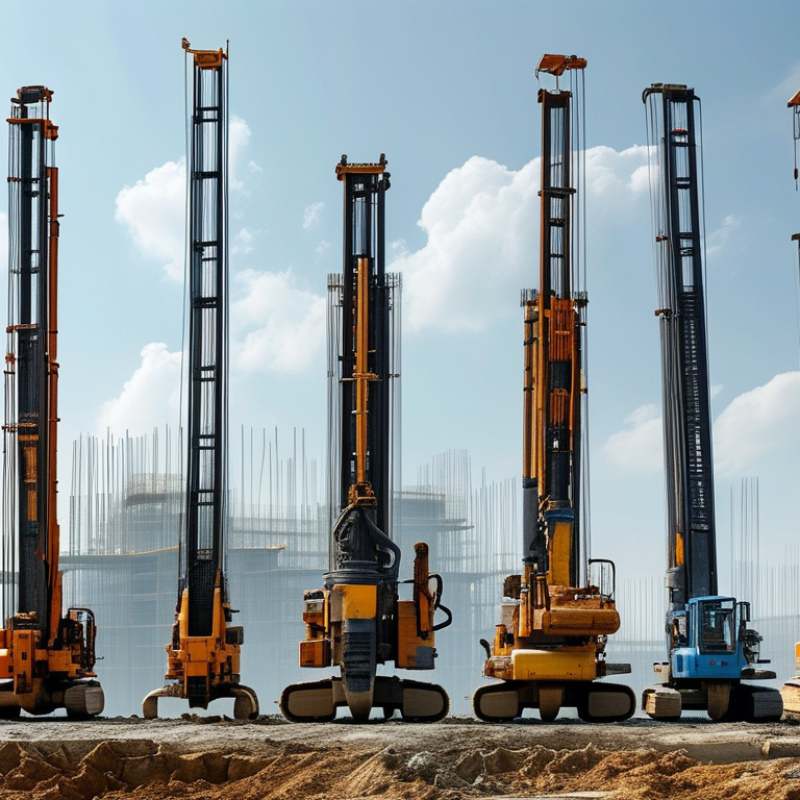
When it comes to construction projects, piling equipment plays a crucial role. These tools help create stable foundations. Proper use ensures structural integrity and sustainability. Various types of piling equipment cater to diverse soil conditions and construction requirements.
Among the essential tools, rotary drills are commonly used for deep foundations. They create large-diameter holes for piles. Another important piece is the hydraulic hammer. This equipment drives piles into the ground effectively. It is vital for projects requiring fast installation. However, using it excessively may cause vibrations, impacting nearby structures negatively.
Bored pile rigs offer another solution by excavating soil without driving piles aggressively. This reduces disturbance but can be slower. The selection of equipment should consider site conditions and project timelines. Each tool has its benefits and drawbacks. Ultimately, understanding these nuances can lead to better decision-making in tool selection. Proper evaluation of local conditions makes a difference in project success.
Piling methods are crucial in construction projects. Among them, rotary piling, driven piling, and screw piling are widely used. Each method has distinct applications, benefits, and limitations that affect project outcomes.
Rotary piling involves rotating a drill to create holes in the ground. This method is often chosen for urban projects due to its ability to handle challenging soil conditions. Research indicates that this technique can reduce vibration and noise levels by up to 50% compared to driven piling. Nevertheless, rotary piling may not be suitable for very hard rock, leading to potential project delays.
Driven piling is another popular method, where piles are hammered into the soil. It is efficient and cost-effective for deeper foundations. However, the impact can cause significant noise and vibration. A study by the American Society of Civil Engineers revealed that driven piles can reach depths of over 100 feet in cohesive soil. Despite this, careful site assessment is essential, as nearby structures may suffer from piling-induced settlement.
Screw piling, utilizing helical-shaped piles, is increasingly recognized for its versatility. This method provides a unique advantage in areas with limited access. Statistics indicate that screw piling can be installed in various soil types, offering a quicker alternative for shallow foundations. However, its load-bearing capacity may not always meet the needs of larger structures, prompting engineers to evaluate its suitability diligently.
Piling equipment plays a crucial role in construction projects worldwide. The performance metrics of such equipment are vital for ensuring project efficiency. This includes load capacity, speed, and accuracy. A high load capacity allows for better stability, especially in challenging soil conditions. Speed affects operational timelines, while precision determines the structural integrity of the foundation.
Durability factors are equally important. Equipment must withstand harsh conditions and rigorous use. Weather-resistant features can enhance longevity. Regular maintenance also contributes to performance, yet it’s often overlooked. Operators need to be aware of wear and tear, as ignoring this can lead to failures. Each piece of equipment has nuances that require attention. Understanding these aspects ensures effective use and maximizes investment.
Sourcing reliable equipment requires careful consideration. Global buyers must evaluate the specifications of available options comprehensively. Misleading information can lead to poor choices, ultimately affecting project outcomes. A continuous learning approach is helpful in navigating these complexities. Sharing insights and experiences can lead to better decision-making in the long run.
As the global construction sector advances, the demand for high-performance piling equipment continues to rise in 2023. A recent report indicates that the global piling equipment market is projected to grow by over 5% annually, driven by infrastructure projects and urban development. Additionally, the need for robust and reliable equipment is paramount. Construction companies face increasing pressure to adopt advanced technologies that enhance efficiency and safety on-site.
Investors are particularly interested in equipment that demonstrates versatility. For instance, hydraulic hammers and rotary drills are favored for their adaptability across various soil conditions. Precise data indicates that these innovations can reduce project timelines by up to 15%. This efficiency is crucial with many regions experiencing labor shortages. However, the cost of implementing new technologies can be a barrier, and companies need to balance investment with returns carefully.
Tips: When selecting piling equipment, prioritize machines that offer a low noise level and reduced vibrations. These features not only enhance worker safety but also minimize disruptions in urban environments. Also, pay attention to the long-term maintenance costs associated with equipment. Cheaper machines may incur higher repair costs over time. Businesses should conduct thorough research and engage with experts to ensure informed decisions.
| Equipment Type | Primary Use | Key Features | Market Demand (2023) |
|---|---|---|---|
| Hydraulic Pile Driver | Driving Piles into Soil | High Efficiency, Low Noise | High |
| Vibratory Pile Driver | Foundation Work | Rapid Installation, Minimal Vibration | Medium |
| Rotary Pile Drilling Rig | Deep Foundation Construction | High Torque, Versatile | High |
| Continuous Flight Auger (CFA) Rig | Bored Piling | Minimized Soil Disturbance | Growing |
| Diesel Hammer | Heavy Pier Foundations | Powerful Impact, High Strength | Stable |
| Piling Rig | Multiple Pile Types | Multi-functional, Adjustable | High |
| Impact Hammer | Firm Ground Insertion | Suitable for Hard Ground | Medium |
| DTH Hammer | Drilling in Tough Conditions | High Penetrating Capability | Increased Demand |
| Auger Boring Machine | Underground Boring | Cost-Effective, Safe | High |
| Screw Pile Installer | Simple Installation | Minimal Soil Disturbance | Growing |
Sustainable practices in piling operations are essential for protecting the environment. In recent years, the construction industry has faced pressure to reduce environmental impacts. A 2021 report by the International Society of Piling suggests that about 30% of construction waste comes from piling activities.
Innovative piling techniques can minimize this waste. For instance, using eco-friendly materials can enhance sustainability. The trend towards utilizing recycled materials in piles has gained traction. Research indicates that recycled materials can reduce carbon emissions by up to 20%. However, many projects still rely heavily on traditional methods, which can lead to soil contamination and habitat disruption.
Addressing noise and vibration pollution is critical in urban areas. Newer piling equipment aims to lessen these disturbances through design improvements. Yet, a survey showed that 45% of construction professionals believe these technologies are underutilized. There is a need for increased awareness and training on sustainable practices in piling operations. It is crucial to strike a balance between efficiency and environmental stewardship.
This chart illustrates the carbon emissions associated with various piling equipment used globally. The data shows that hydraulic hammers and vibratory drivers have the highest emissions, while sheet piling generates the least carbon footprint. This information is crucial for companies aiming for sustainable practices in their piling operations.
„Thanks to the LUVIR technology, the solder resist process could be switched directly from the previously used mask exposure to direct exposure. As an outstanding digital solution on the market, this technology has been able to demonstrate fast process times and superior quality on our certified conventional ink in production. This allowed us to fully digitize the solder mask process at low cost – without process or ink adjustments. An excellent benefit to our production in Rot am See.“
Ralf Göhringer (Head of Production WE Rot am See)
I would definitely recommend the Limata machine and team for a future company purchase
Michael Greenaway
Compunetics Inc.
“The Limata ldi has been amazing!! Best thing we did was buy this machine”
Richard Brady
GM
Circuitlabs
“Since 2019, we have been running the Limata X1000 LDI system (including LUVIR for solder mask imaging) in daily production as an addition to our current process with film. The machine was capable of properly exposing Taiyo PSR-4000 BN (DI) solder mask types on normal to high-copper boards using a new and unique direct imaging process. The machine operating interface is very user friendly which allowed for a quick technical training curve. The pre-registration processing reduced several seconds of production time at every print. Limata support and service staff is incomparable. They supported our team every step of the way at basically any time of the day or night, with literally, an immediate response time, customizing the software interface to best fit our Operations and needs.
We have exposed more than 8,000 prints since end of October, on various solder mask colors and some resist film panels. Limata, has proven to be very capable and innovative. They are a strong contender in the industry.
We have very much enjoyed this project, and working with the team!
Thank you Limata for the continued support and being a part of our growth.”
Bill Sezate
Vice President, GM
Summit Interconnect
As a replacement to our current contact exposure process with film, the LIMATA X2000 system including LUVIR-Technology was capable of properly exposing non-LDI solder mask types using a direct imaging process. The machine offers cutting edge software with a very intuitive operating interface which allowed for quick technician training curve. The dual drawer system combined with pre-registration processing reduced several seconds of production time at every machine cycle. Limata support and service staff is world class. They added software patches to keep production running at shortest possible response times, customized the software interface to best fit our in-house Operations system, and even wrote a step-by-step machine processing manual. As a result of the project, we have exposed more than 16,000 times on various product types and solder mask brands/colors. Limata, in a very short timeframe as a company, has definitely shown they are truly innovative and will be challenging the industry of direct imaging for the top spot.
Kevin Beattie
Process Engineer
TTM Technologies
Forest Grove Division
