China’s plastic manufacturing landscape is changing quickly, and Plastic Injection Molding Machines remain central to that transformation. They shape bottle caps, medical housings, automotive clips, and thousands of everyday components.
Fortune Business Insights valued the global injection molding machine market at approximately USD 15.39 billion in 2023. Its report projects continued growth through 2032, supported by packaging, automotive, electronics, and healthcare demand. Grand View Research also identifies automation, energy efficiency, and servo-hydraulic technology as major market drivers. These trends explain why Chinese manufacturers increasingly compete through complete production systems, not only lower prices.
Performance still needs proof.
A reliable comparison should examine clamping force, injection speed, repeatability, energy consumption, control software, after-sales service, and spare-parts availability. Factory videos can help, but test samples reveal more. A thin-wall container, a glossy automotive trim, and a complex medical part expose different weaknesses. Juliane Hehl, an ARBURG managing partner and plastics-industry expert, stated, “Sustainability is not a trend, but a necessity.” Her observation matters because machine efficiency affects electricity costs, cycle stability, scrap rates, and factory emissions.
This guide evaluates leading China-based Plastic Injection Molding Machines manufacturers through practical and technical criteria. It considers export experience, certifications, customization capability, and customer support. Market rankings are never permanent. Some suppliers communicate impressively but provide limited evidence. Others remain less visible while delivering dependable machines. That gap deserves careful attention.
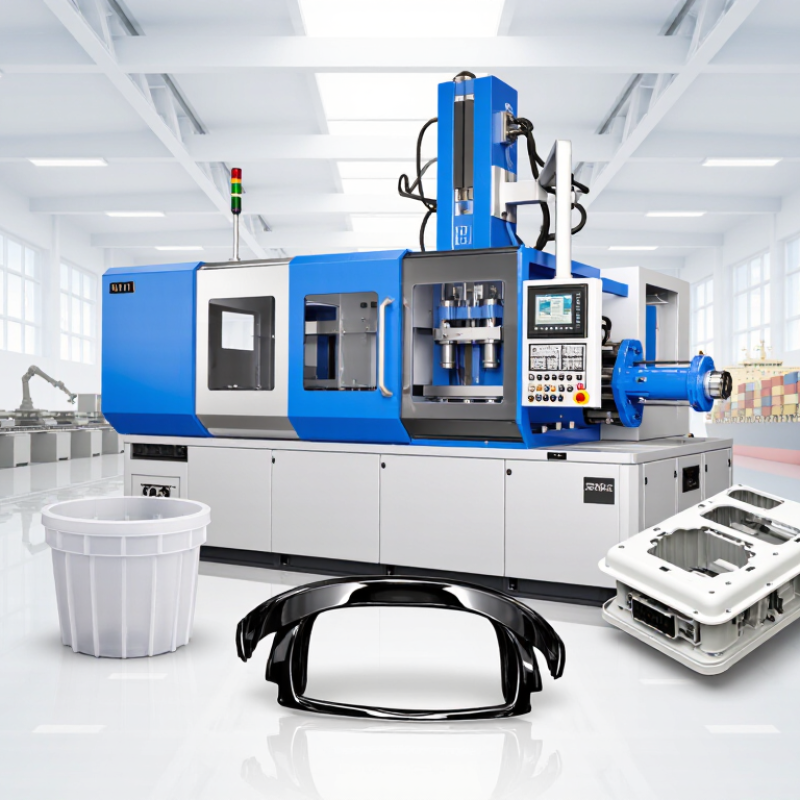
Plastic injection molding machines convert polymer pellets into precise molded parts through heat, pressure, and controlled cooling. A typical cycle starts when pellets enter a heated barrel. A rotating screw melts and mixes them. The screw then pushes the material into a closed mold. After cooling, the mold opens, and ejector pins release the part. It sounds simple. It is not. Small changes in melt temperature, injection speed, or cooling time can create warping, short shots, or visible flow marks. In production work, stable process data matters as much as impressive machine specifications.
Machines generally use hydraulic, electric, or hybrid drive systems. Hydraulic models can provide strong clamping force and familiar maintenance routines. Electric systems often offer clean operation, repeatable movement, and lower noise. Hybrid designs combine selected advantages, but performance depends on proper setup and service support. Buyers comparing top manufacturers should examine clamping accuracy, screw design, energy use, controller access, spare-part availability, and operator training. A large machine is not automatically better. Oversizing may increase costs and energy consumption.
Evaluating Chinese injection molding machine manufacturers requires more than comparing quotations. Global plastics production reached 400.3 million tonnes in 2022, according to PlasticsEurope’s Plastics—The Fast Facts 2023. That scale makes process stability, service capacity, and energy use practical concerns, not marketing details.
Check the manufacturer’s engineering evidence. Request machine drawings, hydraulic or servo specifications, control-system records, and test-shot data using your material. A reliable supplier should explain clamping-force calculations and repeatability results clearly. Inspect the factory if possible. Look for clean assembly areas, calibrated testing equipment, and traceable component records. ISO 9001 certification helps, but it does not replace an audit. Safety design should also align with ISO 20430:2020.
Compare total operating cost, not only the purchase price. Grand View Research estimated the global injection molding machine market at about USD 10.4 billion in 2023, while other reports use different boundaries and reach different values. Treat market figures carefully. Ask for measured energy consumption per production cycle, spare-parts lead times, remote-support procedures, and technician response targets. Run a factory acceptance test with real molds and resin. Record cycle time, part weight, flash, and rejection rate. My own evaluation would still leave room for doubt: a polished demonstration can hide maintenance weaknesses. Require references from factories producing similar parts, then verify them independently.
China’s injection molding machine sector includes several practical manufacturer categories. Hydraulic machine producers remain common because their equipment handles large molds and demanding production cycles. Many factories use them for automotive parts, household products, and industrial containers. Electric machine manufacturers focus on cleaner operation, accurate dosing, and lower energy use. Their machines suit medical components, electronics, and precision packaging.
Hybrid machine producers combine hydraulic clamping with electric injection control. This design can balance cost, speed, and repeatability. Vertical injection machine manufacturers serve insert molding and small components.
Two-color and multi-material specialists support products with soft-touch surfaces or integrated functions. High-speed packaging equipment makers target thin-wall containers, closures, and short cycle times.
Some manufacturers also build complete cells with robots, dryers, conveyors, and inspection systems. The machine alone is rarely the whole answer.
Tips: Check clamp force, injection volume, mold dimensions, and cycle targets against your actual parts. Request sample trials using your resin and mold. Ask for test reports, electrical standards, spare-parts availability, and service response times. Inspect the control interface in person when possible. Small details matter. A lower purchase price may hide difficult maintenance or unstable process control. I have seen specifications look impressive, yet real cycle results change after installation. Leave room for careful verification.
When comparing plastic injection molding machines, start with the mold, not the catalog headline. Required clamp force depends on projected part area, cavity pressure, and safety margin. Excessive tonnage can waste energy and increase mold stress. A higher number is not automatically better.
Check injection pressure, shot volume, screw diameter, and screw length-to-diameter ratio. These specifications influence filling speed, mixing quality, and material residence time. For glass-filled polymers, wear-resistant screw and barrel surfaces deserve close attention. For thin-wall parts, responsive injection control matters more than maximum pressure alone. That number matters.
During factory evaluations, inspect platen flatness, tie-bar spacing, mold thickness range, and ejector stroke. Confirm whether the controller records pressure, position, and cycle data. Servo-hydraulic systems may reduce energy use during holding and cooling, while electric systems often provide precise repeatability. However, actual savings depend on cycle design and maintenance habits. I have seen impressive efficiency claims weakened by poor temperature calibration. Check the details.
Compare repeatability under real production conditions, not only during an empty-machine test. Ask for sample parts, dimensional records, noise levels, and oil-temperature data after extended cycling. Safety interlocks, guarded access, and emergency stops should be tested physically. Service response, spare-part availability, and operator training also affect machine reliability. Specifications look clean on paper. Production is less forgiving.
Choosing a Chinese injection molding machine manufacturer requires more than comparing catalogue prices. PlasticsEurope reported 413.8 million tonnes of global plastics production in 2023, with China contributing about one-third. This scale supports strong manufacturing capacity, but it does not guarantee consistent quality.
Start with the application. Confirm clamping force, injection volume, mold dimensions, cycle time, material type, and expected annual output. Ask for calculations, not general claims. A suitable supplier should provide machine drawings, tolerance data, energy consumption, and a sample-production plan. Request a factory acceptance test using your mold and resin. Watch the part weight, flash, cooling stability, and cycle records. Small details matter.
Check the quality system and export experience. ISO 9001 certification is useful, but audit the actual process: incoming inspection, assembly records, software backups, and final testing. ISO 20430:2020 provides relevant safety guidance for injection molding machines. Confirm electrical compliance for your destination and clarify who handles documentation. It is easy to overlook this.
Compare total cost over five years, not only the purchase price. The International Energy Agency notes that industrial efficiency improvements can significantly reduce electricity demand, so ask for measured power data under production conditions. Also examine spare-parts availability, remote diagnostics, technician response time, warranty exclusions, and training. A low quote may hide costly delays. I would still keep a risk allowance; supplier promises are not always machine performance. Evaluate evidence, then negotiate.
„Thanks to the LUVIR technology, the solder resist process could be switched directly from the previously used mask exposure to direct exposure. As an outstanding digital solution on the market, this technology has been able to demonstrate fast process times and superior quality on our certified conventional ink in production. This allowed us to fully digitize the solder mask process at low cost – without process or ink adjustments. An excellent benefit to our production in Rot am See.“
Ralf Göhringer (Head of Production WE Rot am See)
I would definitely recommend the Limata machine and team for a future company purchase
Michael Greenaway
Compunetics Inc.
“The Limata ldi has been amazing!! Best thing we did was buy this machine”
Richard Brady
GM
Circuitlabs
“Since 2019, we have been running the Limata X1000 LDI system (including LUVIR for solder mask imaging) in daily production as an addition to our current process with film. The machine was capable of properly exposing Taiyo PSR-4000 BN (DI) solder mask types on normal to high-copper boards using a new and unique direct imaging process. The machine operating interface is very user friendly which allowed for a quick technical training curve. The pre-registration processing reduced several seconds of production time at every print. Limata support and service staff is incomparable. They supported our team every step of the way at basically any time of the day or night, with literally, an immediate response time, customizing the software interface to best fit our Operations and needs.
We have exposed more than 8,000 prints since end of October, on various solder mask colors and some resist film panels. Limata, has proven to be very capable and innovative. They are a strong contender in the industry.
We have very much enjoyed this project, and working with the team!
Thank you Limata for the continued support and being a part of our growth.”
Bill Sezate
Vice President, GM
Summit Interconnect
As a replacement to our current contact exposure process with film, the LIMATA X2000 system including LUVIR-Technology was capable of properly exposing non-LDI solder mask types using a direct imaging process. The machine offers cutting edge software with a very intuitive operating interface which allowed for quick technician training curve. The dual drawer system combined with pre-registration processing reduced several seconds of production time at every machine cycle. Limata support and service staff is world class. They added software patches to keep production running at shortest possible response times, customized the software interface to best fit our in-house Operations system, and even wrote a step-by-step machine processing manual. As a result of the project, we have exposed more than 16,000 times on various product types and solder mask brands/colors. Limata, in a very short timeframe as a company, has definitely shown they are truly innovative and will be challenging the industry of direct imaging for the top spot.
Kevin Beattie
Process Engineer
TTM Technologies
Forest Grove Division
