The significance of Polymer Additives in industrial applications cannot be overstated. According to Dr. Anna Taylor, a leading expert in polymer science, "The right additives can drastically enhance material performance." This insight highlights the pivotal role these substances play in improving durability and functionality.
In the competitive landscape of materials science, the choice of polymer additives affects everything. They can influence properties such as flexibility, strength, and resistance to chemicals. Industries rely on these additives to optimize their products. For instance, an automotive company may incorporate specific additives to enhance the resilience of parts exposed to harsh environments.
Despite their benefits, the selection and application of polymer additives can be challenging. Each additive interacts differently with base polymers. There is no one-size-fits-all solution. Careful consideration is necessary to avoid potential drawbacks like reduced stability or unexpected reactions. This complex decision-making process underscores the need for expert knowledge in the field. Continuous research and development are essential to realize the true potential of polymer additives.
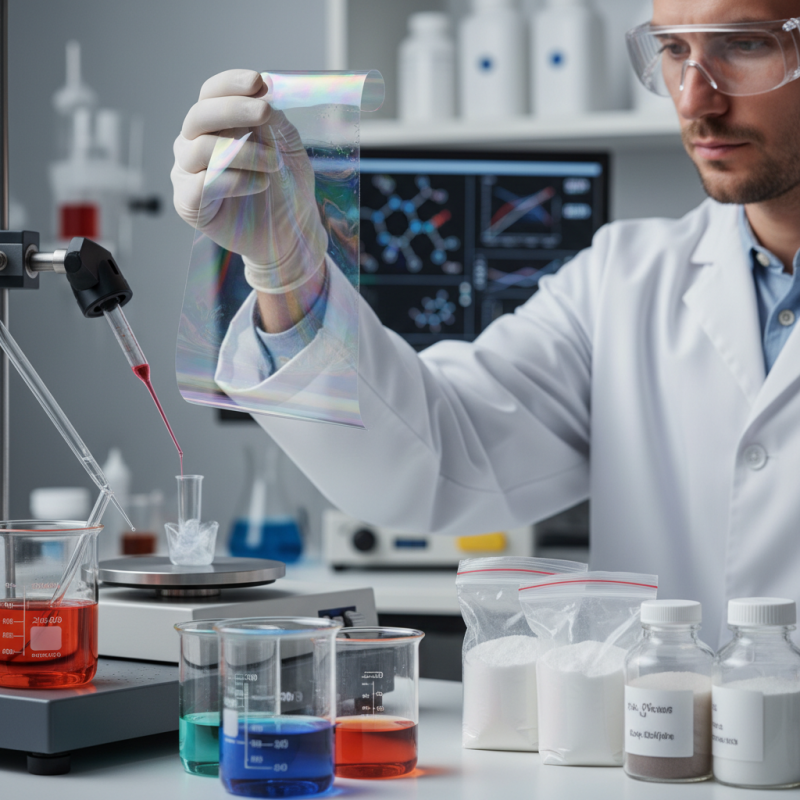
Polymer additives play a crucial role in enhancing the performance of materials across various industries. These substances improve properties like durability, flexibility, and thermal stability. A recent industry report indicates that the global polymer additives market is projected to grow to $60 billion by 2025, reflecting their increasing significance.
Additives such as plasticizers, stabilizers, and fillers are widely used. Plasticizers enhance flexibility, making them vital for applications in construction and automotive industries. Stabilizers protect against degradation caused by heat and UV light. Many companies focus on optimizing these additives to achieve better performance. However, the dependency on additives raises sustainability concerns. The environmental impact of some additives can be significant and necessitates careful assessment.
Innovation in additive technology is vital. Stakeholders must prioritize developing eco-friendly options. Some companies are exploring bio-based additives to address sustainability issues. Though progress is being made, barriers remain. Industries need to balance performance needs with environmental responsibility. Striving for this balance will shape the future of polymer applications.
| Additive Type | Function | Common Applications | Benefits |
|---|---|---|---|
| Plasticizers | Increase flexibility | PVC, rubbers | Improved processability and flexibility |
| Stabilizers | Prevent degradation | Polyolefins, PVC | Extended service life and durability |
| Fillers | Enhance mechanical properties | Composites, plastics | Cost reduction and improved strength |
| Flame Retardants | Reduce flammability | Electronics, construction materials | Enhanced safety and compliance |
| Antioxidants | Prevent oxidation | Rubber, plastics | Improved stability and lifespan |
| Impact Modifiers | Enhance impact resistance | Polycarbonate, acrylonitrile butadiene styrene (ABS) | Increased toughness and durability |
Polymer additives play a crucial role in enhancing the performance of various industrial applications. These materials can improve strength, flexibility, and durability. Understanding the types of additives is essential for choosing the right one for specific needs. Common categories include plasticizers, antioxidants, and UV stabilizers.
Plasticizers increase the flexibility of polymers, making them more pliable. They are commonly used in products like cables and flooring. Antioxidants protect polymers from degradation caused by oxygen and heat. Meanwhile, UV stabilizers shield materials from harmful ultraviolet rays.
However, the selection of additives should not be taken lightly. Compatibility with the base polymer is vital for effectiveness. Using the wrong type can lead to issues like reduced performance and lifespan. Manufacturers must continually test and refine choices to ensure optimal results. This highlights the complexity of additive systems in industrial applications.
The selection of polymer additives greatly impacts the performance of materials in various industries. One key factor is compatibility; additives must blend well with base polymers. This ensures uniform performance characteristics. For instance, when incorporating plasticizers, their molecular size and polarity can affect flexibility. It’s crucial to choose additives that enhance the desired properties without compromising the polymer's integrity.
Another important consideration is the processing conditions. Temperature and pressure during manufacturing significantly influence the effectiveness of additives. High temperatures may degrade some additives, reducing their benefits. It’s essential to conduct trials under actual processing conditions to assess the performance. Evaluating additive interactions is also vital. Certain combinations may produce synergies, but others can lead to unexpected challenges, like phase separation.
Lastly, regulatory compliance is an ongoing concern. Manufacturers must stay informed about laws affecting specific additives. This awareness ensures that the products not only perform well but also meet industry standards and safety regulations. Keeping up with research and trends can help fill any knowledge gaps, promoting better decision-making in additive selection.
Polymer additives play a crucial role across various industries, enhancing performance and extending product lifespan. In the packaging sector, for example, they improve durability and barrier properties. According to a report by Smithers Pira, the global market for polymer additives reached $46 billion in 2022, with packaging accounting for a significant portion of that growth. These additives can ensure products remain fresh and protected from moisture.
The automotive industry also benefits greatly from polymer additives. They contribute to lightweighting of components, which improves fuel efficiency. A study by Market Research Future estimates a compound annual growth rate (CAGR) of 5.2% in polymer additives for automotive applications from 2022 to 2028. However, challenges still exist. Not all additives perform uniformly across various conditions, and environmental impacts of certain additives require careful consideration.
Construction materials increasingly utilize polymer additives to enhance strength and resistance to weathering. According to a recent analysis by Technavio, demand for polymer additives in construction could grow by 4.5% annually until 2027. Yet, this growth brings risks, as formulations may not always meet stringent environmental standards. The industry must balance innovation with the ecological footprint of these additives to ensure sustainable development.
The future of polymer additive development is ripe with potential. Innovations in this field aim to enhance the performance of materials while addressing environmental concerns. One notable trend is the shift toward bio-based and sustainable additives. Manufacturers are exploring renewable sources to create alternatives that minimize environmental impact. This evolution reflects a growing demand for materials that align with sustainability goals.
As applications expand, additive customization becomes crucial. Industries are seeking tailored solutions to enhance specific properties, like resistance to heat or chemicals. The use of nanotechnology is another exciting trend. Nanomaterials can significantly improve the mechanical strength and durability of polymers. However, challenges remain in ensuring consistency and scalability in production.
Emerging data points to the need for continuous improvement. Producers must remain vigilant in monitoring the long-term effects of novel additives. Regulatory standards are also evolving, necessitating ongoing research. It is essential to balance innovation with safety and efficacy. Development requires collaboration among scientists, engineers, and regulatory bodies, ensuring a responsible approach to integrating new polymer additives into industry practices.
„Thanks to the LUVIR technology, the solder resist process could be switched directly from the previously used mask exposure to direct exposure. As an outstanding digital solution on the market, this technology has been able to demonstrate fast process times and superior quality on our certified conventional ink in production. This allowed us to fully digitize the solder mask process at low cost – without process or ink adjustments. An excellent benefit to our production in Rot am See.“
Ralf Göhringer (Head of Production WE Rot am See)
I would definitely recommend the Limata machine and team for a future company purchase
Michael Greenaway
Compunetics Inc.
“The Limata ldi has been amazing!! Best thing we did was buy this machine”
Richard Brady
GM
Circuitlabs
“Since 2019, we have been running the Limata X1000 LDI system (including LUVIR for solder mask imaging) in daily production as an addition to our current process with film. The machine was capable of properly exposing Taiyo PSR-4000 BN (DI) solder mask types on normal to high-copper boards using a new and unique direct imaging process. The machine operating interface is very user friendly which allowed for a quick technical training curve. The pre-registration processing reduced several seconds of production time at every print. Limata support and service staff is incomparable. They supported our team every step of the way at basically any time of the day or night, with literally, an immediate response time, customizing the software interface to best fit our Operations and needs.
We have exposed more than 8,000 prints since end of October, on various solder mask colors and some resist film panels. Limata, has proven to be very capable and innovative. They are a strong contender in the industry.
We have very much enjoyed this project, and working with the team!
Thank you Limata for the continued support and being a part of our growth.”
Bill Sezate
Vice President, GM
Summit Interconnect
As a replacement to our current contact exposure process with film, the LIMATA X2000 system including LUVIR-Technology was capable of properly exposing non-LDI solder mask types using a direct imaging process. The machine offers cutting edge software with a very intuitive operating interface which allowed for quick technician training curve. The dual drawer system combined with pre-registration processing reduced several seconds of production time at every machine cycle. Limata support and service staff is world class. They added software patches to keep production running at shortest possible response times, customized the software interface to best fit our in-house Operations system, and even wrote a step-by-step machine processing manual. As a result of the project, we have exposed more than 16,000 times on various product types and solder mask brands/colors. Limata, in a very short timeframe as a company, has definitely shown they are truly innovative and will be challenging the industry of direct imaging for the top spot.
Kevin Beattie
Process Engineer
TTM Technologies
Forest Grove Division
