Choosing among the Top 10 Power Factor Correction CKD Suppliers Worldwide starts with a practical question: what does “CKD” include in each supplier’s offer? It may mean a complete, knocked-down package for local assembly, but scope can differ. Buyers should confirm whether the package includes capacitors, reactors, switching devices, controllers, protection, and clear assembly documentation.
The details matter. A cabinet label cannot tell you how a system will behave under changing loads. Dr. Robert C. Dugan, co-author of Electrical Power Systems Quality, has emphasized through his technical work that power quality depends on the interaction between equipment and the electrical system. Put simply: context matters. This is a paraphrase of his work, not a direct quotation.
A useful comparison looks beyond price. Check rated voltage, kvar steps, harmonic conditions, enclosure design, component traceability, and after-sales support. Ask for test records and a specific bill of materials. If a supplier cannot explain how its design handles frequent switching or local site conditions, pause.
Look closely.
This guide examines ten worldwide suppliers through those practical lenses. It considers product range, engineering support, documentation, customization, and delivery capability. No ranking can replace a site-specific assessment; even a reputable package can be a poor fit for one installation. That is worth remembering. The aim is to help readers ask sharper questions before choosing a Power Factor Correction Ckd supplier.
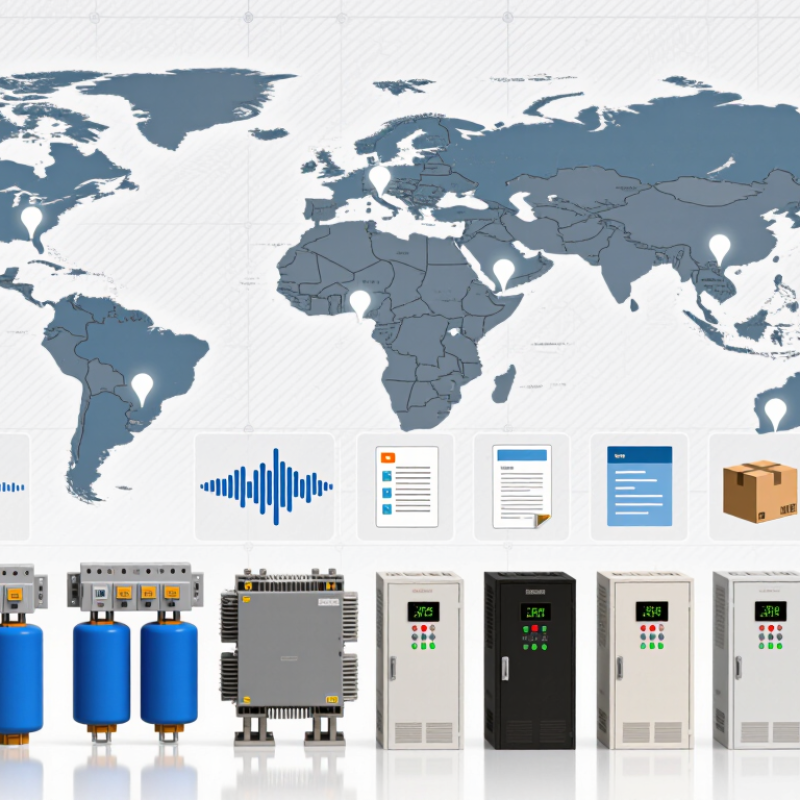
Power factor correction reduces reactive demand and can ease current loading in an electrical system. A CKD supply model ships equipment as separate parts for local assembly, rather than as a fully assembled cabinet. Typical kits may include capacitor units, switching devices, protection components, busbars, and a controller. The exact contents vary. Confirm them before comparing supplier quotations.
Good suppliers clarify the intended load, operating voltage, switching duty, and harmonic conditions before sizing a system. Harmonics matter. Where they are significant, a design may need detuned reactors instead of plain capacitor steps. Ask for wiring diagrams, component schedules, assembly instructions, and test requirements. Check that these documents match the kit in the crate. A missing connector can delay commissioning as surely as a major component.
CKD can support regional assembly and reduce the shipment of bulky, finished cabinets, but it also transfers work to the buyer. Local teams need suitable tools, trained technicians, and a clear process for inspection and testing. Packaging labels and part traceability deserve attention; small items are easy to misplace. A supplier’s value is not measured by kit price alone. Still, no checklist catches every site condition, and that deserves honest review before an order is placed.
Assessing worldwide CKD suppliers for power factor correction starts with the kit’s intended operating range, not its catalog photos. Ask for capacitor and reactor ratings, switching method, enclosure limits, and supported system voltage. A credible supplier should provide clear drawings, bill-of-material references, assembly instructions, and acceptance criteria. Details matter.
Compare how each supplier controls incoming parts and final assembly. Request sample inspection records, routine test procedures, and traceability from component batch to shipped kit. Review whether technicians can identify terminals, torque values, and safe clearances from the supplied documents. Ask how they verify capacitance, insulation, and switching operation before dispatch. Paperwork can still mislead. Confirm test records match the kit configuration, including local frequency and ambient conditions.
CKD readiness also depends on support after delivery. Check spare-part availability, response times across time zones, training materials, and whether instructions suit the receiving site’s language and tools. Ask for evidence from comparable installations, while recognizing that one reference cannot predict every grid condition. Compare realistic lead times and packaging protection for long-distance transport. A low price may hide gaps in testing or commissioning support. A small pilot order can expose unclear labeling and assembly steps early. This approach is imperfect, but more useful than judging a supplier by claims alone.
Power factor correction CKD suppliers serve different needs across regional markets. CKD kits typically include capacitors, switching devices, reactors, and control equipment for local assembly. In Asia, manufacturing networks can support high-volume orders and flexible configurations. European suppliers often emphasize engineering documentation and harmonic studies. North American projects may prioritize retrofit support, enclosure fit, and maintenance access. These are broad patterns, not guarantees.
Tips: Check the bill of materials, wiring diagrams, and capacitor ratings before comparing prices. Ask how local teams handle commissioning and replacement parts. Small omissions matter.
Regional capability also depends on nearby technical support and reliable shipping. In the Middle East, Africa, and parts of Latin America, project schedules may hinge on import lead times and access to trained installers. Confirm that the CKD package matches site voltage, ambient temperature, and load variation. A cabinet designed for a cool indoor room may struggle in a hot, dusty plant. Supplier directories rarely reveal this detail, and regional labels can oversimplify real differences. Request test records and clarify who verifies performance after assembly.
These ten capability-based profiles offer a practical way to compare CKD suppliers for power factor correction; they are not a verified ranking. One supplier may specialize in capacitor banks for factories. Another may supply reactors for harmonic-sensitive sites. A third may provide controllers with clear switching settings. A fourth may focus on compact enclosures for crowded electrical rooms. A fifth may bundle capacitors, fuses, and connection hardware. Details matter.
Other profiles include suppliers with strong assembly documentation, suppliers offering configurable kit sizes, and suppliers experienced with export packaging. Some emphasize testing records, while others provide responsive engineering support during commissioning. Look for component ratings, wiring diagrams, and clear instructions for local assembly. A supplier’s catalogue can look impressive, yet missing test details may slow installation. That is easy to overlook.
Tips: Request a sample bill of materials and one assembly drawing. Check capacitor ratings against the site’s voltage and load conditions. Ask how replacement parts are identified. Compare technical support, not just price; small documentation gaps can become real delays.
Comparing power factor correction CKD suppliers means looking beyond catalog ratings. Check whether kits include capacitors, switching devices, reactors, enclosure parts, and wiring documents, or only selected components. Clear bills of materials make local assembly easier. They also reduce surprises when a panel reaches the workshop. Small details matter.
Product suitability depends on the load. A facility with variable-speed drives may need detuned capacitor steps to limit harmonic risks, while a steadier load may use simpler automatic correction. Ask suppliers for step sizes, voltage ratings, switching method, protection details, and test documentation. A polished datasheet is useful, but it cannot replace application review. That distinction is easy to miss.
Service and market coverage deserve equal attention. Compare engineering support, assembly guidance, spare-part access, delivery estimates, and commissioning assistance in the regions where equipment will operate. Ask how technical questions are handled across time zones, and whether documentation matches local language and installation practices. Response times should be confirmed, not assumed. Some CKD offers look complete until a small accessory is needed. That is a fair reason to ask for a sample packing list and a written scope before comparing prices.
An anonymized, non-ranked comparison of common power factor correction supply profiles. Entries describe typical products and services available in the market, not verified offerings of specific companies.
| Profile | Typical Products | CKD Supply Scope | Common Services | Typical Market Coverage | Best-Fit Applications |
|---|---|---|---|---|---|
| Profile 1 — LV automatic bank specialist | Low-voltage capacitor banks, contactor-switched steps, power factor controllers | Capacitors, switching devices, fuses, controller, enclosure components, wiring diagrams | Sizing support, assembly documentation, commissioning guidance | Often supplied through regional distributors and panel builders; availability varies by country | Commercial buildings and industrial sites with changing loads |
| Profile 2 — Detuned bank supplier | Detuned capacitor banks using series reactors to reduce resonance risk | Capacitors, detuning reactors, protection and switching components, assembly specifications | Harmonic assessment, detuning selection, installation support | Typically served through electrical distributors, engineering partners, and local integrators | Facilities with variable-speed drives or other harmonic-producing loads |
| Profile 3 — Fixed capacitor unit supplier | Single- or three-phase capacitors and fixed capacitor assemblies | Capacitor units and, depending on the package, fuses, contactors, and mounting accessories | Product selection assistance and replacement guidance | Commonly distributed internationally; stock and certifications are market-specific | Steady loads such as transformers, motors, and lightly varying plant loads |
| Profile 4 — Medium-voltage bank supplier | Medium-voltage capacitor banks, switching equipment, and protection arrangements | Capacitor units, reactors where required, insulators, protection components, and technical drawings | System studies, project engineering, testing coordination, commissioning support | Usually project-based, with delivery dependent on local grid codes and engineering partners | Utilities, substations, and large industrial distribution networks |
| Profile 5 — Thyristor-switched bank supplier | Fast-switching capacitor steps using thyristor switching assemblies | Capacitors, thyristor modules, control electronics, sensors, and thermal-management components | Load analysis, controller configuration, commissioning and maintenance guidance | Generally available through specialist integrators in industrial markets; regional support varies | Rapidly fluctuating loads where mechanical switching may be too slow |
| Profile 6 — Harmonic-filtering solution provider | Passive harmonic-filter banks and capacitor-reactor combinations | Capacitors, filter reactors, switching and protection components, design data | Harmonic measurements, filter design, installation and performance checks | Typically delivered through specialist engineering projects across multiple regions | Sites with significant harmonic distortion requiring a study-led solution |
| Profile 7 — Active power quality provider | Active harmonic filters and dynamic reactive-power compensation equipment | Power-electronic modules, current sensors, controls, cabinet and connection components | Power-quality survey, system configuration, commissioning, and technical support | Often supported by regional technical teams or authorized integrators; service reach varies | Dynamic loads and sites needing harmonic mitigation alongside reactive-power control |
| Profile 8 — Modular panel and CKD kit supplier | Modular capacitor-bank kits and configurable panel components | Preselected electrical components, assembly layouts, connection details, and bills of materials | Panel-builder documentation, assembly guidance, and component-matching support | Can be exported through component distributors; local assembly and compliance checks may be required | Panel builders and contractors assembling equipment close to the installation site |
| Profile 9 — Turnkey power-factor correction integrator | Engineered LV or MV capacitor-bank systems, with filtering or switching options as specified | Project-specific equipment packages, drawings, protection schedules, and installation materials | Site survey, engineering, installation coordination, testing, and handover documentation | Coverage is normally tied to project locations and local engineering or contracting partners | Projects requiring a single point of coordination from assessment through commissioning |
| Profile 10 — Retrofit and service provider | Replacement capacitors, controllers, switching devices, and upgrade packages | Retrofit components selected to suit the existing panel and its electrical ratings | Condition checks, component replacement, recommissioning, and maintenance planning | Usually focused on local or regional service areas, with parts availability varying by equipment type | Existing installations needing repair, life-extension, or control-system upgrades |
Note: “CKD supply scope” refers here to components or kits supplied for local assembly. Actual configurations, certifications, lead times, and service coverage depend on the supplier, project specification, and destination market.
„Thanks to the LUVIR technology, the solder resist process could be switched directly from the previously used mask exposure to direct exposure. As an outstanding digital solution on the market, this technology has been able to demonstrate fast process times and superior quality on our certified conventional ink in production. This allowed us to fully digitize the solder mask process at low cost – without process or ink adjustments. An excellent benefit to our production in Rot am See.“
Ralf Göhringer (Head of Production WE Rot am See)
I would definitely recommend the Limata machine and team for a future company purchase
Michael Greenaway
Compunetics Inc.
“The Limata ldi has been amazing!! Best thing we did was buy this machine”
Richard Brady
GM
Circuitlabs
“Since 2019, we have been running the Limata X1000 LDI system (including LUVIR for solder mask imaging) in daily production as an addition to our current process with film. The machine was capable of properly exposing Taiyo PSR-4000 BN (DI) solder mask types on normal to high-copper boards using a new and unique direct imaging process. The machine operating interface is very user friendly which allowed for a quick technical training curve. The pre-registration processing reduced several seconds of production time at every print. Limata support and service staff is incomparable. They supported our team every step of the way at basically any time of the day or night, with literally, an immediate response time, customizing the software interface to best fit our Operations and needs.
We have exposed more than 8,000 prints since end of October, on various solder mask colors and some resist film panels. Limata, has proven to be very capable and innovative. They are a strong contender in the industry.
We have very much enjoyed this project, and working with the team!
Thank you Limata for the continued support and being a part of our growth.”
Bill Sezate
Vice President, GM
Summit Interconnect
As a replacement to our current contact exposure process with film, the LIMATA X2000 system including LUVIR-Technology was capable of properly exposing non-LDI solder mask types using a direct imaging process. The machine offers cutting edge software with a very intuitive operating interface which allowed for quick technician training curve. The dual drawer system combined with pre-registration processing reduced several seconds of production time at every machine cycle. Limata support and service staff is world class. They added software patches to keep production running at shortest possible response times, customized the software interface to best fit our in-house Operations system, and even wrote a step-by-step machine processing manual. As a result of the project, we have exposed more than 16,000 times on various product types and solder mask brands/colors. Limata, in a very short timeframe as a company, has definitely shown they are truly innovative and will be challenging the industry of direct imaging for the top spot.
Kevin Beattie
Process Engineer
TTM Technologies
Forest Grove Division
