China’s rail network is more than a map of tracks. It is a freight system linking inland factories, ports, and border crossings. In 2023, China’s national railways moved about 3.91 billion tonnes of freight, according to China State Railway Group’s annual operating data. That scale makes carrier choice a practical business question.
This introduction to the top Rail Freight companies in China examines network reach, cargo specialization, intermodal services, and operating scale. China State Railway Group is central to the national system, while specialist providers and logistics groups serve distinct freight needs. The Ministry of Transport’s 2023 statistical communiqué offers useful context on the country’s transport infrastructure. Still, headline tonnage does not tell the whole story. Terminal access, schedules, and cargo handling matter on the ground.
Transport geographer Jean-Paul Rodrigue’s work on transport systems highlights how rail’s strengths depend on distance, volume, and network connections. Put simply: fit matters. This is a summary of his framework, not a verbatim quotation. It offers a useful lens for comparing operators without treating size as the only measure of performance. A long train passing a freight yard is impressive; a dependable connection to a customer’s door is more useful. The companies ahead differ in reach and focus, and published figures may not be directly comparable. That limitation deserves attention. The overview that follows weighs reported evidence alongside practical service differences, helping readers identify which Chinese rail freight provider may suit a particular route or shipment.
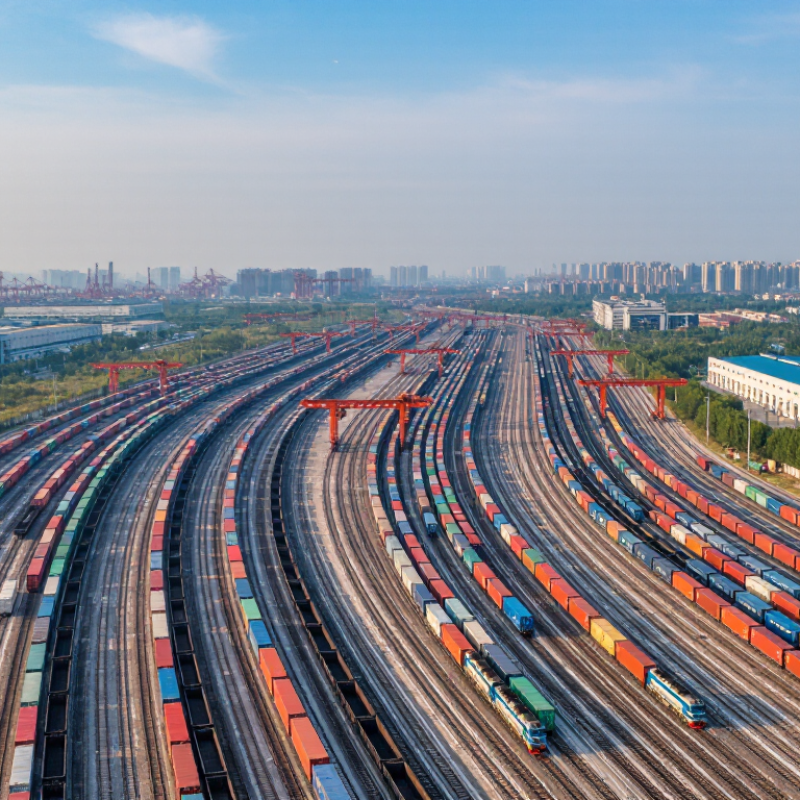
China’s rail freight sector is a network of infrastructure managers, regional operating units, and logistics providers. No single company handles every stage. Rail infrastructure links major industrial centers, inland hubs, ports, and border crossings. Regional teams coordinate train paths, terminals, and local freight demand. Private logistics firms may arrange cargo collection, storage, and delivery beyond the railway.
Rail is especially useful for predictable, high-volume shipments such as containers, machinery, and raw materials. A container moving between an inland terminal and a coastal port may travel by train for the long-distance leg, then transfer to trucks for nearby delivery. That handoff matters. Delays can occur when schedules, terminal capacity, or pickup windows do not align. The system is efficient, but not frictionless. I would not assume every route offers the same frequency or service level.
Tips: Compare door-to-door timing, not just rail transit time. Ask who manages terminal handling and final delivery. Check cutoff times, tracking detail, and how schedule changes are communicated. A low quoted rate can hide extra transfers or waiting time.
China’s leading rail freight companies work across a broad network of national rail lines, inland terminals, and port connections. Their services can include container transport, wagonload freight, customs coordination, and links with road or sea shipping. For exporters, a train may offer a useful balance between transit time and cost, especially on long inland routes. The right provider depends on the cargo, destination, departure frequency, and handling needs.
Look beyond a quoted transit time. Ask how often trains depart, where containers are transferred, and what happens if a connection is missed. A shipment moving from an inland manufacturing area to a coastal port may involve several handovers. That matters. Track availability, terminal capacity, and seasonal demand can all affect the schedule. Some providers offer detailed tracking; others provide fewer updates between terminals. Even careful planning cannot remove every delay. Schedules can look tidy on paper; terminal dwell is less tidy. Compare written service terms, insurance options, and recent route performance before choosing a carrier. A low rate is not always the lowest final cost.
Rail freight companies in China commonly coordinate container transport, wagon booking, terminal handling, and connections with trucks or coastal shipping. Their core service is moving cargo between inland production centers, border crossings, and seaports. Some also arrange shipment tracking and freight documentation. Service details vary by route, terminal capacity, and departure frequency. Small delays matter.
Their specialties often reflect the cargo and corridor. Container services suit machinery, electronics, and packaged consumer goods that need predictable handling. Bulk wagons can carry materials such as grain or minerals, while refrigerated containers may support temperature-sensitive goods where suitable equipment is available.
Not every route offers the same equipment or transfer speed. Schedules can look precise on paper, yet congestion, weather, and missed connections may affect delivery. A useful comparison checks transit estimates, handling steps, cargo limits, and contingency plans—not just the quoted price.
Even careful planning has gaps; the details deserve a second look.
China’s rail freight network connects inland production centers with coastal ports, border gateways, and major domestic markets. The strongest providers are often distinguished by route access, terminal coverage, and reliable transfer arrangements. A network serving Chengdu, Chongqing, Wuhan, or Xi’an may suit inland shippers better than one focused on eastern port corridors. Trunk routes move containers and bulk cargo over long distances; feeder services connect factories and depots to rail yards. Details matter.
Northwestern corridors link China with Central Asian markets and onward Eurasian routes. Coastal rail connections can support transfers to maritime services, while domestic lines link industrial regions across provinces. A route map is not a promise. Actual performance can shift with train frequency, border processing, seasonal congestion, and last-mile capacity. Maps can mislead.
Tips: Ask for the specific origin and destination terminals, not just city names. Confirm departure frequency, transit-time ranges, transfer points, and backup options. Check whether the quoted service includes final delivery. Compare performance on your actual lane, since a small depot constraint can change the plan.
| Anonymized Operator Profile | Network and Representative Routes | Regional Coverage | Typical Freight | Network Strength |
|---|---|---|---|---|
| National trunk-network services | Freight movements across China’s standard-gauge railway network, connecting major inland hubs, industrial areas, border crossings, and seaports. | Nationwide, including eastern coastal provinces, central manufacturing regions, and western inland areas. | Containerized goods, metals, construction materials, agricultural products, and industrial inputs. | Broad domestic reach and connections between regional rail corridors. |
| China–Europe cross-border services | Routes use border gateways including Manzhouli, Erenhot, Alashankou, and Horgos; onward itineraries vary and may pass through Mongolia, Russia, or Central Asia. | Chinese inland hubs linked with markets in Central Asia and Europe. | Containerized manufactured goods, machinery, electronics, and other general cargo. | International rail connections through multiple northern and western land gateways. |
| Coal-corridor freight services | Includes established routes such as the Datong–Qinhuangdao corridor, carrying coal from northern production areas toward the Bohai coast. | Coal-producing areas in northern China and receiving ports or industrial users. | Primarily coal and other bulk commodities. | Dedicated heavy-haul infrastructure supports high-volume bulk movements. |
| Yangtze River Delta port-rail services | Rail links connect inland logistics hubs with major coastal port areas, including Shanghai and Ningbo-Zhoushan. | Shanghai, Jiangsu, Zhejiang, and Anhui, with connections to inland provinces. | Export and import containers, manufactured goods, and industrial materials. | Intermodal connections between major manufacturing centers and seaports. |
| Pearl River Delta port-rail services | Regional freight links connect Guangdong logistics and industrial centers with rail terminals and coastal port facilities. | Southern Guangdong and connections to the wider national railway network. | Containers, electronics, consumer goods, and industrial cargo. | Serves a dense manufacturing and export region with access to port logistics. |
| Northwest border and Central Asia services | Western routes connect through Alashankou and Horgos to Kazakhstan and onward Central Asian rail networks. | Xinjiang and other western regions, with cross-border links into Central Asia. | Containers, consumer products, machinery, and regional trade cargo. | Provides land-based access to neighboring markets and international rail corridors. |
Note: Company names and brands are intentionally omitted. Profiles describe established rail freight service types and corridors; they are not a company-specific ranking.
China’s major rail freight operators differ less by headline tonnage than by the routes and cargo they can reliably serve. The national network operator offers broad reach, long-haul capacity, and connections between inland production zones and seaports. Regional and industrial rail operators often provide shorter feeder links, yard handling, and access to mines, factories, or terminals. Short routes matter. A delayed transfer at a busy siding can erase the advantage of a fast trunk-line journey.
The National Railway Administration’s 2024 Statistical Bulletin reports 5.18 billion tonnes of rail freight nationwide, up 2.8% from 2023. That figure shows market scale, but it does not rank individual operators. UIC railway statistics also distinguish freight volume from tonne-kilometres, a useful measure of distance moved. Compare operators using both, alongside on-time performance, available wagon types, terminal access, and shipment visibility. Bulk-cargo specialists may excel on dedicated corridors, while intermodal providers need smooth transfers between rail, road, and ports. The public data are uneven. That makes direct comparisons less certain than they appear.
„Thanks to the LUVIR technology, the solder resist process could be switched directly from the previously used mask exposure to direct exposure. As an outstanding digital solution on the market, this technology has been able to demonstrate fast process times and superior quality on our certified conventional ink in production. This allowed us to fully digitize the solder mask process at low cost – without process or ink adjustments. An excellent benefit to our production in Rot am See.“
Ralf Göhringer (Head of Production WE Rot am See)
I would definitely recommend the Limata machine and team for a future company purchase
Michael Greenaway
Compunetics Inc.
“The Limata ldi has been amazing!! Best thing we did was buy this machine”
Richard Brady
GM
Circuitlabs
“Since 2019, we have been running the Limata X1000 LDI system (including LUVIR for solder mask imaging) in daily production as an addition to our current process with film. The machine was capable of properly exposing Taiyo PSR-4000 BN (DI) solder mask types on normal to high-copper boards using a new and unique direct imaging process. The machine operating interface is very user friendly which allowed for a quick technical training curve. The pre-registration processing reduced several seconds of production time at every print. Limata support and service staff is incomparable. They supported our team every step of the way at basically any time of the day or night, with literally, an immediate response time, customizing the software interface to best fit our Operations and needs.
We have exposed more than 8,000 prints since end of October, on various solder mask colors and some resist film panels. Limata, has proven to be very capable and innovative. They are a strong contender in the industry.
We have very much enjoyed this project, and working with the team!
Thank you Limata for the continued support and being a part of our growth.”
Bill Sezate
Vice President, GM
Summit Interconnect
As a replacement to our current contact exposure process with film, the LIMATA X2000 system including LUVIR-Technology was capable of properly exposing non-LDI solder mask types using a direct imaging process. The machine offers cutting edge software with a very intuitive operating interface which allowed for quick technician training curve. The dual drawer system combined with pre-registration processing reduced several seconds of production time at every machine cycle. Limata support and service staff is world class. They added software patches to keep production running at shortest possible response times, customized the software interface to best fit our in-house Operations system, and even wrote a step-by-step machine processing manual. As a result of the project, we have exposed more than 16,000 times on various product types and solder mask brands/colors. Limata, in a very short timeframe as a company, has definitely shown they are truly innovative and will be challenging the industry of direct imaging for the top spot.
Kevin Beattie
Process Engineer
TTM Technologies
Forest Grove Division
