In 2026, the Refrigeration Cooler market is poised to see significant advancements. With increasing global temperatures, businesses and consumers seek efficient cooling solutions. A refrigeration cooler plays a critical role in preserving perishables and maintaining optimal temperatures in various settings.
Today’s consumers prioritize energy efficiency and sustainability. Many brands are responding to this demand, offering innovative designs and technologies. Some coolers now integrate smart features, enhancing usability. However, the choice can be overwhelming due to diverse options. It is imperative for buyers to consider their specific needs and preferences.
Not all refrigeration coolers are created equal. Quality, durability, and performance can vary widely. Thus, buyers should look for reputable brands that emphasize reliability. Reflecting on past experiences and feedback can lead to better decisions. Ultimately, investing in a refrigeration cooler is a significant consideration for any business or household in a warming world.
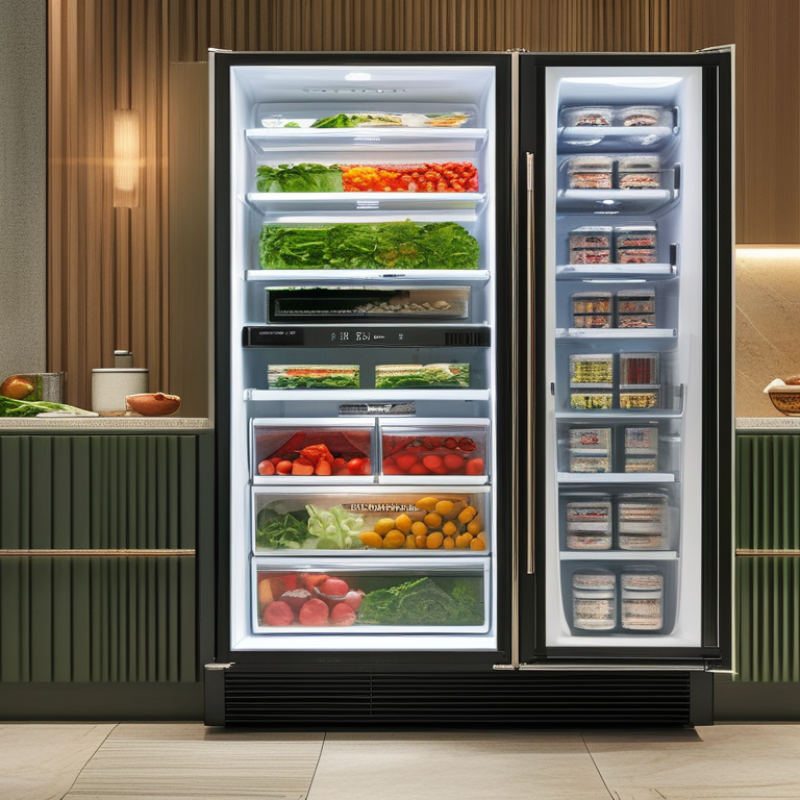
When considering refrigeration coolers, several key features can enhance your purchasing decision. Start with size and capacity. A cooler must fit your needs. Whether you require a compact design or a larger unit, ensure it provides ample storage without occupying too much space. Look for models with adjustable shelving. This allows flexibility in the arrangement, accommodating different items effortlessly.
Energy efficiency is paramount in today’s eco-conscious market. High-efficiency models reduce energy consumption while providing optimal cooling. Check for energy ratings. A reliable cooler should also maintain consistent temperatures. This prevents spoilage and ensures freshness, which is crucial for food and beverage storage.
Temperature control is another essential feature. Digital displays simplify monitoring and adjustments. Some advanced coolers even offer dual-zone functionality. This permits distinct temperature settings for various items. Additionally, consider the cooling mechanism. Compressor models are powerful but can be noisier. Absorption units tend to operate quietly but may be less effective in extreme heat. Reflecting on these features helps ensure you choose a refrigeration cooler that meets your specific requirements.
This chart illustrates key features to consider when evaluating the top refrigeration coolers for global buyers in 2026. It includes metrics such as capacity, energy efficiency, noise level, price, and warranty duration to guide purchasing decisions.
The refrigeration cooler market is evolving rapidly. Many brands dominate this space with cutting-edge technology and innovative designs. Buyers now seek efficiency and reliability in coolers. Advanced insulation materials and energy-efficient compressors are vital. These features ensure optimal temperature control, reducing energy costs for users.
Leading brands focus on durability and user-friendliness. Portable options are popular among outdoor enthusiasts. They need lightweight coolers that fit their lifestyle. It’s interesting to see how some brands emphasize eco-friendly materials. This not only attracts eco-conscious consumers but also sets a new standard in the market. However, some companies struggle to maintain quality while scaling production, leading to inconsistency in their product lines.
Customization is another factor shaping the market. Personalization in design and functionality can cater to individual preferences. Yet, not every brand offers extensive customization. Some companies must rethink their approach to meet diverse consumer needs. As the market grows, staying ahead means embracing innovation and addressing these gaps. The journey of improving refrigeration coolers is ongoing.
| Rank | Cooling Capacity (BTU) | Energy Efficiency Rating | Price Range (USD) | Availability |
|---|---|---|---|---|
| 1 | 8000 | A+ | 300 - 400 | Worldwide |
| 2 | 10000 | A | 400 - 500 | North America |
| 3 | 12000 | A++ | 500 - 600 | Europe |
| 4 | 15000 | B | 600 - 700 | Asia |
| 5 | 9000 | A | 350 - 450 | South America |
| 6 | 14000 | A++ | 550 - 650 | Middle East |
| 7 | 11000 | B+ | 400 - 500 | Africa |
| 8 | 9500 | A+ | 320 - 420 | Australia |
| 9 | 13000 | A++ | 500 - 600 | Global |
| 10 | 17000 | B | 700 - 800 | Asia |
The world of refrigeration coolers is rapidly evolving. Emerging technologies are at the forefront of this transformation. These innovations aim to enhance energy efficiency and reduce environmental impact. High-performance insulation materials are one example of how design improvements are pushing the limits of cooler technology. These materials help maintain the ideal temperature for longer periods.
Smart technology integration is another significant trend. Many modern coolers now feature IoT capabilities. This allows users to monitor and control temperature settings remotely. Interactive displays provide real-time updates as well. However, it’s important to consider privacy and security when adopting these technologies. Not all users may be ready for such advancements.
Tips for choosing a cooler include looking for energy-efficient models. Understand your specific cooling needs before making a purchase. Don't overlook the importance of portability and usability features. If you prioritize cleanliness, consider surface materials that resist bacteria and stains. Remember, while innovation is exciting, it’s essential to choose a product that meets practical needs and stands the test of time. Balancing technology with functionality can be challenging but rewarding.
In 2026, sustainability trends will significantly shape the refrigeration cooler market. The industry is adapting to increased environmental concerns. A recent report indicates that 80% of consumers prioritize energy efficiency in cooling appliances. This shift highlights a demand for innovative designs that do not compromise on performance.
One major trend is the use of eco-friendly refrigerants. Traditional refrigerants often contribute to global warming. In contrast, newer options have a much lower environmental impact. Data shows that using hydrofluoroolefins (HFOs) can reduce greenhouse gas emissions by up to 50%. Manufacturers must invest in research and development to meet these sustainability demands.
Additionally, energy-efficient coolers can lead to significant cost savings. Studies suggest that businesses can cut energy costs by 30% when using advanced cooling technology. However, many companies still lag in adopting these innovations due to budget constraints and a lack of awareness. This presents a challenge that requires reflective thinking and strategic planning within the industry.
As the demand for refrigeration coolers continues to rise globally, regional preferences play a crucial role. Buyers from North America often focus on energy-efficient models. They value features like programmable temperature controls and smart technology. In contrast, European buyers may prioritize design and noise level along with functionality. They have a keen interest in sustainable materials and eco-friendly cooling solutions.
In Asia, cost-effectiveness is usually the top concern. Buyers often seek feature-rich models at competitive prices. They may overlook brand reputation to prioritize affordability. However, the trend is shifting, with more customers becoming environmentally conscious. This awareness is leading to a growing demand for energy-efficient coolers across the continent.
**Tip:** Always research local energy regulations. This can help in choosing models that comply with specific requirements.
**Tip:** Consider warranty and service options. Good after-sales support can significantly enhance your buying experience.
As preferences evolve and trends shift, being adaptable is essential. The refrigeration market is dynamic, and buyer needs may change unexpectedly. Keeping an eye on emerging trends helps in making informed choices.
„Thanks to the LUVIR technology, the solder resist process could be switched directly from the previously used mask exposure to direct exposure. As an outstanding digital solution on the market, this technology has been able to demonstrate fast process times and superior quality on our certified conventional ink in production. This allowed us to fully digitize the solder mask process at low cost – without process or ink adjustments. An excellent benefit to our production in Rot am See.“
Ralf Göhringer (Head of Production WE Rot am See)
I would definitely recommend the Limata machine and team for a future company purchase
Michael Greenaway
Compunetics Inc.
“The Limata ldi has been amazing!! Best thing we did was buy this machine”
Richard Brady
GM
Circuitlabs
“Since 2019, we have been running the Limata X1000 LDI system (including LUVIR for solder mask imaging) in daily production as an addition to our current process with film. The machine was capable of properly exposing Taiyo PSR-4000 BN (DI) solder mask types on normal to high-copper boards using a new and unique direct imaging process. The machine operating interface is very user friendly which allowed for a quick technical training curve. The pre-registration processing reduced several seconds of production time at every print. Limata support and service staff is incomparable. They supported our team every step of the way at basically any time of the day or night, with literally, an immediate response time, customizing the software interface to best fit our Operations and needs.
We have exposed more than 8,000 prints since end of October, on various solder mask colors and some resist film panels. Limata, has proven to be very capable and innovative. They are a strong contender in the industry.
We have very much enjoyed this project, and working with the team!
Thank you Limata for the continued support and being a part of our growth.”
Bill Sezate
Vice President, GM
Summit Interconnect
As a replacement to our current contact exposure process with film, the LIMATA X2000 system including LUVIR-Technology was capable of properly exposing non-LDI solder mask types using a direct imaging process. The machine offers cutting edge software with a very intuitive operating interface which allowed for quick technician training curve. The dual drawer system combined with pre-registration processing reduced several seconds of production time at every machine cycle. Limata support and service staff is world class. They added software patches to keep production running at shortest possible response times, customized the software interface to best fit our in-house Operations system, and even wrote a step-by-step machine processing manual. As a result of the project, we have exposed more than 16,000 times on various product types and solder mask brands/colors. Limata, in a very short timeframe as a company, has definitely shown they are truly innovative and will be challenging the industry of direct imaging for the top spot.
Kevin Beattie
Process Engineer
TTM Technologies
Forest Grove Division
