In the world of fasteners, the "Rivet Nut" stands out for its versatility and strength. Industry expert John Smith once stated, “Choosing the right Rivet Nut can enhance the durability of your projects.” This phrase encapsulates the essence of selecting the most suitable rivet nut type for various applications.
Rivet nuts are crucial in manufacturing, construction, and automotive sectors. Each type serves a specific function and material compatibility. Their design ensures they can secure objects to thin materials effectively. However, the variety in types can overwhelm newcomers. It’s important to note that not all rivet nuts suit every project. Some may struggle under extreme conditions or could be challenging to install in tight spaces.
Understanding the nuances of different rivet nut types will aid in making informed decisions. Each selection requires careful consideration of material, load capacity, and environment. By analyzing these factors, one can avoid potential pitfalls. After all, the right choice not only enhances structural integrity but also contributes to project longevity.
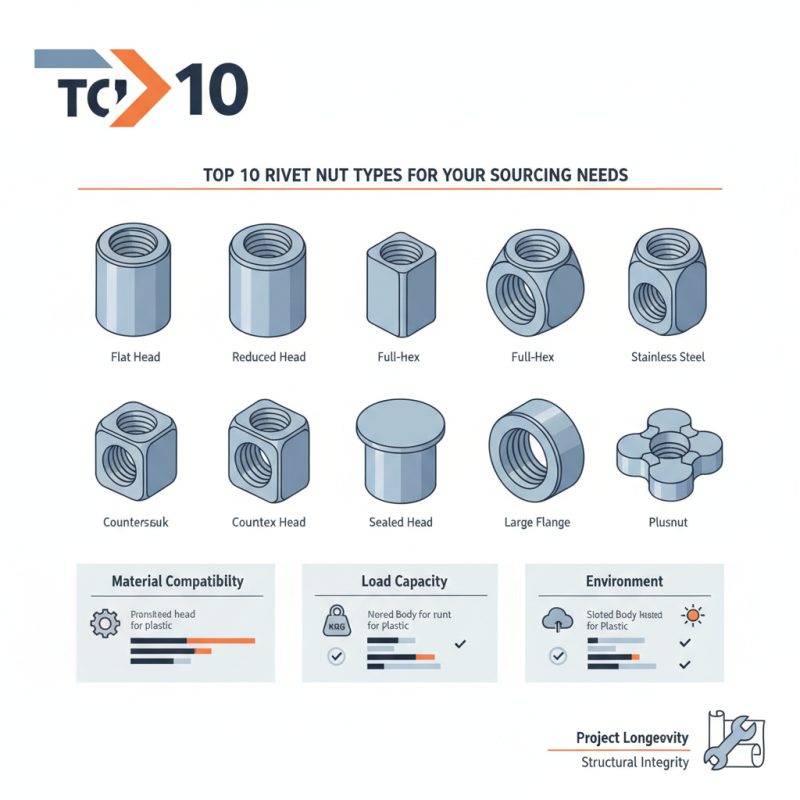
Rivet nuts, also known as blind rivet nuts or insert nuts, are essential components in fastening. They consist of a tubular sleeve with internal threads. These nuts are designed to be installed in thin materials where a secure fastening point is required. Their design allows for quick assembly, making them ideal for various applications, from automotive to electronics.
The primary purpose of rivet nuts is to provide a strong anchor point in materials like aluminum, plastic, and composites. Their installation is simple; a tool applies pressure, causing the nut to expand within the substrate. This creates a reliable grip. However, improper installation can lead to slippage or failure, stressing the importance of expert knowledge and experience in choosing the right type for your project.
Understanding the different types of rivet nuts is crucial for sourcing needs. Each type offers unique benefits, such as load-bearing capacity or corrosion resistance. Yet, making the wrong choice can result in compromised structural integrity. It's vital to assess your specific requirements carefully. Pay attention to material compatibility and environmental factors. This will ensure long-lasting performance and safety in your applications.
Rivet nuts, often known as blind nuts, come in various types, catering to different applications. Each type has unique features that improve specific manufacturing processes. For instance, open-end rivet nuts are ideal for thin materials. They provide excellent grip and easy installation. These nuts can be used in situations where access is limited.
Another popular variety is the closed-end rivet nut. This type is preferred for moisture-sensitive applications. Its closed design prevents water and contaminants from entering. This makes it suitable for outdoor projects. Furthermore, hexagonal rivet nuts offer significant advantages in torque resistance. They provide a stable fastening solution in high-stress environments.
Considering strength, flanged rivet nuts are noteworthy. Their increased surface area helps distribute load better. This type can be essential in ensuring durability over time. Yet, users must consider installation challenges. Some rivet nuts require specific tools or techniques. Overall, understanding these variations helps in selecting the right rivet nut for your project. Each option comes with its own set of benefits and challenges.
When choosing rivet nuts, material selection is crucial. Steel and aluminum are common options. Steel rivet nuts provide strength and durability. They are corrosion-resistant when coated. However, they can be heavier and less suitable for certain applications.
Aluminum rivet nuts are lightweight and resistant to corrosion. Their lower weight can benefit industries like aerospace. Yet, they may lack the same tensile strength as steel. This can be a concern in heavy-load applications. It's essential to consider these factors based on specific needs.
Other materials exist, including brass and plastic. Brass rivet nuts offer excellent conductivity and corrosion resistance. Plastic options provide lightweight solutions, often for non-structural assemblies. Each material presents unique advantages and disadvantages. Reflecting on these choices is vital to selecting the best fit for your projects.
| Type | Material | Diameter (mm) | Length (mm) | Strength (N) |
|---|---|---|---|---|
| Rivet Nut A | Steel | 6 | 10 | 5000 |
| Rivet Nut B | Aluminum | 8 | 12 | 3000 |
| Rivet Nut C | Brass | 5 | 8 | 4000 |
| Rivet Nut D | Stainless Steel | 10 | 14 | 6000 |
| Rivet Nut E | Aluminum Alloy | 12 | 16 | 3500 |
| Rivet Nut F | Steel | 14 | 20 | 7000 |
| Rivet Nut G | Brass | 16 | 25 | 4500 |
| Rivet Nut H | Aluminum | 20 | 30 | 2500 |
| Rivet Nut I | Stainless Steel | 18 | 40 | 8000 |
| Rivet Nut J | Aluminum Alloy | 22 | 35 | 4800 |
Rivet nuts are essential fasteners used across various industries. They create strong, reliable threads in thin materials. This makes them ideal for applications in automotive, aerospace, and electronics. In automotive manufacturing, rivet nuts secure body panels and internal components. They help enhance structural integrity while ensuring lightweight designs.
In the aerospace sector, rivet nuts contribute to safety and performance. They secure assemblies that withstand high stress during flight. Their use in electronic devices is growing as well. Lightweight and durable, they attach circuit boards without adding bulk. However, improper installation can lead to failures. It's crucial to choose the right type for each application.
Some industries face challenges in sourcing rivet nuts. Variability in quality and design can be problematic. Understanding the specific needs for each use case is vital. Failing to consider these factors may lead to costly mistakes. Reflecting on our choices can lead to better sourcing strategies in the long run.
When sourcing rivet nuts, several key considerations are essential. Understanding the types available is crucial. Different applications require different specifications. Factors like material, size, and load capacity can affect performance. Common materials include aluminum, steel, and brass. Each has unique attributes that provide different levels of strength and durability.
Tips: Always verify the specifications of your rivet nuts. Ensure they align with your project needs. Exploring various options can help in finding the best fit.
Also, consider the installation method. This can vary based on the type of rivet nut you select. For example, some require specific tools for proper installation. Identifying these needs early can save time and resources.
Last, assess the supplier's credibility. Trustworthy suppliers typically provide accurate information and solid customer support. Check reviews and past projects before making commitments. Understanding their track record will help in choosing the right partner.
„Thanks to the LUVIR technology, the solder resist process could be switched directly from the previously used mask exposure to direct exposure. As an outstanding digital solution on the market, this technology has been able to demonstrate fast process times and superior quality on our certified conventional ink in production. This allowed us to fully digitize the solder mask process at low cost – without process or ink adjustments. An excellent benefit to our production in Rot am See.“
Ralf Göhringer (Head of Production WE Rot am See)
I would definitely recommend the Limata machine and team for a future company purchase
Michael Greenaway
Compunetics Inc.
“The Limata ldi has been amazing!! Best thing we did was buy this machine”
Richard Brady
GM
Circuitlabs
“Since 2019, we have been running the Limata X1000 LDI system (including LUVIR for solder mask imaging) in daily production as an addition to our current process with film. The machine was capable of properly exposing Taiyo PSR-4000 BN (DI) solder mask types on normal to high-copper boards using a new and unique direct imaging process. The machine operating interface is very user friendly which allowed for a quick technical training curve. The pre-registration processing reduced several seconds of production time at every print. Limata support and service staff is incomparable. They supported our team every step of the way at basically any time of the day or night, with literally, an immediate response time, customizing the software interface to best fit our Operations and needs.
We have exposed more than 8,000 prints since end of October, on various solder mask colors and some resist film panels. Limata, has proven to be very capable and innovative. They are a strong contender in the industry.
We have very much enjoyed this project, and working with the team!
Thank you Limata for the continued support and being a part of our growth.”
Bill Sezate
Vice President, GM
Summit Interconnect
As a replacement to our current contact exposure process with film, the LIMATA X2000 system including LUVIR-Technology was capable of properly exposing non-LDI solder mask types using a direct imaging process. The machine offers cutting edge software with a very intuitive operating interface which allowed for quick technician training curve. The dual drawer system combined with pre-registration processing reduced several seconds of production time at every machine cycle. Limata support and service staff is world class. They added software patches to keep production running at shortest possible response times, customized the software interface to best fit our in-house Operations system, and even wrote a step-by-step machine processing manual. As a result of the project, we have exposed more than 16,000 times on various product types and solder mask brands/colors. Limata, in a very short timeframe as a company, has definitely shown they are truly innovative and will be challenging the industry of direct imaging for the top spot.
Kevin Beattie
Process Engineer
TTM Technologies
Forest Grove Division
