In today's fast-paced manufacturing landscape, the importance of efficiency cannot be overstated. Industry experts emphasize the role of innovation in achieving this goal. Dr. Emily Carter, a leading authority on automation, states, “Robot Cnc Machines are revolutionizing how we approach production efficiency.” Her insights highlight a transformative shift toward automation.
Robot CNC machines integrate robotics with computer-controlled machining. This technology allows manufacturers to enhance precision while reducing operational costs. Yet, as we explore the top five Robot CNC machines, it's important to acknowledge that not every solution fits all. Different industries have varied needs. Customization is essential for optimal results.
However, challenges remain. The initial investment can be significant. Moreover, companies may face a steep learning curve when integrating these technologies. Despite these hurdles, the potential benefits are substantial. Understanding the unique capabilities of each Robot CNC machine can lead to better decision-making and improved production efficiency.
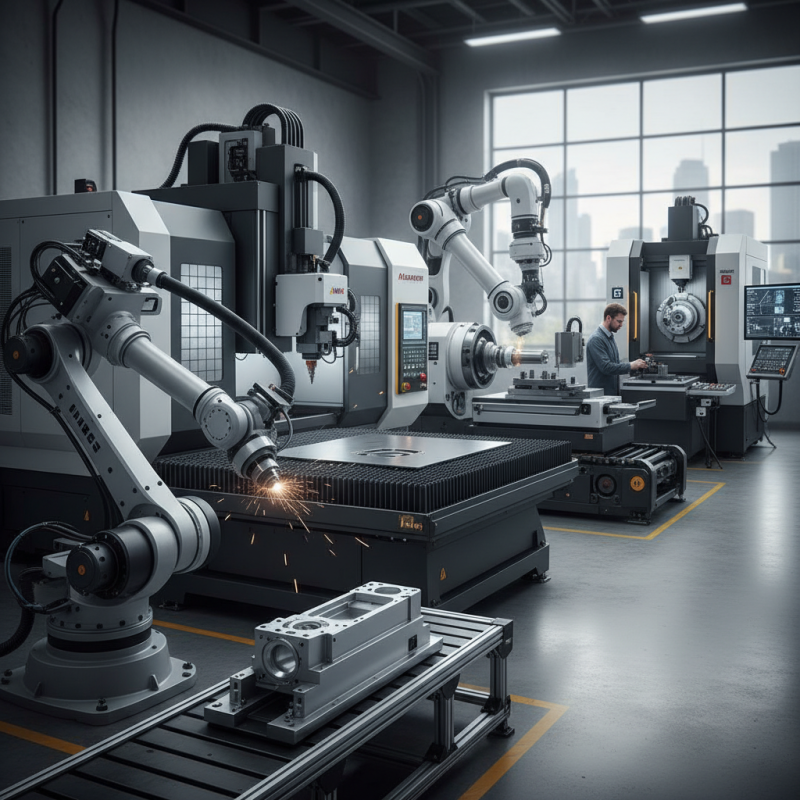
Robot CNC machines have become game-changers in modern manufacturing. They combine the power of robotics with precision CNC technology. This results in increased efficiency and productivity across various industries. According to a report from Market Research Future, the global CNC machine market is expected to reach $100 billion by 2025. This growth highlights the rising importance of automation in manufacturing.
These machines offer remarkable benefits. They can operate 24/7 without breaks, which helps companies meet higher demands. Additionally, robot CNC machines minimize human error. They enhance precision in cutting, drilling, and milling tasks. However, with these advancements come challenges. The initial setup costs can be high, and operators must be well-trained. A 2022 study revealed that companies often struggle with integrating these machines into existing workflows. This reflects the need for careful planning and execution in adopting new technologies.
Efficiency gains can also lead to over-reliance on automation. Businesses may overlook the need for skilled human oversight. This can create risks if machines fail or require maintenance. Regular evaluations of both human and machine roles in production are crucial. The integration of robot CNC machines marks a significant advancement in manufacturing, yet it calls for ongoing reflection on best practices.
In modern manufacturing, robot CNC machines stand out as efficient tools for production. They offer versatility, precision, and speed. Statistics show that automated machining can result in up to 30% increased production rates. Key features of these machines include advanced robotics, real-time monitoring, and customizable programming. These elements help reduce downtime and enhance productivity.
When selecting a robot CNC machine, consider the payload capacity. Machines with higher capacities can handle heavier materials, providing more flexibility in operations. Look for models with easily upgradable software. This can enhance the machine's functionality over time. Remember, integration with existing systems is crucial for seamless operation.
One important tip: prioritize machines that provide training resources. Proper training can lead to effective use of robotic systems. Also, assess after-sales support availability. Effective support can resolve issues quickly. Reflecting on these factors can lead to better investment in technology. In the evolving landscape of manufacturing, being well-informed is key to staying competitive.
In the world of manufacturing, robot CNC machines are pivotal. They enhance precision and speed, reducing human error significantly. Performance metrics like RPM, axis movement, and load capacity play vital roles in evaluating these machines. Higher RPM can lead to quicker production, but balancing speed with accuracy ensures quality outcomes.
Efficiency is also determined by energy consumption. Machines that operate quietly often consume less energy. This reduction in energy usage can lead to cost savings over time. Additionally, some models may show wear and tear sooner than expected, requiring more maintenance than others. This factor can affect overall efficiency, demanding regular assessments from manufacturers.
When comparing models, the choice often comes down to the specific needs of a business. Some industries prioritize speed, while others emphasize quality. Not all machines are perfect for all tasks. It's crucial for manufacturers to evaluate their unique requirements thoroughly. A machine that excels in one area may falter in another, highlighting the need for careful consideration and strategic investment. This reflective approach can lead to smarter choices and better outcomes in the manufacturing process.
Robot CNC machines are transforming various industries by enhancing efficiency and precision in manufacturing processes. In automotive production, these machines enable advanced machining of components. Robotic arms can perform drilling, milling, and cutting tasks with minimal human intervention. This not only increases output but also improves safety. Automation in such settings reduces human error, which is essential for maintaining quality standards.
In the aerospace sector, the role of Robot CNC machines is crucial. They allow for the manufacturing of intricate aircraft parts that require tight tolerances. The precision offered by these machines is unmatched, reducing waste and rework. However, the integration of robotics presents challenges. Staff must adapt to new technologies and workflows, which can create temporary disruptions. Training programs are essential to ensure a smooth transition.
Manufacturing in electronics also benefits significantly from robot CNC technology. These machines can handle small components with extreme accuracy. This leads to faster production times and less downtime. Nevertheless, the initial setup and maintenance of these systems can be complex. Organizations must weigh the long-term advantages against the initial challenges to maximize their effectiveness.
This chart illustrates the cutting speed (in mm/min) of the top 5 robot CNC machines used across various industries, highlighting their efficiency in manufacturing processes.
The future of robot CNC technology is poised for incredible innovation. Advanced algorithms and artificial intelligence are becoming integral. They enhance precision in manufacturing and minimize errors. These machines can analyze complex data to optimize production processes. As a result, efficiency improves significantly, leading to faster turnaround times.
Moreover, collaboration between humans and robots is on the rise. Collaborative robots, or cobots, work alongside human operators. They handle repetitive tasks, allowing humans to focus on more complex responsibilities. However, integrating cobots into existing workflows can pose challenges. Training and adjustment are required for a smooth transition.
Sustainability is another key trend. Eco-friendly practices are increasingly important in manufacturing. Robot CNC machines are now designed to minimize waste. These machines optimize material usage, reducing costs and environmental impact. As industries move toward greener practices, robot CNC technology must adapt. Embracing these trends can lead to more effective and responsible manufacturing solutions.
| Model | Type | Max Processing Speed (m/min) | Accuracy (mm) | Applications |
|---|---|---|---|---|
| RoboCut 3000 | Milling | 12 | 0.02 | Aerospace, Automotive |
| CNC RoboArm X100 | 3D Printing | 15 | 0.01 | Medical Devices, Prototyping |
| Precision CNC 2000 | Laser Cutting | 20 | 0.005 | Electronics, Signage |
| NanoRouter 500 | Routing | 10 | 0.03 | Furniture, Crafts |
| SmartFab Pro | Milling & Drilling | 14 | 0.015 | Construction, Aerospace |
„Thanks to the LUVIR technology, the solder resist process could be switched directly from the previously used mask exposure to direct exposure. As an outstanding digital solution on the market, this technology has been able to demonstrate fast process times and superior quality on our certified conventional ink in production. This allowed us to fully digitize the solder mask process at low cost – without process or ink adjustments. An excellent benefit to our production in Rot am See.“
Ralf Göhringer (Head of Production WE Rot am See)
I would definitely recommend the Limata machine and team for a future company purchase
Michael Greenaway
Compunetics Inc.
“The Limata ldi has been amazing!! Best thing we did was buy this machine”
Richard Brady
GM
Circuitlabs
“Since 2019, we have been running the Limata X1000 LDI system (including LUVIR for solder mask imaging) in daily production as an addition to our current process with film. The machine was capable of properly exposing Taiyo PSR-4000 BN (DI) solder mask types on normal to high-copper boards using a new and unique direct imaging process. The machine operating interface is very user friendly which allowed for a quick technical training curve. The pre-registration processing reduced several seconds of production time at every print. Limata support and service staff is incomparable. They supported our team every step of the way at basically any time of the day or night, with literally, an immediate response time, customizing the software interface to best fit our Operations and needs.
We have exposed more than 8,000 prints since end of October, on various solder mask colors and some resist film panels. Limata, has proven to be very capable and innovative. They are a strong contender in the industry.
We have very much enjoyed this project, and working with the team!
Thank you Limata for the continued support and being a part of our growth.”
Bill Sezate
Vice President, GM
Summit Interconnect
As a replacement to our current contact exposure process with film, the LIMATA X2000 system including LUVIR-Technology was capable of properly exposing non-LDI solder mask types using a direct imaging process. The machine offers cutting edge software with a very intuitive operating interface which allowed for quick technician training curve. The dual drawer system combined with pre-registration processing reduced several seconds of production time at every machine cycle. Limata support and service staff is world class. They added software patches to keep production running at shortest possible response times, customized the software interface to best fit our in-house Operations system, and even wrote a step-by-step machine processing manual. As a result of the project, we have exposed more than 16,000 times on various product types and solder mask brands/colors. Limata, in a very short timeframe as a company, has definitely shown they are truly innovative and will be challenging the industry of direct imaging for the top spot.
Kevin Beattie
Process Engineer
TTM Technologies
Forest Grove Division
