China has become a major production base for the Smartwatch Sport Watch industry. Its manufacturers combine hardware engineering, software development, flexible assembly, and export experience. However, “top” should not mean the largest factory alone. It should reflect product reliability, testing discipline, innovation, and after-sales support.
Jitesh Ubrani, research manager at IDC, has said, “Smartwatches are becoming more than just a fashion accessory.” This observation matters for sports models. Buyers now expect accurate heart-rate tracking, stable GPS, sleep analysis, water resistance, and comfortable straps. A serious manufacturer must test these features in real conditions, not only in a showroom. Runners notice GPS drift. Swimmers notice weak sealing. Small faults become large complaints.
This introduction examines leading Chinese Smartwatch Sport Watch manufacturers and the capabilities behind their products. It considers OEM and ODM services, sensor integration, battery performance, companion applications, production capacity, and quality control. It also looks at how companies support different markets and brand strategies. Some manufacturers offer impressive specifications but limited software refinement. Others provide polished applications but higher minimum order quantities. That difference deserves attention.
The market is moving quickly.
No single supplier is perfect. Rankings can change with new certifications, factory audits, customer feedback, and product launches. Therefore, this discussion should be read as a practical starting point, not a final verdict. A reliable sourcing decision still requires samples, independent testing, clear documentation, and direct communication with the manufacturer. Capability on paper is useful. Evidence is better.
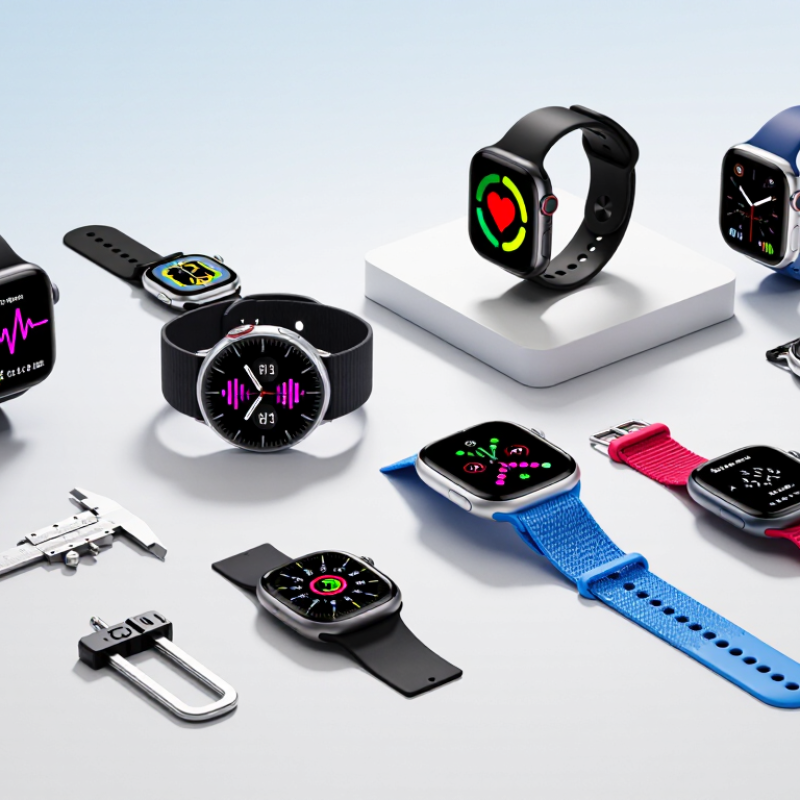
China’s smartwatch and sport watch manufacturing landscape combines dense supply chains, flexible production, and specialized engineering teams.
Many factories support OEM and ODM projects, covering industrial design, circuit assembly, firmware integration, casing, packaging, and quality inspection. This connected structure can shorten development cycles and reduce coordination problems.
Manufacturers often produce devices with heart-rate monitoring, positioning, sleep tracking, waterproof protection, and sports data analysis. However, specifications should be verified through repeated testing. A sample may perform well in a laboratory, yet behave differently during running, swimming, or cold-weather use. Battery life also depends on screen brightness, network connection, and sensor frequency. The landscape is efficient, but not flawless.
Tips: Request production samples, inspection records, material details, and software update policies. Check whether testing covers skin contact, charging safety, water resistance, and radio requirements in your target market. Ask for evidence, not promises. Factory visits can reveal important details, such as calibration procedures, component storage, and worker training. Independent testing remains useful, especially for health-related measurements. Small suppliers may offer strong technical skills, but their documentation can be uneven. That weakness deserves attention before signing a long-term agreement.
Leading Chinese smartwatch manufacturers now combine sports tracking, health monitoring, and practical outdoor durability. Counterpoint Research reported that global smartwatch shipments grew in 2024, while China remained an important growth market. This pressure encourages better components and faster product testing.
Reliable models usually include multi-band GNSS, optical heart-rate sensors, blood oxygen tracking, sleep analysis, and over 100 workout modes. Many use AMOLED displays with strong outdoor brightness. Battery life often reaches 10 to 20 days in basic use, although GPS workouts reduce it sharply. Water resistance ratings, such as 5 ATM, support swimming but do not guarantee safety during diving.
The best manufacturers focus on calibration, firmware updates, and readable training data. A 2024 IDC wearable device report highlighted health features and longer battery life as major purchase factors. However, users should treat wellness readings as estimates, not medical diagnoses. This distinction reflects responsible engineering and stronger consumer trust. Some specifications look impressive on paper, yet real performance depends on skin contact, temperature, and movement.
Tips: Check independent test data before buying. Compare GPS tracks in cities, forests, and open roads. Review the companion app’s privacy controls. Confirm strap comfort during long workouts. A lighter case may matter more than extra modes. Personally, I would value stable syncing over a crowded feature list.
China Top Smartwatch Sport Watch Manufacturers
Major Product Categories and Sports Applications
China’s smartwatch sport-watch sector now covers several distinct product categories. Basic fitness watches track steps, heart rate, sleep, and calories. Advanced multisport models add GPS, training load, recovery estimates, and route navigation. Outdoor versions usually include barometric altitude, compass functions, and stronger water resistance. Swimming models require reliable stroke detection and lap counting. Cycling watches need cadence support and clear sunlight readability.
Grand View Research valued the global smartwatch market at approximately US$33.6 billion in 2023. It also forecasts strong growth through 2030. The American College of Sports Medicine continues to list wearable technology among leading fitness trends. These figures support growing demand, but they do not guarantee measurement accuracy. Field testing still matters. A loose wrist fit can distort heart-rate readings during intervals. Cold weather can also reduce battery performance.
Tips: Match the watch to the sport. Runners should inspect GPS stability and interval tools. Cyclists need sensor compatibility and weather resistance. Swimmers should check depth ratings and pool-mode accuracy. Ask manufacturers for validation methods, battery tests, and software update policies. Do not trust every recovery score blindly. It is useful guidance, not medical proof.
Typical continuous GPS tracking endurance by product category. Values represent practical specification ranges commonly found in current sport-watch products and are shown without company or brand data.
Multisport GPS watches generally provide the longest endurance for hiking, trail running, triathlon and expedition use. Lifestyle smartwatches focus on daily health monitoring and connected features, while running watches prioritize lightweight GPS training and recovery analytics.
China’s leading sport watch factories increasingly follow ISO 9001 quality systems and documented supplier audits. IDC reported 537.9 million wearable device shipments worldwide in 2024, an 11.1% annual increase. This scale makes process control essential, not optional. Manufacturers should verify incoming sensors, displays, batteries, and charging components before assembly. Each production batch needs traceable records, operator checks, and calibration results. Small gaps can create large warranty problems.
Modern sport watches combine optical heart-rate sensors, GNSS positioning, motion detection, and low-power processors. Testing should compare sensor readings against calibrated reference equipment under movement, sweat, temperature, and lighting changes. Battery samples require charging-cycle, thermal, and protection testing. Water resistance also needs pressure testing, seal inspection, and post-test functional checks. IEC 60529 classifications can guide ingress protection claims, while EMC testing helps reduce wireless interference risks.
The factory floor matters.
Reliable manufacturers use automated optical inspection, controlled assembly areas, and sampling plans based on ISO 2859-1. They should also screen materials against restricted-substance requirements, including RoHS expectations. Still, no factory is flawless. A sensor may pass laboratory testing yet perform poorly on a fast-moving wrist. That uncomfortable result deserves investigation, not concealment. Independent audits and field-failure reviews can expose weak assumptions. Production data should improve firmware, assembly methods, and supplier decisions over time.
China’s smartwatch sport watch sector is expanding, but supplier quality varies sharply. Counterpoint Research reported that China’s smartwatch shipments grew 9% year over year in Q1 2024. IDC also recorded 520.1 million wearable device shipments worldwide in 2023. These figures show demand, not automatic manufacturing excellence.
Start with factory evidence, not catalog images. Request production-line videos, recent audit records, and random samples from finished inventory. Check sensor readings during walking, cycling, and sleep tracking. Compare results with a medical-grade reference device. A polished sample can still hide unstable firmware. Test three batches, not one.
Review water resistance, battery aging, GPS accuracy, and charging safety. Ask whether test reports match the exact model and factory. Confirm quality-control checkpoints, defect limits, replacement procedures, and delivery history. Supplier response time matters during firmware problems. Counterpoint’s market data suggests strong competition, but low prices may reflect weaker support. I would also inspect data handling and software update practices. This area is easy to overlook. A supplier should explain component sources, testing frequency, and corrective actions clearly. Still, documents can become outdated, so independent verification remains necessary.
„Thanks to the LUVIR technology, the solder resist process could be switched directly from the previously used mask exposure to direct exposure. As an outstanding digital solution on the market, this technology has been able to demonstrate fast process times and superior quality on our certified conventional ink in production. This allowed us to fully digitize the solder mask process at low cost – without process or ink adjustments. An excellent benefit to our production in Rot am See.“
Ralf Göhringer (Head of Production WE Rot am See)
I would definitely recommend the Limata machine and team for a future company purchase
Michael Greenaway
Compunetics Inc.
“The Limata ldi has been amazing!! Best thing we did was buy this machine”
Richard Brady
GM
Circuitlabs
“Since 2019, we have been running the Limata X1000 LDI system (including LUVIR for solder mask imaging) in daily production as an addition to our current process with film. The machine was capable of properly exposing Taiyo PSR-4000 BN (DI) solder mask types on normal to high-copper boards using a new and unique direct imaging process. The machine operating interface is very user friendly which allowed for a quick technical training curve. The pre-registration processing reduced several seconds of production time at every print. Limata support and service staff is incomparable. They supported our team every step of the way at basically any time of the day or night, with literally, an immediate response time, customizing the software interface to best fit our Operations and needs.
We have exposed more than 8,000 prints since end of October, on various solder mask colors and some resist film panels. Limata, has proven to be very capable and innovative. They are a strong contender in the industry.
We have very much enjoyed this project, and working with the team!
Thank you Limata for the continued support and being a part of our growth.”
Bill Sezate
Vice President, GM
Summit Interconnect
As a replacement to our current contact exposure process with film, the LIMATA X2000 system including LUVIR-Technology was capable of properly exposing non-LDI solder mask types using a direct imaging process. The machine offers cutting edge software with a very intuitive operating interface which allowed for quick technician training curve. The dual drawer system combined with pre-registration processing reduced several seconds of production time at every machine cycle. Limata support and service staff is world class. They added software patches to keep production running at shortest possible response times, customized the software interface to best fit our in-house Operations system, and even wrote a step-by-step machine processing manual. As a result of the project, we have exposed more than 16,000 times on various product types and solder mask brands/colors. Limata, in a very short timeframe as a company, has definitely shown they are truly innovative and will be challenging the industry of direct imaging for the top spot.
Kevin Beattie
Process Engineer
TTM Technologies
Forest Grove Division
