When searching for hydraulic hose for sale, potential buyers face numerous challenges. According to a report by MarketsandMarkets, the hydraulic hose market is projected to reach $2.4 billion by 2026. This growth highlights the increasing importance of selecting high-quality hoses for various applications. However, many buyers overlook critical factors during their purchase, leading to costly mistakes.
Hydraulic hoses serve as essential components in machinery and equipment, but not all hoses are created equal. Selecting the right hose can impact efficiency and safety. Research indicates that improper hose selection can lead to 30% more frequent maintenance. Furthermore, many users underestimate the significance of pressure ratings and temperature limitations. They may prioritize price over performance, which often results in unexpected failures.
The need for proper education on hydraulic hoses is evident. Buyers should pay close attention to specifications and materials. Reading reviews and seeking expert advice can greatly enhance decision-making. In a competitive market, the right hydraulic hose for sale can make a significant difference in operational success. Buyers must remain vigilant and informed to ensure their choices yield long-term benefits.
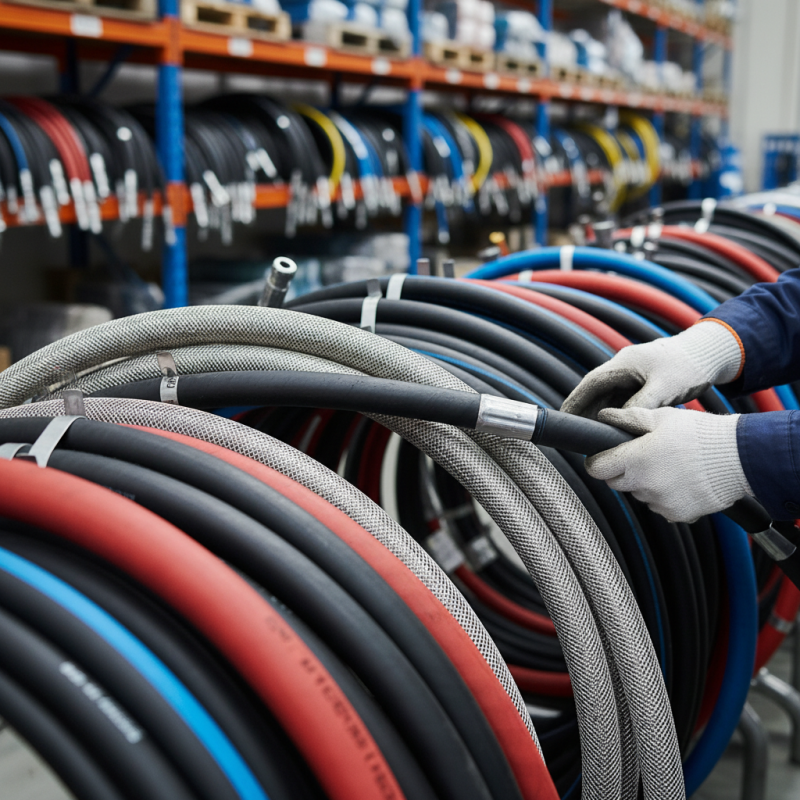
Understanding the types and specifications of hydraulic hoses is crucial for making informed choices. Hydraulic hoses come in various forms, including reinforced, non-reinforced, and thermoplastic variations. Each type serves different purposes and operates under distinct pressure ratings. Choosing the right hose involves understanding these specifications to ensure optimal performance.
When buying a hydraulic hose, consider the pressure requirements. Hoses are rated for specific pressures. A hose rated too low may fail. Also, look at the temperature range. Hoses must withstand heat without degrading. It can be surprising how quickly a hose can wear out in high-heat environments.
Quality matters. Not all hoses are made equal. Seek hoses that meet industry standards for durability. Some hoses may look appealing but have hidden flaws. Testing the hoses for flexibility and abrasion resistance can reveal their true quality. Don’t overlook the connection types, whether threaded or flanged. These details impact performance and compatibility. Each choice shapes your equipment's efficiency and safety, so take your time.
When choosing a hydraulic hose, evaluating material durability is crucial. Different materials offer various strengths and weaknesses. Rubber hoses are flexible and resistant to weather, but they may wear out quickly under extreme conditions. On the other hand, synthentic materials can provide higher durability and resistance to chemicals, but they might lack the flexibility required for certain applications.
Heat resistance is another factor to consider. Operating temperatures can vary based on the system. Some hoses can handle high temperatures, while others degrade rapidly. At times, users may overlook overheating warnings. This oversight could lead to hose failure and costly downtime. Choosing the right hose involves understanding both your system's demands and the temperatures it may encounter.
While finding the perfect hose may seem straightforward, balancing durability and heat resistance is often challenging. Users sometimes prioritize one over the other, leading to inefficient operations. It’s essential to reflect on your specific needs and potential risks. Investing time in the selection process pays off, ensuring your hydraulic system functions smoothly for longer.
Choosing the right hydraulic hose involves understanding the specifics of size and fittings. Proper sizing ensures optimal performance and reduces the risk of hose failure. Industry data suggests that approximately 40% of hydraulic system failures are due to improper hose sizing. This underscores the importance of precise measurements in your selection process.
When selecting a hose, consider the outer diameter and the inner diameter. Too large a diameter can lead to pressure drops, while a diameter that is too small may create blockages. It’s essential to measure the required length as well. A length that is too short can lead to tension on the fittings, increasing the risk of leaks or bursts.
Tip: Always account for movement or flex in your machine. A static hose can become taut under operational conditions. Additionally, the fittings must match the hose’s specifications. Mismatched fittings can compromise the system. It’s not uncommon for users to overlook these details, leading to costly replacements or downtime.
Another point to consider is the working pressure of the hose. Ensure that the chosen hose can withstand the maximum pressure your system will experience. A hose rated for lower pressure can lead to serious failures. Always check industry standards for pressure ratings.
| Hydraulic Hose Type | Inner Diameter (ID) | Max Pressure (psi) | Length (ft) | Fitting Type |
|---|---|---|---|---|
| SAE 100R2AT | 3/8" | 4000 | 15 | JIC 37° Flare |
| SAE 100R1AT | 1/2" | 3000 | 20 | NPT Male |
| SAE 100R5 | 3/4" | 3500 | 25 | BSPP |
| SAE 100R12 | 1" | 5000 | 30 | ORFS |
| SAE 100R16 | 5/8" | 4000 | 10 | Socket Weld |
When purchasing hydraulic hoses, understanding quality standards is crucial. The American National Standards Institute (ANSI) and the International Organization for Standardization (ISO) set benchmarks for hydraulic components. For instance, ISO 18752 defines performance requirements based on pressure and temperature. Hoses must meet these standards to ensure safety and efficiency.
Identifying certifications helps gauge product reliability. Look for certifications like SAE J517, which signifies high durability and performance. According to industry reports, using certified hoses can reduce failure rates by up to 30%. However, some manufacturers may highlight certifications without full compliance, risking performance and safety.
Remember, not all hoses labeled as hydraulic meet these quality standards. Some may perform well under specific conditions but fail elsewhere. It’s essential to review test reports and material specifications. Transparency from suppliers is non-negotiable; ask for documentation to support claims. Quality assurance processes can make a significant difference. Without diligence, purchasing decisions may lead to ineffective systems.
When looking for hydraulic hoses, price comparison is crucial. Reports indicate that prices can vary significantly among suppliers. Research by the Hydraulic Institute found that pricing discrepancies can be as high as 30% across different vendors. This highlights the need for diligent research before making a purchase.
Reliable suppliers often have detailed product information available. They should provide specifications on pressure ratings and material types. The National Fluid Power Association emphasizes checking certifications. This ensures that a product meets safety and performance standards. If a supplier can't provide clear information, it may be a red flag.
In addition to price, consider shipping costs and delivery times. Some suppliers may have low prices but high shipping fees. A supplier's location can impact delivery speed. According to a recent industry survey, 60% of businesses reported delays due to poor logistics. Choosing a reliable supplier means balancing cost with timely service.
„Thanks to the LUVIR technology, the solder resist process could be switched directly from the previously used mask exposure to direct exposure. As an outstanding digital solution on the market, this technology has been able to demonstrate fast process times and superior quality on our certified conventional ink in production. This allowed us to fully digitize the solder mask process at low cost – without process or ink adjustments. An excellent benefit to our production in Rot am See.“
Ralf Göhringer (Head of Production WE Rot am See)
I would definitely recommend the Limata machine and team for a future company purchase
Michael Greenaway
Compunetics Inc.
“The Limata ldi has been amazing!! Best thing we did was buy this machine”
Richard Brady
GM
Circuitlabs
“Since 2019, we have been running the Limata X1000 LDI system (including LUVIR for solder mask imaging) in daily production as an addition to our current process with film. The machine was capable of properly exposing Taiyo PSR-4000 BN (DI) solder mask types on normal to high-copper boards using a new and unique direct imaging process. The machine operating interface is very user friendly which allowed for a quick technical training curve. The pre-registration processing reduced several seconds of production time at every print. Limata support and service staff is incomparable. They supported our team every step of the way at basically any time of the day or night, with literally, an immediate response time, customizing the software interface to best fit our Operations and needs.
We have exposed more than 8,000 prints since end of October, on various solder mask colors and some resist film panels. Limata, has proven to be very capable and innovative. They are a strong contender in the industry.
We have very much enjoyed this project, and working with the team!
Thank you Limata for the continued support and being a part of our growth.”
Bill Sezate
Vice President, GM
Summit Interconnect
As a replacement to our current contact exposure process with film, the LIMATA X2000 system including LUVIR-Technology was capable of properly exposing non-LDI solder mask types using a direct imaging process. The machine offers cutting edge software with a very intuitive operating interface which allowed for quick technician training curve. The dual drawer system combined with pre-registration processing reduced several seconds of production time at every machine cycle. Limata support and service staff is world class. They added software patches to keep production running at shortest possible response times, customized the software interface to best fit our in-house Operations system, and even wrote a step-by-step machine processing manual. As a result of the project, we have exposed more than 16,000 times on various product types and solder mask brands/colors. Limata, in a very short timeframe as a company, has definitely shown they are truly innovative and will be challenging the industry of direct imaging for the top spot.
Kevin Beattie
Process Engineer
TTM Technologies
Forest Grove Division
