When it comes to maintaining comfort in your space, choosing the right Cooling Fan is essential. According to a report by MarketsandMarkets, the global cooling fan market is expected to reach $19.5 billion by 2026, showcasing the importance of these devices in various settings. However, not all Cooling Fans are created equal, and selecting the best one requires careful consideration of your specific needs.
The diversity of Cooling Fans available can be overwhelming. Factors such as size, power consumption, noise levels, and airflow patterns significantly influence performance. Industry experts advise consumers to assess their environment and preferences before making a purchase. For instance, a small desk fan may be perfect for personal use but insufficient for larger spaces. Additionally, energy-efficient models can help reduce electricity costs while providing ample cooling.
Be aware that not every Cooling Fan will meet your expectations. Some may offer limited airflow, while others may produce excessive noise, disrupting your peace. Understanding these nuances can help you make a more informed decision. Your comfort is worth the effort, and selecting an optimal fan can greatly impact your overall experience.
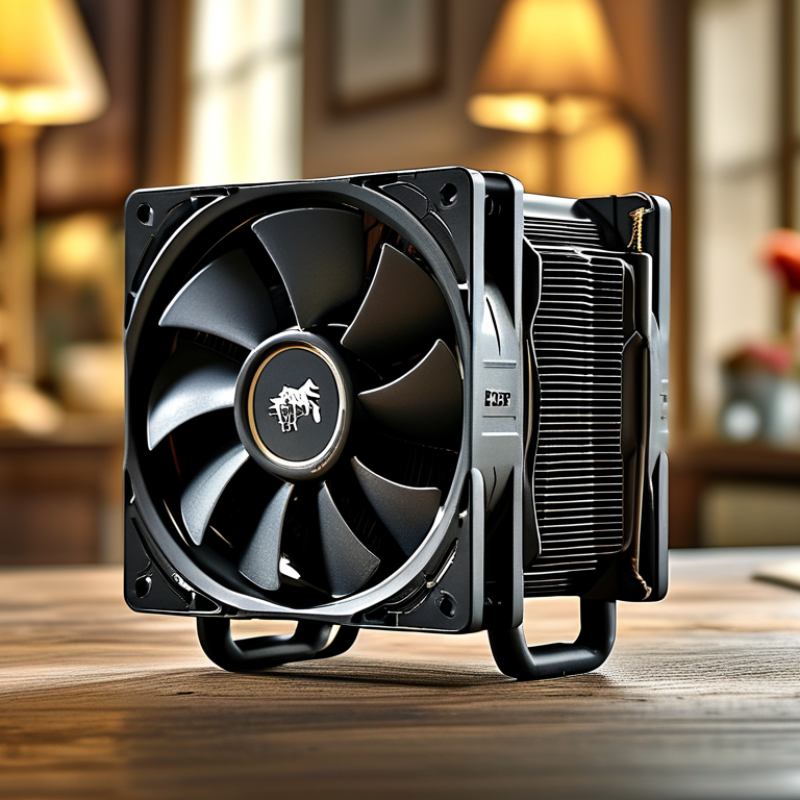
Understanding the different types of cooling fans available on the market is crucial for effective cooling solutions. The most common types include ceiling fans, table fans, and wall-mounted fans. According to the U.S. Department of Energy, ceiling fans can improve comfort and reduce cooling costs by up to 14%. They circulate air efficiently in larger spaces, making them ideal for homes with high ceilings.
Table fans offer portability and versatility, suitable for small rooms or personal use. Their compact design allows placement on desks or countertops, making them user-friendly. A recent study showed that adjustable speed features in table fans can lead to energy savings of around 25%. Wall-mounted fans are perfect for people with limited floor space. They provide effective airflow while staying out of the way.
When choosing a cooling fan, consider the room size and your specific cooling needs. Noise levels are another factor. Some fans can be quite loud, which might disrupt your daily activities. The effectiveness of a fan also depends on the airflow it can generate. Data indicates that fans with higher CFM (cubic feet per minute) ratings provide better circulation. Investigating various types and their capabilities ensures finding the right fit for individual preferences and spaces.
When it comes to selecting the right cooling fan, evaluating your space is paramount. The size of your room will significantly impact the effectiveness of the fan you choose. A small fan may struggle in a large space, leaving some corners uncooled. Conversely, a powerful fan in a compact room could create uncomfortable gusts.
Consider the layout of your room carefully. Place your fan in a location where airflow can circulate freely. Avoid corners or crowded areas. You may want to try different placements to see what works best.
Tip: Assess height as well. Fans mounted higher can disperse air more effectively in tall rooms. Don't underestimate the direction of airflow either. Ideally, your fan should complement the natural movement of air in your space.
Take note of any obstacles. Furniture, walls, and other structures can block airflow. This may lead to inefficient cooling. Regularly revisit your fan placement, as seasonal changes could alter the room’s cooling needs.
| Room Size | Fan Type | Airflow (CFM) | Placement Consideration | Noise Level (dB) |
|---|---|---|---|---|
| Small (up to 100 sq ft) | Table Fan | 500-900 | On a desk or nightstand | 20-30 |
| Medium (100-250 sq ft) | Floor Fan | 900-1800 | In corner, pointing towards center | 30-40 |
| Large (250-500 sq ft) | Ceiling Fan | 1500-3000 | Center of the room | 40-50 |
| Extra Large (over 500 sq ft) | Whole House Fan | 3000+ | Attic or upper floor | 50-60 |
When selecting a cooling fan, examining specific features can significantly impact comfort and satisfaction. Speed settings are crucial. Research indicates that fans with multiple speed options enhance user experience. About 70% of consumers prefer fans that offer at least three distinct speed levels. This variety allows for tailored airflow according to personal preferences and environmental conditions.
Noise levels play a vital role as well. Fans can vary widely in sound output, with some models emitting less than 30 decibels. Such quiet operation is attractive for nighttime use. A study showed that approximately 55% of users prioritize low-noise fans. Meanwhile, oscillation features can enhance airflow distribution across a room. Fans with oscillating capability can reduce perceived temperatures by making the air feel cooler. Industry reports suggest that oscillating models can increase comfort levels by up to 25% in larger spaces.
Choosing the right fan involves balancing these features with personal needs. Some users may find high-speed settings disruptive at night. Others may feel that low noise levels compromise cooling effectiveness. Consider your unique environment and usage scenarios when evaluating these aspects. Strive for a fan that meets your specific cooling demands while prioritizing sound comfort and functionality.
When selecting a cooling fan, energy efficiency is crucial. Eco-friendly options are beneficial for your wallet and the environment. Look for fans with high energy efficiency ratings. These ratings indicate lower electricity consumption without sacrificing performance. Energy-efficient fans can significantly reduce monthly bills.
Consider the type of technology used in the fan. Brushless DC motors are often more efficient than traditional motors. They consume less energy and offer quieter operation. It’s worth researching and comparing models. This process can feel overwhelming.
Additionally, pay attention to features like timers and multiple speed settings. These can improve a fan's efficiency in practical use. Sometimes, a fan may seem powerful but uses excessive energy in higher settings. Think about your specific needs. Choosing the right fan can be a reflection of your lifestyle.
When budgeting for a cooling fan, it’s essential to balance quality and price. A higher price doesn't always guarantee better performance. Consider your specific needs carefully. Do you need a portable fan or something more permanent? Establishing your requirements upfront can save money.
Look for features like energy efficiency. Fans that use less energy can reduce your electricity bills over time. Check the noise levels too; a quiet fan can enhance comfort, especially in bedrooms. It's not just about airflow; comfort relies on a perfect blend of air circulation and peace.
Research multiple options before making a purchase. Reading user reviews can provide insight into reliability. Not all cheap models offer the same lifespan. Sometimes, a more expensive fan can be a better investment if it lasts longer. Prioritize what matters most to you, and keep in mind that spending less doesn’t mean settling for low quality. When in doubt, trust your instincts.
„Thanks to the LUVIR technology, the solder resist process could be switched directly from the previously used mask exposure to direct exposure. As an outstanding digital solution on the market, this technology has been able to demonstrate fast process times and superior quality on our certified conventional ink in production. This allowed us to fully digitize the solder mask process at low cost – without process or ink adjustments. An excellent benefit to our production in Rot am See.“
Ralf Göhringer (Head of Production WE Rot am See)
I would definitely recommend the Limata machine and team for a future company purchase
Michael Greenaway
Compunetics Inc.
“The Limata ldi has been amazing!! Best thing we did was buy this machine”
Richard Brady
GM
Circuitlabs
“Since 2019, we have been running the Limata X1000 LDI system (including LUVIR for solder mask imaging) in daily production as an addition to our current process with film. The machine was capable of properly exposing Taiyo PSR-4000 BN (DI) solder mask types on normal to high-copper boards using a new and unique direct imaging process. The machine operating interface is very user friendly which allowed for a quick technical training curve. The pre-registration processing reduced several seconds of production time at every print. Limata support and service staff is incomparable. They supported our team every step of the way at basically any time of the day or night, with literally, an immediate response time, customizing the software interface to best fit our Operations and needs.
We have exposed more than 8,000 prints since end of October, on various solder mask colors and some resist film panels. Limata, has proven to be very capable and innovative. They are a strong contender in the industry.
We have very much enjoyed this project, and working with the team!
Thank you Limata for the continued support and being a part of our growth.”
Bill Sezate
Vice President, GM
Summit Interconnect
As a replacement to our current contact exposure process with film, the LIMATA X2000 system including LUVIR-Technology was capable of properly exposing non-LDI solder mask types using a direct imaging process. The machine offers cutting edge software with a very intuitive operating interface which allowed for quick technician training curve. The dual drawer system combined with pre-registration processing reduced several seconds of production time at every machine cycle. Limata support and service staff is world class. They added software patches to keep production running at shortest possible response times, customized the software interface to best fit our in-house Operations system, and even wrote a step-by-step machine processing manual. As a result of the project, we have exposed more than 16,000 times on various product types and solder mask brands/colors. Limata, in a very short timeframe as a company, has definitely shown they are truly innovative and will be challenging the industry of direct imaging for the top spot.
Kevin Beattie
Process Engineer
TTM Technologies
Forest Grove Division
