Global buyers are looking for Trucker Caps that balance recognizable style with dependable construction. In 2026, the strongest options pair breathable mesh with a structured front, clean stitching, and adjustable closures that feel secure without pinching. Small details matter. A stiff brim can hold its curve, while a soft crown may pack more easily for travel.
This guide compares the silhouettes and finishes buyers are likely to encounter, from classic foam-front designs to understated, garment-washed styles. It also considers practical sourcing questions: fabric hand-feel, color consistency, logo placement, and how samples match bulk production. These checks are not glamorous. They prevent avoidable surprises.
“Good Trucker Caps should feel considered on the head and consistent in the box—not just convincing in a product photo.” This is an original editorial line, not a verified quotation from a named industry expert; a sourced expert quote should be confirmed before publication. That distinction matters. Trend forecasts can help with planning, but they cannot replace hands-on sample review. A color that looks warm on a screen may arrive cooler under daylight. And a popular silhouette may not suit every buyer’s audience. The choices ahead are useful, but no single style is right for every market.
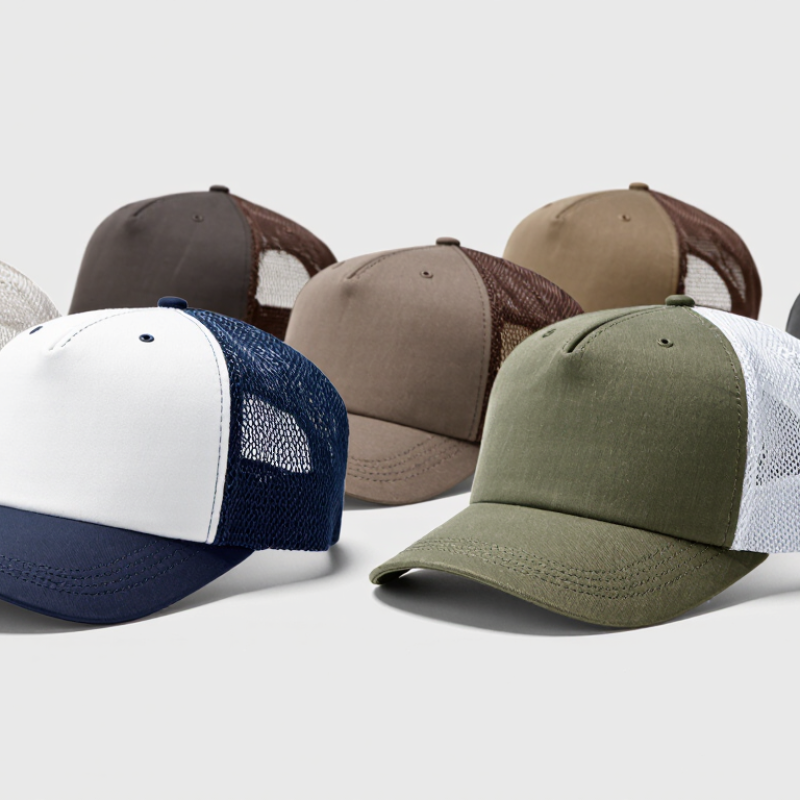
A trucker cap’s shape begins with its crown, front panels, and brim. Structured front panels hold their form and provide a clear area for embroidery or printing. Softer panels feel less rigid, but may crease during packing. The back usually uses mesh to encourage airflow, while the brim can be curved or left flatter. Small details matter.
Fit depends on more than the adjustable closure. Crown depth affects how low the cap sits, and a narrow sweatband can feel uncomfortable during long wear. Measure head circumference, then check the cap on different head shapes when developing a size range. An adjustment strap helps, but it cannot correct a crown that is too tall or too shallow.
Core features should work together: breathable mesh, secure panel seams, a stable brim, and a closure that adjusts smoothly. Inspect stitching around the brim and where mesh joins the fabric; these areas take regular strain. A cap can look balanced on a table yet feel awkward after an hour. That is easy to miss. Wear samples during movement, and note pressure points, heat, and whether the brim blocks useful vision.
In 2026, trucker caps are splitting into three clear style directions: classic mesh-back shapes, lightweight performance builds, and vintage-inspired color blocking. Buyers still value the familiar curved brim and airy rear panels, but small choices matter: deeper crowns suit some markets, while lower profiles feel easier to wear daily. Fit is not universal. That is easy to overlook.
Material decisions are becoming more important, too. Textile Exchange’s Materials Market Report 2024 estimates global fiber production reached 124 million tonnes in 2023, with polyester accounting for 57 percent. This is fiber-industry data, not a forecast for cap sales. Still, it helps explain why buyers are asking suppliers about recycled polyester mesh, fabric traceability, and durable trims. Claims should be checked against documentation; a recycled label alone says little about a finished cap’s full impact.
For global assortments, restrained earth tones can sit beside brighter two-tone panels and embroidered front patches. Performance versions may use quick-drying sweatbands and lighter fabric, while casual ranges benefit from sturdy mesh and clean stitching. Test samples in warm and humid conditions. A cap that looks sharp on a product sheet may feel stiff after several hours. That mismatch is real. Teams should compare crown depth, closure adjustment, and color consistency before confirming a bulk order.
Buyer overview of established trucker cap constructions and design options. Specifications shown are typical product characteristics, not market-share rankings; exact measurements vary by supplier and model.
| Style | Typical construction | Fit and ventilation | Common decoration options | Suitable buying applications | Sourcing considerations |
|---|---|---|---|---|---|
| Classic Foam-Front Trucker | Foam front panels, curved bill, and mesh rear panels; commonly finished with a snapback closure. | Structured front; ventilated back; adjustable fit across a range of head sizes. | Screen print, heat transfer, patch, or embroidery, depending on panel material and design. | Promotional programs, casual retail, events, and outdoor merchandise. | Check foam density, mesh feel, front-panel shape, color consistency, and closure durability. |
| Cotton-Front Trucker | Cotton or cotton-blend front panels combined with a mesh back and a curved or moderately curved bill. | Structured or lightly structured front; breathable mesh back; adjustable closure is common. | Flat or raised embroidery, woven patches, and printed front-panel artwork. | Lifestyle collections, team merchandise, workwear, and everyday casual wear. | Confirm fabric composition, colorfastness, shrinkage expectations, and embroidery backing. |
| Low-Profile Trucker | Lower crown with a softer or lightly structured front, mesh rear panels, and a curved bill. | Closer-to-head silhouette; mesh supports airflow; adjustable closures are widely used. | Small embroidery, compact patches, and restrained front-panel graphics. | Casual retail assortments and buyers seeking a less tall crown profile. | Request crown-height measurements and fit samples; “low profile” is not standardized across suppliers. |
| High-Crown Trucker | Tall, structured front panels, mesh back, and a curved or flat bill. | More vertical front-panel space; adjustable closure is common; fit depends on crown shape. | Large embroidery, prominent patches, and bold printed artwork. | Statement headwear, promotional merchandise, and graphic-led collections. | Compare crown height, front-panel stiffness, bill profile, and on-head fit using physical samples. |
| Flat-Bill Trucker | Structured front, mesh rear, and a flat or nearly flat bill; often paired with a snapback closure. | Defined, angular silhouette; ventilated back; adjustable fit on many models. | Embroidered logos, patches, and high-contrast front graphics. | Streetwear-inspired ranges, youth-oriented collections, and event merchandise. | Specify bill shape and stiffness clearly; check that the bill remains consistent between production units. |
| Recycled-Material Trucker | May use recycled polyester fabric or mesh; panel combinations and bill materials vary by product. | Usually retains the familiar mesh-back construction; fit depends on the chosen crown and closure. | Embroidery, patches, and transfers compatible with the selected material. | Collections with material-traceability or recycled-content requirements. | Request documentation for recycled-content claims and confirm whether each component is included. |
| Performance Trucker | Lightweight woven front fabric with mesh panels; some models add moisture-managing or quick-drying materials. | Ventilated back; commonly offered with an adjustable closure and a curved bill. | Lightweight embroidery, heat-applied graphics, or low-bulk patches. | Outdoor activities, sports-related merchandise, and warm-weather use. | Verify fabric performance claims, wash-care instructions, ventilation details, and decoration compatibility. |
| Rope-Detail Trucker | Mesh-back cap with a decorative cord across the front of the crown, typically above the bill. | Available in different crown heights and bill shapes; ventilation comes from the mesh rear panels. | Small embroidery, patches, or simple front graphics that leave room for the cord detail. | Golf-inspired, resort, and casual lifestyle assortments. | Check cord placement, attachment strength, color matching, and clearance from the decoration area. |
Specification note: Crown profile, panel materials, bill shape, closure, and decoration method are configurable. Buyers should confirm final measurements, material composition, testing requirements, and samples with their supplier before placing an order.
For 2026, trucker cap choices are less about one “best” fabric and more about how materials work together. Textile Exchange’s Materials Market Report 2024 estimates that global fiber production reached 124 million tonnes in 2023, with polyester accounting for 57 percent. That scale makes recycled polyester mesh and lining worth considering, but a recycled label alone says little about a cap’s durability. Check mesh recovery after squeezing, seam strength, and whether the sweatband feels comfortable against skin. Small test. A stiff front panel holds embroidery neatly; a softer cotton blend gives a more relaxed, worn-in shape.
Color choices are becoming more practical, too. Charcoal, sand, navy, and muted green pair easily with seasonal collections, while a contrasting bill or mesh adds a visible detail without changing the whole palette. Ask for a physical swatch: “olive” can shift from dusty green to bright khaki under different lighting. The Ellen MacArthur Foundation’s 2017 report, A New Textiles Economy, found clothing utilization fell 36 percent between 2000 and 2015. Though it concerns clothing broadly, the finding is a useful reminder: caps should be made for repeated wear, not just a product photograph. Reinforced stitching at the bill, washable sweatbands, and replaceable snap closures can extend use. Still, extra components may complicate repair, so simpler construction can sometimes be the better choice.
2026 Top Trucker Cap Styles for Global Buyers
For brands and wholesale buyers, a trucker cap’s details can make a standard style feel purpose-built. Choose mesh color, crown profile, brim shape, and snapback closure to suit the intended audience. Embroidery works well for bold marks; woven labels offer a quieter finish. Pantone references can help suppliers match colors, though fabric and lighting may shift the final shade. Approve a physical sample before confirming bulk production.
Personalization also has commercial relevance. McKinsey & Company’s 2021 report, The value of getting personalization right—or wrong—is multiplying, found that 71% of consumers expected personalized interactions, while 76% felt frustrated when they did not receive them. These figures cover consumer experiences broadly, not caps specifically. Still, they support offering clear choices, such as colorways or discreet label placement. Too many options can slow sampling. I’ve seen a detailed spec sheet become harder to use than a simple sample review.
Tips: Keep artwork in vector format and confirm stitch size, placement, and thread colors on a sample. Ask for measurements and packing details in writing. Start with a small range of options. It is easy to over-customize.
Customization Options for Brands and Wholesale Buyers
The bars show the number of sewn panels in each cap construction, not sales, popularity, or market share. Panel layout can affect the available space for front decoration; buyers can also discuss options such as fabric, mesh, closure, bill finish, and embroidery or printing with their supplier.
Compare trucker caps by climate, wear duration, and retail setting—not by color alone. In hot, humid markets, open mesh backs can improve airflow, while dense foam fronts may feel warm during long outdoor wear. For cooler regions, commuting, or promotional use, structured crowns offer a crisp display surface and hold their shape. Fit is easy to underestimate. Head circumference, crown depth, and adjustable closure range should be checked against local customer preferences before ordering.
Use cases matter too. The Outdoor Industry Association’s 2024 Outdoor Participation Trends Report counted 175.8 million U.S. outdoor participants in 2023, representing 57.3% of the population. That figure supports demand for caps suited to outdoor wear, but it is U.S.-specific; buyers should not treat it as a global forecast. For trail use, test sweatband comfort and stitching after repeated wear. For retail gifting, weigh decoration space against packability.
Material choices deserve similar scrutiny. Textile Exchange’s Materials Market Report 2024 estimated global fiber production at 124 million tonnes in 2023, with polyester accounting for 57%. When comparing mesh and panels, ask suppliers for fiber composition and documented recycled-content claims. A lower price can hide inconsistent sizing or weak seams. Samples help, though one sample cannot represent every production batch.
„Thanks to the LUVIR technology, the solder resist process could be switched directly from the previously used mask exposure to direct exposure. As an outstanding digital solution on the market, this technology has been able to demonstrate fast process times and superior quality on our certified conventional ink in production. This allowed us to fully digitize the solder mask process at low cost – without process or ink adjustments. An excellent benefit to our production in Rot am See.“
Ralf Göhringer (Head of Production WE Rot am See)
I would definitely recommend the Limata machine and team for a future company purchase
Michael Greenaway
Compunetics Inc.
“The Limata ldi has been amazing!! Best thing we did was buy this machine”
Richard Brady
GM
Circuitlabs
“Since 2019, we have been running the Limata X1000 LDI system (including LUVIR for solder mask imaging) in daily production as an addition to our current process with film. The machine was capable of properly exposing Taiyo PSR-4000 BN (DI) solder mask types on normal to high-copper boards using a new and unique direct imaging process. The machine operating interface is very user friendly which allowed for a quick technical training curve. The pre-registration processing reduced several seconds of production time at every print. Limata support and service staff is incomparable. They supported our team every step of the way at basically any time of the day or night, with literally, an immediate response time, customizing the software interface to best fit our Operations and needs.
We have exposed more than 8,000 prints since end of October, on various solder mask colors and some resist film panels. Limata, has proven to be very capable and innovative. They are a strong contender in the industry.
We have very much enjoyed this project, and working with the team!
Thank you Limata for the continued support and being a part of our growth.”
Bill Sezate
Vice President, GM
Summit Interconnect
As a replacement to our current contact exposure process with film, the LIMATA X2000 system including LUVIR-Technology was capable of properly exposing non-LDI solder mask types using a direct imaging process. The machine offers cutting edge software with a very intuitive operating interface which allowed for quick technician training curve. The dual drawer system combined with pre-registration processing reduced several seconds of production time at every machine cycle. Limata support and service staff is world class. They added software patches to keep production running at shortest possible response times, customized the software interface to best fit our in-house Operations system, and even wrote a step-by-step machine processing manual. As a result of the project, we have exposed more than 16,000 times on various product types and solder mask brands/colors. Limata, in a very short timeframe as a company, has definitely shown they are truly innovative and will be challenging the industry of direct imaging for the top spot.
Kevin Beattie
Process Engineer
TTM Technologies
Forest Grove Division
