Choosing a Zebra Blind Mechanism Manufacturer is about more than comparing prices. For global buyers, the mechanism must move smoothly, hold the fabric evenly, and remain dependable through repeated daily use. A zebra blind pairs alternating sheer and opaque bands, so small alignment errors can show quickly. The clutch, control chain, tube, brackets, and bottom rail all affect the final result. Small details matter.
This guide introduces leading manufacturers serving different markets and project needs in 2026. It considers product range, customization, production capacity, quality controls, communication, and after-sales support. Buyers can also ask for material specifications, test reports, sample mechanisms, and clear lead-time estimates. These checks help turn broad claims into useful evidence. A neat product photo is not a durability test.
No single supplier will suit every order. One factory may offer competitive pricing but limited customization; another may provide motorized options with longer lead times. Even a polished catalog can leave practical questions unanswered. That deserves a second look. Before placing a large order, compare samples under real operating conditions and confirm that quoted specifications match the delivered components. The manufacturers featured here offer a starting point, not a substitute for careful supplier checks.
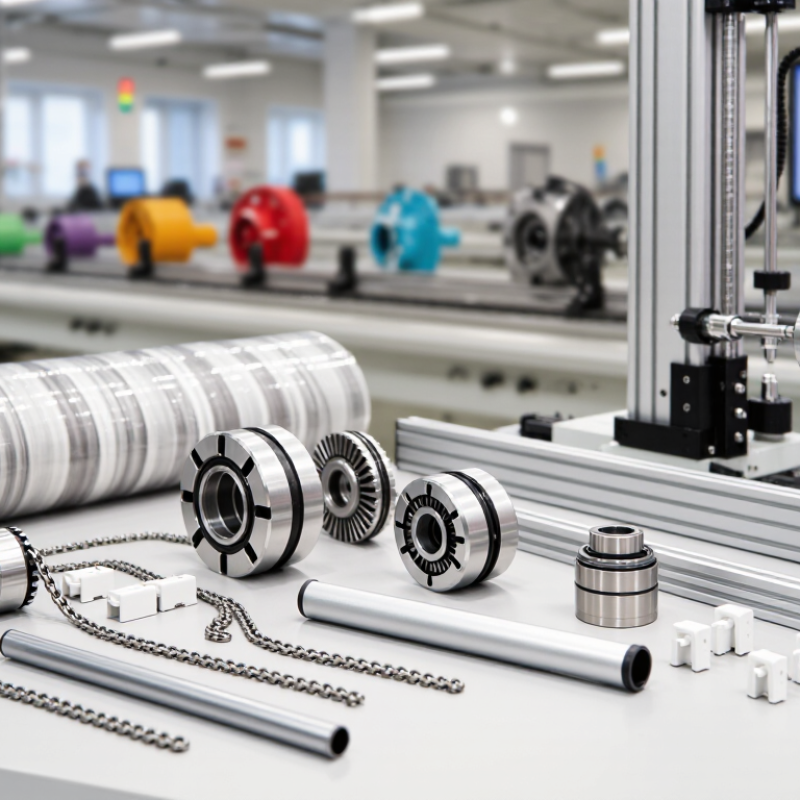
A zebra blind mechanism aligns two fabric layers, each carrying alternating sheer and opaque bands. Moving one layer shifts the bands from overlap to offset, changing how much daylight enters. The effect is visible in a practical detail: a narrow pull can turn a bright window into softened, filtered light. Not full darkness.
The roller tube holds the fabric and keeps its movement controlled. Its diameter, wall strength, and end supports matter, especially on wide windows where fabric can sag or track unevenly. A manual clutch translates chain movement into rotation; a motorized drive turns the tube electronically. Smooth travel matters. So does fabric alignment. A mechanism may look sturdy on a sample, yet perform differently across a wider span.
UNEP’s 2024 Global Status Report for Buildings and Construction estimates that buildings accounted for 32% of global energy demand and 34% of energy-related CO₂ emissions in 2023. That figure describes the building sector, not savings from zebra blinds. Still, it explains why buyers examine daylight control alongside durability and operation. Compare load ratings, tube dimensions, and tested cycle performance, not just appearance. One weak point remains: published specifications do not always show how quietly a drive runs after years of daily use.
A zebra blind mechanism should be specified by more than fabric width. Buyers should compare operating torque, tube diameter, and the complete moving load. The load includes fabric, the bottom rail, and resistance from brackets or alignment. A wide blind may feel noticeably heavier, even with lightweight fabric. Fit matters.
Manual systems use a chain drive or spring-assisted mechanism, and their torque rating should suit the blind’s size and operating feel. A chain drive needs enough reduction to lift the load without excessive pulling force. Check the tube diameter and drive insert together; a small mismatch can cause slipping or uneven rotation. Ask for rated limits, not just a general size range.
Motorized systems need a motor matched to both the tube and expected load. Confirm the motor’s rated torque, compatible tube diameter, and capacity for the blind’s width and drop. Also consider repeated operation, since friction can rise with poor alignment. A neat catalog table can still mislead. Request test data or a full-size sample when the application is unusual. That extra check may reveal noise, slow travel, or a bottom rail that settles unevenly.
For global buyers, zebra blind mechanism suppliers should be compared on repeatable output, not factory size alone. Grand View Research valued the global window coverings market at about US$30.73 billion in 2023 and forecast 7.6% annual growth through 2030. That expansion makes dependable replenishment important. Ask manufacturers for monthly output specifically for zebra mechanisms, lead times at peak season, and evidence of recent shipments. A large total workforce proves little.
Quality control needs measurable checkpoints. Request inspection records for clutch torque, tube alignment, chain operation, and cycle testing. Check how defects are logged and whether corrective actions are documented. ISO 9001 certification can indicate a formal quality system, but it does not guarantee a mechanism will perform well in your blind assembly. Test samples under your own fabric weight and operating conditions. A polished sample can still hide batch variation.
Export reach is more than a list of destinations. The WTO’s 2024 Global Trade Outlook reported that merchandise trade volume fell 1.2% in 2023, while forecasting 2.6% growth for 2024. Such swings make shipping flexibility and clear delivery records worth checking. Compare export markets served, packaging suited to long-distance transit, and the supplier’s ability to provide spare parts. Ask for shipment references and on-time delivery data. Some figures may be self-reported; verify them with a small trial order.
A comparison framework for evaluating capacity, quality control, and export reach. Manufacturer-level scores are not shown because no standardized, independently verified dataset is provided here.
Compare suppliers using documented production capacity, audited quality procedures, and shipment records. Request current evidence directly from each manufacturer before making purchasing decisions.
For zebra blinds, safety review should cover the complete assembly, not just the operating mechanism. Check whether test documents identify ANSI/WCMA A100.1-2022 and EN 13120:2009+A1:2014, and confirm they match the exact blind configuration offered. The standards address hazards associated with cords and operation, but their scope and market use differ. Ask for test reports showing cord or chain arrangements, product dimensions, installation method, and any safety devices. A report for a similar model is not enough. Small details matter.
The risk is documented. The U.S. Consumer Product Safety Commission reported that at least 200 children aged eight or younger died in window-covering-cord strangulation incidents from 1986 through 2019, with nearly 100 additional near-strangulations (CPSC, 2022). For buyers, that makes traceable evidence more useful than a general “compliant” claim. Verify the standard edition, testing laboratory, report date, and whether production units match the tested sample. For EN 13120, check the stated installation conditions and child-safety provisions for the destination market. Paperwork can still miss a real-world issue: inspect how cords hang after installation, especially beside beds or reachable furniture.
Use this supplier-evaluation table to compare manufacturers without relying on unverified rankings or claims. Request evidence for the exact mechanism, blind configuration, and destination market; a standard reference alone does not establish product compliance.
| Evaluation dimension | What to check for a zebra blind mechanism | Evidence to request | Buyer assessment |
|---|---|---|---|
| Applicable safety standard | Confirm which requirements apply to the finished window covering and its operating system in each destination market. ANSI/WCMA A100.1-2022 addresses safety of corded window covering products; EN 13120:2009+A1:2014 covers performance requirements, including safety, for internal blinds. | A written compliance statement identifying the standard edition, product model or configuration, market, and test basis. | Do not treat a general catalogue statement or a mechanism-only claim as proof that the complete blind complies. |
| Operating method | Identify whether the blind is cord-operated, chain-operated, spring-operated, motorized, or uses another control method. Safety obligations can depend on the product design and market rules. | Mechanism drawings, control-system description, and the proposed finished-product configuration. | Compare like-for-like configurations; do not assume a motorized option makes every other component compliant. |
| Safety test documentation | Check that testing covers the relevant blind assembly and safety features, rather than only a component unrelated to the finished installation. | A complete test report or other market-appropriate technical evidence, with model identification, test date, standard edition, and tested configuration. | Confirm that the report matches the product being quoted and is applicable to the intended market. |
| Cord and chain risk controls | For products with accessible cords or chains, verify the supplied design, safety devices, installation instructions, and warnings against the applicable requirements. | Photos or drawings of the complete control system, included safety devices, and product-specific installation and user instructions. | Check the delivered product and packaging; safety accessories should not be treated as optional if required for the specified configuration. |
| Product identification and traceability | Check that the supplier can consistently identify the mechanism version, compatible components, and finished-product configuration. | Model codes, revision history, technical data sheets, and lot or production traceability information. | Verify that approved test evidence and supplied goods refer to the same model and revision. |
| Installation and user information | Review whether instructions clearly cover mounting, operation, maintenance, and any safety-related installation steps for the supplied system. | Current instructions and warnings in the languages required for the target market. | Check that instructions correspond to the actual control type and accessories included in the order. |
| Change control | Ask how changes to the mechanism, control, components, or assembly are reviewed when compliance evidence exists for an earlier configuration. | Documented change-notification process and confirmation of whether a change affects existing test evidence. | Request updated documentation before accepting a materially changed product. |
| Market and edition verification | Confirm the applicable national or regional rules and accepted standard editions for the sales destination at the time of purchase. | Destination-specific compliance documentation and confirmation from the importer, conformity specialist, or relevant authority when needed. | Standards and legal requirements can differ by market and may change; verify current obligations rather than relying solely on this table. |
When evaluating zebra blind mechanism manufacturers, treat ISO 9001:2015 as evidence of a managed quality system, not proof that every mechanism will last. Ask for the current certificate, issuing body, covered site, and scope. Confirm that the scope includes production or design relevant to the mechanism. Small detail, big difference. A certificate for another factory may not show how your order is controlled.
Request cycle-life reports tied to the exact mechanism configuration. A useful report states sample count, fabric and tube load, operating speed, test environment, cycle definition, and failure criteria. Look for repeated raise-and-lower cycles, with notes on clutch wear, uneven movement, or slippage. Numbers without conditions are hard to compare. Ask whether testing used regular production samples or hand-selected prototypes.
Compare the test setup with your installation: width, drop, fabric weight, and daily use can change stress on the clutch and chain. Ask how nonconforming units are recorded, corrected, and retested. A recent batch inspection record can add useful context. This is not perfect. Lab cycles cannot reproduce every dusty window or hurried pull, and suppliers may use different fixtures. Keep those gaps visible in your sourcing notes; a clear limitation is more useful than a polished claim.
„Thanks to the LUVIR technology, the solder resist process could be switched directly from the previously used mask exposure to direct exposure. As an outstanding digital solution on the market, this technology has been able to demonstrate fast process times and superior quality on our certified conventional ink in production. This allowed us to fully digitize the solder mask process at low cost – without process or ink adjustments. An excellent benefit to our production in Rot am See.“
Ralf Göhringer (Head of Production WE Rot am See)
I would definitely recommend the Limata machine and team for a future company purchase
Michael Greenaway
Compunetics Inc.
“The Limata ldi has been amazing!! Best thing we did was buy this machine”
Richard Brady
GM
Circuitlabs
“Since 2019, we have been running the Limata X1000 LDI system (including LUVIR for solder mask imaging) in daily production as an addition to our current process with film. The machine was capable of properly exposing Taiyo PSR-4000 BN (DI) solder mask types on normal to high-copper boards using a new and unique direct imaging process. The machine operating interface is very user friendly which allowed for a quick technical training curve. The pre-registration processing reduced several seconds of production time at every print. Limata support and service staff is incomparable. They supported our team every step of the way at basically any time of the day or night, with literally, an immediate response time, customizing the software interface to best fit our Operations and needs.
We have exposed more than 8,000 prints since end of October, on various solder mask colors and some resist film panels. Limata, has proven to be very capable and innovative. They are a strong contender in the industry.
We have very much enjoyed this project, and working with the team!
Thank you Limata for the continued support and being a part of our growth.”
Bill Sezate
Vice President, GM
Summit Interconnect
As a replacement to our current contact exposure process with film, the LIMATA X2000 system including LUVIR-Technology was capable of properly exposing non-LDI solder mask types using a direct imaging process. The machine offers cutting edge software with a very intuitive operating interface which allowed for quick technician training curve. The dual drawer system combined with pre-registration processing reduced several seconds of production time at every machine cycle. Limata support and service staff is world class. They added software patches to keep production running at shortest possible response times, customized the software interface to best fit our in-house Operations system, and even wrote a step-by-step machine processing manual. As a result of the project, we have exposed more than 16,000 times on various product types and solder mask brands/colors. Limata, in a very short timeframe as a company, has definitely shown they are truly innovative and will be challenging the industry of direct imaging for the top spot.
Kevin Beattie
Process Engineer
TTM Technologies
Forest Grove Division