A Truck Wheel is not a cosmetic upgrade. It carries heavy loads, faces potholes and road salt, and must match the truck’s hub, brake clearance, and operating demands. A wheel that looks right can still be wrong. Small details matter.
The U.S. Department of Energy’s vehicle lightweighting guidance estimates that a 10% reduction in vehicle weight can improve fuel economy by about 6% to 8%. That is a general estimate, not a guaranteed result for a truck-wheel change. Wheel weight is only one factor; load capacity, material, tire compatibility, and maintenance also shape performance. The DOE figure is useful context, but it should not replace vehicle-specific specifications.
This guide examines seven practical checks for global buyers: fitment, load rating, materials, manufacturing quality, certification documents, supplier support, and total ownership cost. Check the stamped markings. Request traceable test records. Confirm replacement availability before placing a large order. A low unit price can become expensive when a wheel fails inspection or sits in transit. A reliable named Truck Wheel expert quotation was not provided or verifiable for this introduction, so no direct quote has been invented. That omission is deliberate; buyers deserve evidence, not borrowed authority.
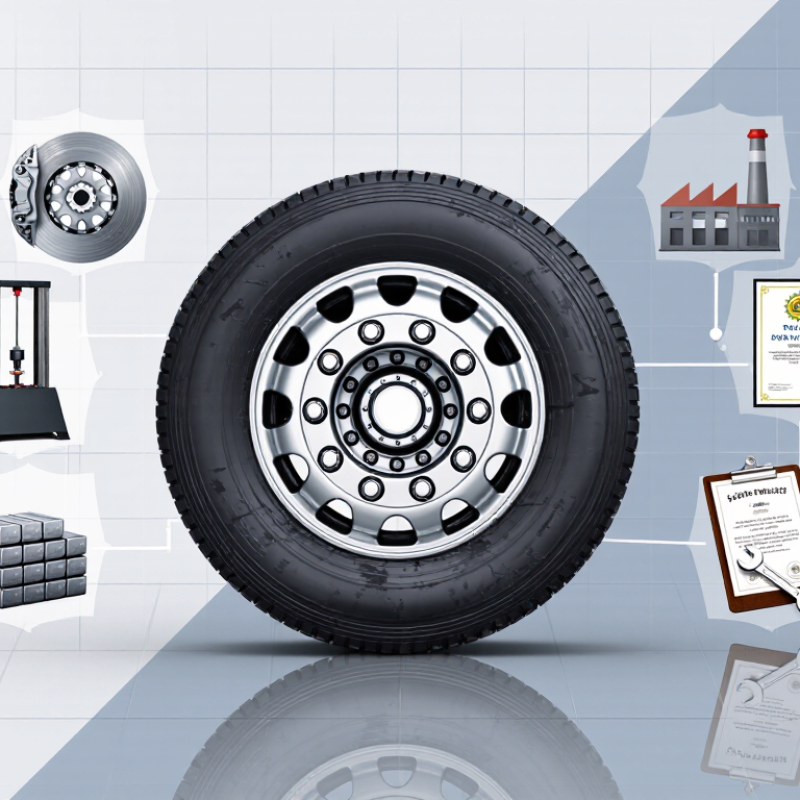
Before comparing truck wheels, define the work the vehicle will actually perform. A regional delivery truck making frequent stops faces different demands from a long-haul tractor or a quarry hauler. Record the heaviest expected axle load, typical payload, daily distance, and whether the truck runs with single or dual wheels. Check the axle and vehicle maker’s specifications, then compare them with measured, fully loaded axle weights. Gross vehicle weight alone can hide uneven loading. Small detail. It matters.
ATRI’s 2024 Operational Costs of Trucking report estimated average U.S. trucking costs at about $2.27 per mile in 2023. That figure is not a wheel-cost forecast, but it shows why downtime and maintenance deserve attention during selection. Note the routes, too: potholes, gravel, curb strikes, steep grades, and repeated braking can all change service demands. In coastal or winter operations, moisture and road treatments may also affect corrosion risk. Ask suppliers for documented wheel load ratings, material and finish details, and fitment dimensions—not just a model description. One assumption deserves a second look: a wheel suited to a truck’s usual load may not suit its occasional peak load. Check the real duty cycle, including those peak days.
7 Truck Wheel Buying Tips for Global Buyers
Matching a truck wheel starts with the exact size, not a visual guess. Check the wheel diameter and width against the vehicle or axle documentation. A wheel that looks close may still contact a brake component or sit poorly under load. Small differences matter. Record the tire size too, since tire and wheel dimensions must work together.
Tip: Confirm the bolt pattern by counting the holes and measuring their spacing with the correct method for that pattern. Then check the center bore against the hub diameter. A wheel with an unsuitable bore may not center correctly. Offset also deserves attention: it affects how far the wheel sits inward or outward, which can change clearance around suspension parts and fenders. Do not rely on a supplier’s “fits most trucks” description.
Before ordering, compare every measurement with the truck’s service information, and ask a qualified wheel or fleet professional to verify uncertain figures. Also confirm the wheel’s load rating meets the vehicle’s axle requirements. It is easy to assume matching bolt holes mean a safe fit; they do not. Keep the measurements in writing, including units, because millimeters and inches are sometimes mixed in product listings. That detail is easy to overlook.
| Buying Check | Why It Matters | What to Verify | Practical Buying Tip |
|---|---|---|---|
| 1. Match wheel diameter and width | The wheel must work with the specified tire size and fit within the vehicle’s available clearance. | Confirm the wheel diameter and width against the vehicle or axle manufacturer’s specifications and the intended tire’s approved rim-width range. | Do not rely on the old wheel’s appearance alone; check the vehicle placard, service information, or original equipment specification. |
| 2. Confirm the bolt pattern | The number of mounting holes and the diameter of their circle must match the hub. | Check both the number of studs or holes and the bolt-circle diameter. For example, a 10-hole pattern is not enough information without its circle diameter. | Request the complete pattern specification and confirm it against the exact axle or vehicle configuration. |
| 3. Check wheel offset and backspacing | These dimensions affect wheel position, tire clearance, and the relationship between the wheel and suspension or body. | Verify the specified offset, usually expressed in millimetres, and any required backspacing. Confirm the reference face used for the measurement. | Compare with the approved specification; changing wheel position can create clearance or handling issues. |
| 4. Match the hub interface | The wheel’s centre opening and mounting face must seat correctly on the hub for the specified fitment. | Confirm centre-bore or hub-pilot diameter, mounting-face design, and whether the wheel is hub-piloted or stud-piloted. | Do not treat hub-piloted and stud-piloted systems as interchangeable. Check the specified fastener type and seating style as well. |
| 5. Verify load rating and application | Each wheel must be suitable for the loads imposed by the vehicle and its operating conditions. | Check the wheel’s rated load against the applicable axle loads and vehicle requirements. Also confirm tire capacity and local regulations. | Use the rating for the exact wheel specification; do not assume that wheels of the same size have the same load capacity. |
| 6. Check material, construction, and service needs | Wheel construction can affect weight, durability, maintenance, and suitability for the intended duty cycle. | Confirm whether the wheel is steel or aluminum, its construction and finish, and any maintenance or inspection requirements. | Choose based on the vehicle’s work environment, service requirements, and approved specifications rather than appearance alone. |
| 7. Confirm documentation and exact fitment | Truck specifications can vary by model year, axle, market, and configuration, so a general size match may not be sufficient. | Provide the vehicle or axle details and request a drawing or specification sheet listing size, bolt pattern, offset, hub dimensions, fasteners, and load rating. | Before ordering, confirm the final specification in writing and check any applicable import, certification, and road-use requirements. |
Truck wheel choice is a trade-off between material, construction, and payload. Steel wheels generally tolerate dents and are easier to repair; aluminum wheels weigh less but need careful inspection for cracks and corrosion. The U.S. Department of Energy’s Vehicle Technologies Office reports that a 10% reduction in vehicle weight can improve fuel economy by roughly 6–8%. That figure is not a promise for every truck or wheel change. A lighter wheel is not automatically better.
Tips: Compare the stamped load rating with the truck’s axle rating and the tire’s required capacity. Check bolt pattern, offset, rim width, and brake clearance before ordering. The U.S. National Highway Traffic Safety Administration’s FMVSS No. 120 addresses tire and rim selection for many heavy vehicles; buyers should also confirm the applicable market’s requirements. Ask for documented test results, not just a seller’s claim. Small details matter.
For construction, inspect welds, mounting faces, and valve areas; these see real stress on rough roads. Forged and cast aluminum are not interchangeable in strength or price, while steel designs vary too. Compare the wheel’s rated load per wheel against the heaviest expected axle load, with a suitable margin. One detail is easy to miss: a high load rating cannot fix poor fitment. Records can be incomplete, so verify specifications with the supplier and a qualified technician before purchase.
Before ordering truck wheels, confirm that the test standard matches the wheel type, load rating, and destination market. Ask for the full test report, not only a certificate cover page. Check the tested sample’s dimensions, rated load, impact or fatigue results, and report date. A wheel’s markings should match its documents. Small gaps matter.
CVSA’s 2023 International Roadcheck reported 59,026 commercial vehicle inspections, with 19,687 vehicles placed out of service for vehicle violations. This figure covers many defect types; it is not a wheel-failure rate. Still, it shows why documented checks matter. Ask suppliers to link each wheel batch to its material records, production date, inspection results, and test samples. Keep the records.
For traceability, compare the batch code stamped on the wheel with the packing list and test documents. Check that coating, weld, and dimensional inspections identify the same production lot. If a report covers only one sample, ask how later batches are controlled. A tidy certificate can still leave unanswered questions. I would not treat paperwork alone as proof: request clear photos of markings and retain records for incoming inspection.
A low unit price does not prove that a truck wheel supplier is dependable. Ask for recent inspection records, material specifications, and clear answers about load ratings and dimensions. Check that drawings match your vehicle requirements, including bolt pattern and offset. Small details matter. A supplier that responds promptly and flags unclear specifications may be easier to work with than one offering the fastest delivery estimate. Still, polished documents alone are not proof; verify key details before placing a large order.
Compare landed cost, not just the wheel price. Include packaging, inland transport, ocean or air freight, insurance, customs duties, brokerage, and destination handling charges. Request a written quotation that names the currency, quantity, validity period, and included services. One common oversight is port storage: a delayed document or pickup can add charges quickly. Not always obvious. Ask the forwarder who pays each fee and when payment is due.
Read the shipping term beside the named port or destination. Under FOB, for example, buyers generally arrange main carriage after loading; under DAP, delivery reaches the agreed place, but import clearance and duties typically remain the buyer’s responsibility. Confirm the exact allocation in the contract, since wording and local procedures can differ. Request carton dimensions, gross weight, pallet details, and estimated shipment dates. These figures help your forwarder check capacity and provide a more realistic delivery plan. A small trial shipment can reveal packaging or communication problems, though it may cost more per wheel.
Compare key purchasing considerations using an illustrative 1–5 evaluation score. Scores are a planning example, not supplier ratings.
How to use it: Verify load ratings and technical specifications against your vehicle requirements, assess supplier quality documentation, and calculate landed cost—including product price, freight, insurance, duties, and other import charges. Confirm the applicable Incoterms® rule, shipping route, packaging, lead time, and after-sales arrangements before placing an order.
„Thanks to the LUVIR technology, the solder resist process could be switched directly from the previously used mask exposure to direct exposure. As an outstanding digital solution on the market, this technology has been able to demonstrate fast process times and superior quality on our certified conventional ink in production. This allowed us to fully digitize the solder mask process at low cost – without process or ink adjustments. An excellent benefit to our production in Rot am See.“
Ralf Göhringer (Head of Production WE Rot am See)
I would definitely recommend the Limata machine and team for a future company purchase
Michael Greenaway
Compunetics Inc.
“The Limata ldi has been amazing!! Best thing we did was buy this machine”
Richard Brady
GM
Circuitlabs
“Since 2019, we have been running the Limata X1000 LDI system (including LUVIR for solder mask imaging) in daily production as an addition to our current process with film. The machine was capable of properly exposing Taiyo PSR-4000 BN (DI) solder mask types on normal to high-copper boards using a new and unique direct imaging process. The machine operating interface is very user friendly which allowed for a quick technical training curve. The pre-registration processing reduced several seconds of production time at every print. Limata support and service staff is incomparable. They supported our team every step of the way at basically any time of the day or night, with literally, an immediate response time, customizing the software interface to best fit our Operations and needs.
We have exposed more than 8,000 prints since end of October, on various solder mask colors and some resist film panels. Limata, has proven to be very capable and innovative. They are a strong contender in the industry.
We have very much enjoyed this project, and working with the team!
Thank you Limata for the continued support and being a part of our growth.”
Bill Sezate
Vice President, GM
Summit Interconnect
As a replacement to our current contact exposure process with film, the LIMATA X2000 system including LUVIR-Technology was capable of properly exposing non-LDI solder mask types using a direct imaging process. The machine offers cutting edge software with a very intuitive operating interface which allowed for quick technician training curve. The dual drawer system combined with pre-registration processing reduced several seconds of production time at every machine cycle. Limata support and service staff is world class. They added software patches to keep production running at shortest possible response times, customized the software interface to best fit our in-house Operations system, and even wrote a step-by-step machine processing manual. As a result of the project, we have exposed more than 16,000 times on various product types and solder mask brands/colors. Limata, in a very short timeframe as a company, has definitely shown they are truly innovative and will be challenging the industry of direct imaging for the top spot.
Kevin Beattie
Process Engineer
TTM Technologies
Forest Grove Division
