In the realm of advanced manufacturing, the Vacuum Brazing Furnace stands out as a pivotal technology. This furnace plays a crucial role in joining metal parts, especially in industries such as aerospace and automotive. A recent industry report by the International Vacuum Association notes a growth rate of 8% for vacuum brazing technology over the next five years. Such data underscores the significance of understanding this equipment in modern production environments.
Dr. Emily Carter, a renowned expert in metallurgical engineering, emphasizes, "The efficiency of a Vacuum Brazing Furnace directly impacts product quality." This assertion underscores the importance of these furnaces in ensuring durable and reliable metal joints. A vacuum environment eliminates oxidation, enhancing the bonding process.
However, utilizing vacuum brazing furnaces is not without challenges. Achieving optimal temperature control and maintaining the right vacuum levels require precision. Operators must balance these elements to avoid defects. The learning curve can be steep, and ongoing training is essential. The dynamics of operating a Vacuum Brazing Furnace are intricate, raising questions that often necessitate expert guidance. While the technology holds promise, the path to mastery is fraught with complexities that must be navigated.
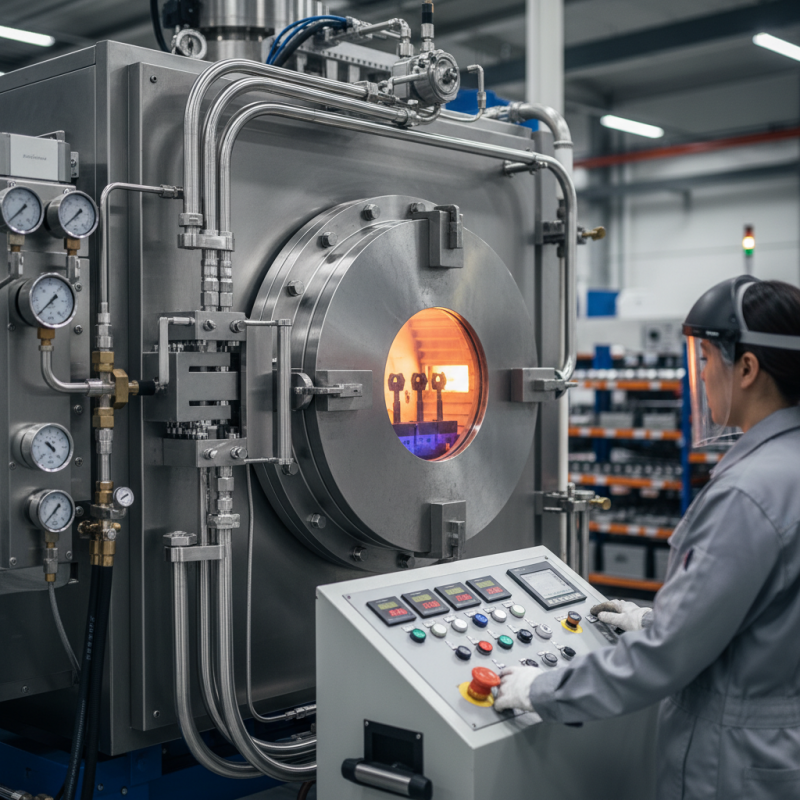
Vacuum brazing is a critical process in manufacturing, particularly in the aerospace and automotive industries. It involves joining metals using a filler material, in a vacuum environment. The absence of oxygen prevents oxidation and contamination, ensuring strong, durable bonds. This technique is crucial for components that must withstand extreme conditions.
The vacuum brazing process is efficient but requires precision. The temperatures often reach between 800 to 1200 degrees Celsius, depending on the materials involved. Industry reports indicate that proper temperature control can improve joint strength by up to 30%. Failure to maintain these conditions may lead to weak bonds, which can compromise the entire component.
While vacuum brazing has advantages, it is not without challenges. Equipment setup can be complex and costly. Additionally, maintaining a stringent vacuum during the process demands high operational discipline. Reports show that even minor fluctuations can lead to defects. Continuous monitoring and adjustments are vital to ensure optimal outcomes. This underscores the importance of expertise in executing vacuum brazing to meet industry standards.
Vacuum brazing furnaces are essential in various manufacturing processes, especially in the aerospace and automotive industries. These furnaces provide a controlled environment for the brazing process, ensuring strong and reliable joints between metal components. The key components of a vacuum brazing furnace are the vacuum chamber, heating elements, and cooling system.
The vacuum chamber is crucial for removing air and contaminants, allowing for better adhesion of solder materials. High-quality furnaces often achieve a vacuum level of 10^-3 torr, significantly improving the quality of joints formed. The heating elements, usually made of high-temperature alloys, are designed to reach temperatures of up to 1,200°C. This is vital for melting brazing alloys while avoiding the overheating of base metals. Lastly, the cooling system helps to rapidly reduce temperatures, which can enhance the mechanical properties of the brazed joint.
Tips: Regular maintenance of the furnace can prevent issues like uneven heating or vacuum leakage. Monitoring the vacuum level is essential; fluctuations can indicate leaks or inefficiencies. Additionally, using advanced control systems can provide real-time data, improving process reliability. However, operators may sometimes overlook these details, leading to production delays.
Overall, understanding these components and their functions can significantly enhance process efficiency and product quality in vacuum brazing. The industry's growth has been remarkable, with reports indicating an annual growth rate of approximately 8.5% in the vacuum brazing market.
Vacuum brazing is a crucial process in manufacturing and metal joining. It relies on controlled environments to reduce oxidation and contamination. The process involves heating metals in a vacuum to bond them using a filler material. This method is preferred in industries like aerospace and automotive, where precision is paramount.
During vacuum brazing, temperatures can reach up to 1200°C. The filler metal melts and flows into the joint between the base metals. Data from industry reports indicate that vacuum brazing can achieve joint strengths comparable to those of the parent metals. This reliability makes it a favored choice for complex assemblies. However, the technology faces challenges with creep resistance at elevated temperatures.
Despite its advantages, vacuum brazing is not without pitfalls. Ensuring a consistent vacuum level is critical. Any leaks can introduce contaminants that compromise the bond quality. Operators must also monitor the heating and cooling rates. These factors significantly affect the microstructure and performance of the final joint. Continuous advancements in technology are needed to address these challenges and improve efficiency.
Vacuum brazing furnaces are becoming increasingly popular in various industries, including aerospace, automotive, and electronics. These furnaces enable precise joining processes that improve product integrity and durability. Statistics show that adopting vacuum brazing can enhance joint strength by up to 30%. This is a significant consideration for manufacturers aiming to meet stringent quality standards.
One of the main advantages of using a vacuum brazing furnace is its ability to eliminate oxidation during the brazing process. Oxidation can weaken joints and compromise the overall reliability of components. The controlled environment of a vacuum furnace provides consistent temperature management, which facilitates a uniform flow of braze material. Industry reports emphasize that this capability reduces defects, leading to lower rejection rates and saving costs.
Yet, relying on vacuum brazing is not without challenges. Maintaining optimal settings requires extensive expertise and precise monitoring. A small error can lead to bonding failures, affecting production timelines. Thus, while vacuum brazing furnaces can offer remarkable benefits, manufacturers should invest in training and experience to fully leverage their potential. Balancing efficiency and quality remains an ongoing concern in the field.
Vacuum brazing is a key process in many industries, providing strong joints for complex assemblies. The aerospace, automotive, and medical sectors rely heavily on this technology. In aerospace, for instance, the need for lightweight and durable components is critical. Reports indicate that the aerospace industry is expected to grow by 5% annually, increasing the demand for vacuum-brazed components.
In the automotive sector, manufacturers use vacuum brazing to achieve high-performance assemblies. According to recent data, 60% of automotive suppliers prefer vacuum brazing for its reliability and efficiency. This method allows for the joining of dissimilar metals, essential for modern vehicle designs. Yet, some companies still struggle with the initial setup costs. Those costs can be a barrier for smaller firms looking to innovate.
In the medical field, vacuum brazing ensures sanitary and robust product designs. It plays a vital role in the manufacturing of surgical instruments and implants. Industry reports highlight a growing trend toward using vacuum-brazed products to enhance safety and performance. However, maintaining consistent quality can be challenging, requiring ongoing investment in technology and training.
„Thanks to the LUVIR technology, the solder resist process could be switched directly from the previously used mask exposure to direct exposure. As an outstanding digital solution on the market, this technology has been able to demonstrate fast process times and superior quality on our certified conventional ink in production. This allowed us to fully digitize the solder mask process at low cost – without process or ink adjustments. An excellent benefit to our production in Rot am See.“
Ralf Göhringer (Head of Production WE Rot am See)
I would definitely recommend the Limata machine and team for a future company purchase
Michael Greenaway
Compunetics Inc.
“The Limata ldi has been amazing!! Best thing we did was buy this machine”
Richard Brady
GM
Circuitlabs
“Since 2019, we have been running the Limata X1000 LDI system (including LUVIR for solder mask imaging) in daily production as an addition to our current process with film. The machine was capable of properly exposing Taiyo PSR-4000 BN (DI) solder mask types on normal to high-copper boards using a new and unique direct imaging process. The machine operating interface is very user friendly which allowed for a quick technical training curve. The pre-registration processing reduced several seconds of production time at every print. Limata support and service staff is incomparable. They supported our team every step of the way at basically any time of the day or night, with literally, an immediate response time, customizing the software interface to best fit our Operations and needs.
We have exposed more than 8,000 prints since end of October, on various solder mask colors and some resist film panels. Limata, has proven to be very capable and innovative. They are a strong contender in the industry.
We have very much enjoyed this project, and working with the team!
Thank you Limata for the continued support and being a part of our growth.”
Bill Sezate
Vice President, GM
Summit Interconnect
As a replacement to our current contact exposure process with film, the LIMATA X2000 system including LUVIR-Technology was capable of properly exposing non-LDI solder mask types using a direct imaging process. The machine offers cutting edge software with a very intuitive operating interface which allowed for quick technician training curve. The dual drawer system combined with pre-registration processing reduced several seconds of production time at every machine cycle. Limata support and service staff is world class. They added software patches to keep production running at shortest possible response times, customized the software interface to best fit our in-house Operations system, and even wrote a step-by-step machine processing manual. As a result of the project, we have exposed more than 16,000 times on various product types and solder mask brands/colors. Limata, in a very short timeframe as a company, has definitely shown they are truly innovative and will be challenging the industry of direct imaging for the top spot.
Kevin Beattie
Process Engineer
TTM Technologies
Forest Grove Division
