A Battery Energy Storage System stores electrical energy and releases it when demand, prices, or renewable generation changes. It commonly combines battery modules, inverters, a battery management system, cooling equipment, sensors, and protective controls. Together, these components manage energy safely and efficiently.
Picture a solar farm producing excess power at noon. The system can capture that electricity and deliver it after sunset, when homes and businesses still need reliable supply. In a factory, it may reduce short demand spikes or support essential equipment during a grid interruption. Its value depends on capacity, power rating, response time, operating temperature, and installation conditions.
The technology is useful, but it is not a perfect solution. Battery cells gradually lose capacity, and poor thermal control can shorten service life. A credible assessment must examine energy needs, local weather, maintenance access, fire protection, software controls, and end-of-life planning. Manufacturer data helps, but independent engineering review remains important. Numbers on a brochure may not reflect real performance after years of cycling.
This guide explains how a Battery Energy Storage System works, where it fits, and what limitations deserve attention. It also considers common battery chemistries, system sizing, safety practices, efficiency losses, and operating costs. Practical experience shows that oversized systems can waste capital, while undersized systems may disappoint users. The right design is rarely based on battery capacity alone. It must match actual load patterns, renewable output, grid conditions, and long-term operational goals. That is the part many introductions overlook.
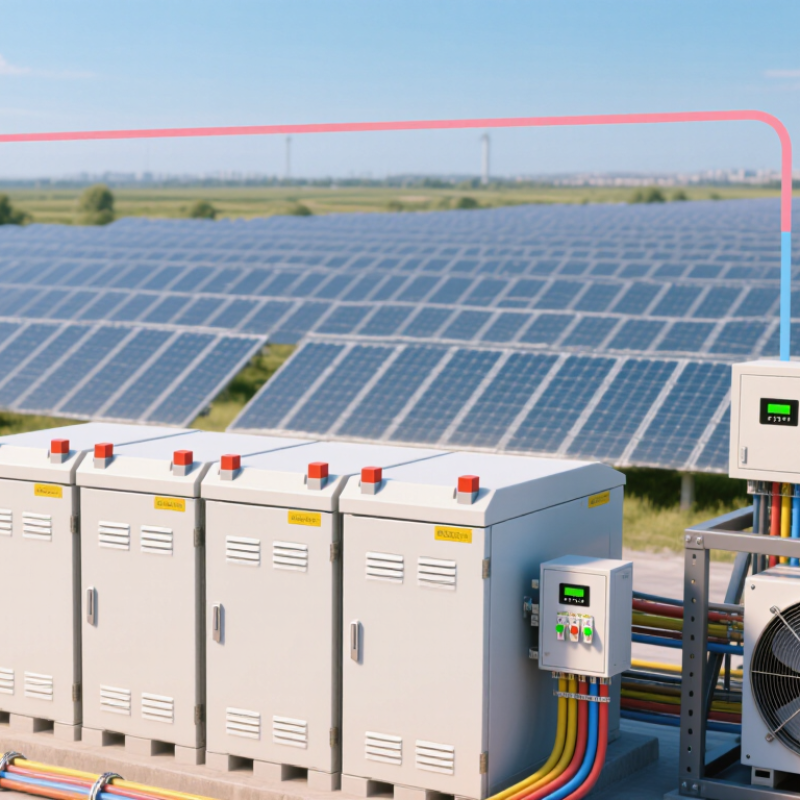
What Is a Battery Energy Storage System?
A battery energy storage system stores electricity for later use. It usually includes battery cells, inverters, controls, cooling equipment, and safety devices. The system charges when electricity is available or affordable. It discharges when demand rises, power fails, or renewable generation drops. Think of it as a carefully managed reservoir of electrical energy. However, it is not a simple box of batteries. Temperature, charging speed, battery age, and installation conditions all affect performance. A professional assessment should examine these details before selecting system capacity.
In practical use, a battery system can support homes, factories, hospitals, and renewable energy projects. It may reduce peak demand and improve power reliability. Some systems respond within milliseconds, helping stabilize voltage and frequency. Yet storage does not create energy. It only shifts energy through time, and every cycle causes gradual capacity loss. This point is often overlooked. A system can also perform below its advertised capacity in cold weather or during poor maintenance. Clear monitoring data matters.
Tips
Check usable capacity, not only the battery’s total capacity. Ask how the system performs at high and low temperatures. Review ventilation, fire protection, emergency shutdowns, and maintenance access. Keep records of charging cycles and performance changes. Do not size the system from average electricity use alone; short demand peaks can change the design significantly. A smaller system may seem cheaper, but it might fail during the moments that matter most.
What Is a Battery Energy Storage System?
How Battery Energy Storage Systems Work
A battery energy storage system stores electricity for later use. It usually combines battery cells, a battery management system, an inverter, cooling equipment, and safety controls. During charging, the inverter converts alternating current into direct current. Battery cells then hold energy through chemical reactions. During discharge, the process reverses. The inverter sends usable alternating current to buildings, renewable generators, or the grid.
The controls matter as much as the cells. A battery management system monitors voltage, temperature, and state of charge. It can isolate a weak module before damage spreads. Thermal systems remove heat during rapid charging or high-power discharge. The International Energy Agency reported about 42 gigawatts of battery storage additions worldwide in 2023, more than doubling the previous year. That growth reflects real grid needs, not only a technology trend. IRENA estimates modern battery systems can achieve roughly 85–95% round-trip efficiency, although actual performance depends on temperature, operating limits, and aging.
Batteries respond quickly.
When solar production falls, the system can discharge within milliseconds. Grid operators use this response for frequency control, peak reduction, and backup power. Yet stored energy is not unlimited. Repeated cycling gradually reduces capacity, and poor forecasting can leave a system empty during a longer outage. Safety design also requires spacing, monitoring, ventilation, and carefully managed shutdown procedures. The U.S. Department of Energy identifies cost, duration, degradation, and safety as continuing development challenges. A battery can look simple from outside, but its performance depends on thousands of measured decisions every minute.
| Data Dimension | Key Data | How It Works or Why It Matters |
|---|---|---|
| Basic Definition | Electrochemical energy storage system | A battery energy storage system stores electricity in rechargeable batteries and releases it when power is needed. It can support homes, commercial facilities, industrial sites, and electrical grids. |
| Main Energy Flow | Grid or renewable source → battery → load or grid | During charging, electrical energy is converted into chemical energy. During discharging, the stored chemical energy is converted back into electrical energy. |
| Core Components | Battery cells, modules, racks, battery management system, power conversion system, thermal management, and safety equipment | Each component has a specific role: batteries store energy, the battery management system monitors operating conditions, the power conversion system manages AC/DC conversion, and thermal and safety systems help control operating risks. |
| Battery Management System | Monitors voltage, current, temperature, state of charge, and state of health | The battery management system helps keep cells within safe operating limits, balances cells, detects abnormal conditions, and can disconnect the battery during unsafe events. |
| Power Conversion System | Bidirectional AC-to-DC and DC-to-AC conversion | Electricity from the grid or an AC renewable source is converted to DC for charging. When the battery discharges, stored DC electricity is converted to AC for buildings or the grid. |
| Common Battery Chemistry | Lithium iron phosphate (LFP) | LFP batteries are widely used in stationary storage because they offer good thermal stability, a relatively long cycle life, and no nickel or cobalt in the cathode. Actual performance depends on system design and operating conditions. |
| Alternative Battery Chemistry | Nickel manganese cobalt (NMC) | NMC batteries can provide high energy density and are used in some storage applications. Their suitability depends on requirements such as space, power, temperature control, and safety design. |
| Energy Capacity | Measured in kilowatt-hours (kWh) or megawatt-hours (MWh) | Energy capacity indicates how much electricity the system can store. A system rated at 1 MWh can theoretically deliver 1 MW for one hour, although usable output depends on reserve settings, efficiency, and operating limits. |
| Power Rating | Measured in kilowatts (kW) or megawatts (MW) | The power rating indicates how quickly the system can charge or discharge. A higher power rating is useful for short-duration applications such as peak demand reduction and frequency response. |
| Typical Duration | Approximately 1 to 4 hours for many grid-connected systems | Duration is calculated by dividing usable energy capacity by discharge power. Some systems are designed for shorter or longer durations depending on the application and project economics. |
| Round-Trip Efficiency | Typically about 80% to 95% for modern systems | Round-trip efficiency is the percentage of charging energy that can be recovered during discharge. Losses occur in the battery, power conversion equipment, cooling systems, wiring, and control equipment. |
| State of Charge | Expressed as a percentage from 0% to 100% | State of charge describes the amount of energy currently stored relative to the system’s usable capacity. Operators may maintain minimum and maximum limits to protect battery life. |
| State of Health | Remaining performance compared with the battery’s original condition | State of health reflects changes in capacity and power capability caused by aging, temperature exposure, charge and discharge patterns, and time in service. |
| Charging Sources | Electric grid, solar photovoltaic systems, wind generation, or other electricity sources | The system can charge when electricity is available, renewable generation is high, or electricity prices are lower, subject to local regulations and the project’s control strategy. |
| Discharge Applications | Peak shaving, backup power, energy shifting, frequency regulation, and renewable integration | Stored energy can be discharged during high-demand periods, outages, grid disturbances, or times when renewable generation is lower than electricity demand. |
| Energy Time-Shifting | Store electricity at one time and use it later | Time-shifting allows electricity generated or purchased during lower-demand periods to be used during higher-demand periods, helping improve energy-use flexibility. |
| Peak Demand Reduction | Discharge during short periods of high electricity demand | For facilities billed partly according to peak demand, a battery can reduce the amount of electricity drawn from the grid during selected demand peaks. |
| Backup Operation | Automatic or manual power supply during an outage | When properly configured with switching and protection equipment, the system can supply selected loads during a grid outage. Backup duration depends on battery capacity and the connected load. |
| Grid Connection | AC-coupled or DC-coupled architecture | In an AC-coupled system, the battery and renewable generator generally use separate power conversion equipment. In a DC-coupled system, they can share part of the DC-side infrastructure, which may reduce conversion steps in some designs. |
| Response Time | From milliseconds to seconds, depending on equipment and control settings | Fast electronic controls allow battery systems to respond quickly to changes in load or grid frequency, making them suitable for several power-quality and grid-support services. |
| Thermal Management | Air cooling, liquid cooling, or a combination of methods | Thermal management keeps cells within their recommended temperature range, supports consistent performance, and helps reduce accelerated degradation and safety risks. |
| Safety Protection | Fuses, circuit breakers, isolation devices, sensors, alarms, and fire protection systems | Multiple layers of electrical, thermal, mechanical, and software protection are used to detect abnormal conditions and limit the effects of faults or overheating. |
| System Degradation | Gradual reduction in usable capacity and power capability | Battery performance declines over time because of charge-discharge cycles, calendar aging, temperature, operating limits, and maintenance conditions. System designs often include operating reserves to manage degradation. |
| Performance Measurement | Capacity, power, efficiency, availability, cycle count, and response time | These measurements help operators evaluate whether the storage system is delivering the expected energy, power, reliability, and grid-support performance. |
Note: Actual performance varies according to battery chemistry, system configuration, ambient temperature, operating strategy, maintenance, and site-specific conditions.
A battery energy storage system stores electricity in rechargeable cells and releases it when needed. Its performance depends on several connected components, not the battery alone. Cells are grouped into modules, racks, and larger enclosures. These layers improve capacity, serviceability, and protection.
The battery management system monitors voltage, temperature, current, and state of charge. It balances cells and can disconnect unsafe sections quickly. A power conversion system changes direct current into alternating current for buildings or the grid. It also converts incoming alternating current during charging. The energy management system decides when to charge, discharge, or reserve power for emergencies.
Safety hardware deserves equal attention. Cooling equipment removes heat from tightly packed cells, while sensors detect smoke, gas, or unusual temperature rises. Fire-resistant barriers and controlled ventilation can limit damage. Switchgear, fuses, transformers, and communication networks connect the system safely to its load. Small details matter.
During commissioning, measurements may differ from design estimates. Cable temperature, airflow, and local weather can change actual performance. A system can appear complete but still lack clear maintenance access. This is where careful testing helps. Operators should review alarms, emergency shutdowns, and backup controls under realistic conditions. Some designs still overemphasize capacity and underestimate installation limits. That is worth questioning.
A Battery Energy Storage System stores electricity chemically and releases it when demand changes. It normally includes battery cells, power converters, thermal controls, and monitoring software. In practical projects, the battery is only one part of the system. A poorly sized converter can reduce real-world performance.
Lithium-ion batteries dominate short-duration storage because they respond quickly and deliver high energy density. Flow batteries separate energy capacity from power capacity, making them suitable for longer discharge periods.
Lead-acid systems remain useful for backup applications, although their cycle life is often limited. Sodium-ion technology is developing, but its commercial deployment still needs careful evaluation.
The applications are diverse. Grid operators use batteries to balance solar and wind output, especially when clouds reduce generation suddenly. Commercial buildings can discharge batteries during expensive demand periods. Remote facilities may combine storage with solar panels, reducing diesel use and improving resilience. Electric infrastructure also uses batteries for frequency regulation and voltage support.
According to the International Energy Agency’s Batteries and Secure Energy Transitions report, global energy storage capacity must increase sixfold by 2030, reaching about 1,500 gigawatts. Battery storage is expected to provide most of that growth. The figure is ambitious. Recycling capacity, fire safety, mineral supply, and uncertain revenue models may slow progress. System designers should examine temperature, degradation, maintenance access, and local grid rules before selecting a battery type.
What Is a Battery Energy Storage System?
Benefits, Challenges, and Safety Considerations
A battery energy storage system stores electricity for later use. It usually includes battery modules, inverters, cooling equipment, sensors, and control software. The system can charge when electricity is plentiful. It can then supply power during outages or periods of high demand. This improves resilience and may reduce pressure on local power networks. In practical installations, operators can monitor battery temperature, charge levels, and unusual electrical signals from a control room.
The benefits are useful, but they are not automatic. Batteries gradually lose capacity, especially under high heat and frequent cycling. Installation also requires space, ventilation, fire detection, and careful electrical planning. Costs can remain significant, even when long-term savings look attractive. A neat design on paper may fail during a real heatwave. That possibility deserves honest attention. Not every building needs a large system.
Safety depends on disciplined operation. Damaged modules can overheat and release flammable gases. Technicians should inspect cables, connectors, barriers, and alarm records regularly. They also need clear procedures for isolation, emergency response, and controlled access. Temperature sensors must work, not merely appear on a checklist. Water, dust, and poor ventilation can create hidden problems. Training should include realistic drills, because people may hesitate during a loud alarm. Remote monitoring helps, but it cannot replace physical inspections. A small warning deserves investigation. That habit prevents larger failures.
A Battery Energy Storage System (BESS) stores electricity in rechargeable batteries and releases it when needed. The representative response-time targets below show why BESS technology is useful for frequency regulation, backup power, renewable-energy shifting, and peak shaving. Lithium-ion systems commonly provide round-trip efficiencies of approximately 85–95%, while safety requires battery-management systems, temperature monitoring, ventilation, fire detection, and carefully designed emergency procedures.
„Thanks to the LUVIR technology, the solder resist process could be switched directly from the previously used mask exposure to direct exposure. As an outstanding digital solution on the market, this technology has been able to demonstrate fast process times and superior quality on our certified conventional ink in production. This allowed us to fully digitize the solder mask process at low cost – without process or ink adjustments. An excellent benefit to our production in Rot am See.“
Ralf Göhringer (Head of Production WE Rot am See)
I would definitely recommend the Limata machine and team for a future company purchase
Michael Greenaway
Compunetics Inc.
“The Limata ldi has been amazing!! Best thing we did was buy this machine”
Richard Brady
GM
Circuitlabs
“Since 2019, we have been running the Limata X1000 LDI system (including LUVIR for solder mask imaging) in daily production as an addition to our current process with film. The machine was capable of properly exposing Taiyo PSR-4000 BN (DI) solder mask types on normal to high-copper boards using a new and unique direct imaging process. The machine operating interface is very user friendly which allowed for a quick technical training curve. The pre-registration processing reduced several seconds of production time at every print. Limata support and service staff is incomparable. They supported our team every step of the way at basically any time of the day or night, with literally, an immediate response time, customizing the software interface to best fit our Operations and needs.
We have exposed more than 8,000 prints since end of October, on various solder mask colors and some resist film panels. Limata, has proven to be very capable and innovative. They are a strong contender in the industry.
We have very much enjoyed this project, and working with the team!
Thank you Limata for the continued support and being a part of our growth.”
Bill Sezate
Vice President, GM
Summit Interconnect
As a replacement to our current contact exposure process with film, the LIMATA X2000 system including LUVIR-Technology was capable of properly exposing non-LDI solder mask types using a direct imaging process. The machine offers cutting edge software with a very intuitive operating interface which allowed for quick technician training curve. The dual drawer system combined with pre-registration processing reduced several seconds of production time at every machine cycle. Limata support and service staff is world class. They added software patches to keep production running at shortest possible response times, customized the software interface to best fit our in-house Operations system, and even wrote a step-by-step machine processing manual. As a result of the project, we have exposed more than 16,000 times on various product types and solder mask brands/colors. Limata, in a very short timeframe as a company, has definitely shown they are truly innovative and will be challenging the industry of direct imaging for the top spot.
Kevin Beattie
Process Engineer
TTM Technologies
Forest Grove Division
