An explosion-proof LED floodlight is a lighting fixture built for locations where flammable gas, vapor, or dust may be present. Its housing is designed to contain certain internal ignition events and limit the chance of heat or flame reaching the surrounding atmosphere. It also uses LED technology, which can provide bright, directional light with less frequent lamp replacement. Not a magic shield.
The key details are in the enclosure, seals, cable entries, and operating temperature—not just the LED chip. A robust metal housing and carefully fitted joints help protect sensitive components from dust, moisture, and impact. Picture a loading bay at dusk: the fixture must light a wide work area while handling vibration, grime, and changing temperatures. Still, one product description cannot confirm suitability for every site.
When assessing an explosion-proof led floodlight, check its markings, temperature rating, ingress protection, mounting options, and manufacturer documentation. Match the fixture to the specific atmosphere and conditions where it will operate. A common mistake is assuming that “explosion-proof” means suitable for any hazardous location. It does not. Ask the manufacturer or a qualified lighting professional to clarify ratings and installation requirements. Consider beam angle and glare, too; a powerful light can leave shadows behind equipment or shine directly into a worker’s eyes. The right choice depends on the actual environment, not a dramatic product photo. Some details are easy to overlook. That is worth remembering.
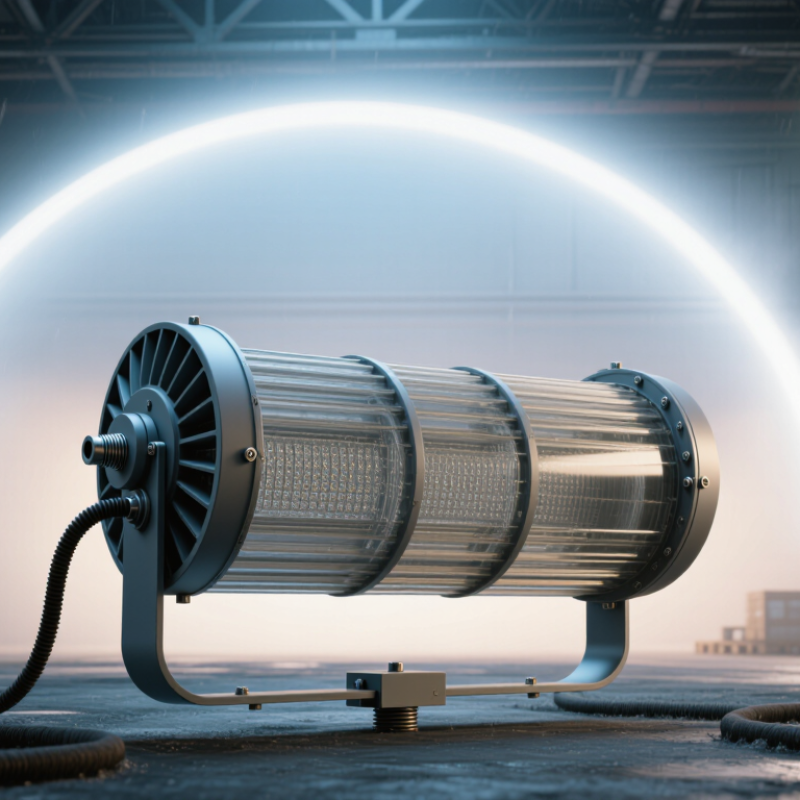
An explosion-proof LED floodlight is a sealed lighting unit built for areas where flammable gas, vapor, or dust may be present. Its enclosure is designed to contain an internal ignition and keep flames or hot particles from reaching the surrounding atmosphere. It does not make an area explosion-proof. The correct protection depends on the site’s hazard classification and the light’s approved rating.
Its purpose is to provide dependable illumination while helping reduce the risk of lighting equipment becoming an ignition source. A rugged housing, protected wiring entries, and carefully managed operating temperature all matter. So does the beam pattern: a wide beam can brighten a loading area, while a focused beam may suit a walkway. Details vary by model and application. A fixture can look sturdy yet still be unsuitable for a particular environment.
Tips: Check the hazard classification, temperature rating, and ambient limits before selecting a floodlight. Have qualified personnel verify installation and cable entries. Keep the lens and seals clean; damage can be easy to miss. And remember, “explosion-proof” is a rating, not a guarantee against every hazard.
An explosion-proof LED floodlight is designed for locations where flammable gas or dust may be present. “Explosion-proof” does not mean an explosion cannot occur. The enclosure is built to contain an ignition inside and limit the chance that flames reach the surrounding atmosphere.
Its housing and joints do much of the protective work. If a fault ignites gas inside, sturdy walls resist the pressure. Narrow, carefully engineered flamepaths cool escaping hot gases before they can ignite material outside. The LED driver and wiring also need protection, since either can become an ignition source. That matters. Heat still matters. The light’s thermal design helps keep its exterior surface within the specified temperature limit. A cool-looking fixture is not proof of safe operation, though; suitability depends on the area and the unit’s ratings.
Installation and upkeep are part of the design’s effectiveness. Cable entries, plugs, and fasteners must match the fixture’s requirements and be fitted correctly. During inspection, corrosion, damaged joints, or loose bolts deserve attention. Even paint or debris on a flamepath can be a concern, so avoid improvised repairs. Details matter. I find this easy to underestimate: a rugged-looking light can still be unsuitable if its protection rating does not match the actual hazard. Verify the documentation and have qualified personnel handle installation and maintenance.
| Design Feature | Typical Specification or Construction | How It Helps Prevent Ignition | Selection Consideration |
|---|---|---|---|
| Flameproof enclosure | A robust housing designed and tested as part of an applicable protection method, such as Ex db. | It is designed to contain an internal ignition and cool escaping gases through engineered joints so they do not ignite the surrounding atmosphere. | Confirm the protection method and certification match the hazardous-area classification. “Explosion proof” does not mean the unit cannot be damaged by an explosion. |
| Temperature class | Common markings include T4 (maximum surface temperature 135°C), T5 (100°C), and T6 (85°C). | Limits the equipment’s maximum surface temperature to reduce the risk of igniting gases or vapors. | The required class depends on the ignition temperature of the substances present; a lower maximum surface temperature may be required. |
| LED thermal management | Heat-dissipating housing, heat sinks, and components selected for the fixture’s rated operating conditions. | Helps control LED and driver temperatures, supporting the specified surface-temperature limit. | Check the marked ambient-temperature range and temperature class; do not assume all LED floodlights have the same limits. |
| Optical window | Typically toughened glass or another certified impact-resistant material, secured to the enclosure. | Protects internal electrical parts from impact and environmental exposure while maintaining the tested enclosure construction. | Inspect the window and its seals for damage; replacement parts must be approved for the specific luminaire. |
| Cable entries and seals | Certified cable glands or conduit fittings, with compatible threads, sealing elements, and installation details. | Help preserve the enclosure’s protection and prevent an ignition path from being created at cable-entry points. | Use fittings appropriate to the protection method, cable type, hazardous location, and equipment certification. |
| Dust and water ingress protection | IP66 indicates dust-tight construction and protection against powerful water jets. IP67 adds protection against temporary immersion under specified test conditions. | Reduces the chance that dust or moisture will compromise electrical insulation or enclosure integrity. | IP ratings describe ingress protection; they do not, by themselves, establish suitability for an explosive atmosphere. |
| Electrical components | LED driver, wiring, and terminals selected and assembled as part of the certified luminaire design. | Limits potential electrical faults, arcing, and excessive heating when used within the equipment’s rated conditions. | Follow the marked voltage, frequency, wiring method, and installation instructions. |
| Area certification and marking | Markings identify the approved protection method, gas or dust group, temperature class, and other certification details. | Shows the conditions under which the complete luminaire has been assessed for use in a hazardous location. | Match the full marking to the site classification and local regulations; requirements vary by jurisdiction and application. |
What Is an Explosion Proof LED Floodlight?
Main Components and Protective Features
An explosion-proof LED floodlight uses a reinforced enclosure to limit the risk of an internal ignition spreading into a hazardous atmosphere. It does not prevent every possible ignition. Its protection depends on the complete fixture, correct installation, and suitability for the specific site.
Inside, an LED array produces light, while a driver regulates electrical current. A metal heat sink draws warmth away from the LEDs and driver. This matters because excess heat can shorten component life. The enclosure, often made from robust metal, surrounds these parts. A thick glass lens protects the light source from impact, and sealed joints help resist dust and moisture. Cable entries and gaskets also matter. A small installation detail can weaken an otherwise well-designed fixture.
Protective features may include flame-containment paths, corrosion-resistant finishes, and impact-resistant lenses. If an internal fault creates hot gases, carefully engineered enclosure joints help cool them before they reach the surrounding atmosphere. Not every floodlight offers the same protection. Check the equipment’s markings and documentation against the site’s hazards, temperature range, and dust or moisture exposure. IP protection describes resistance to water and solids; it does not, by itself, confirm explosion protection. That distinction is easy to miss.
Hazardous areas can contain flammable gases, vapors, or combustible dust. An explosion-proof LED floodlight uses a robust enclosure designed to contain an internal ignition and prevent flames from igniting the surrounding atmosphere. Its protection must match the site’s classified area, material group, and temperature limits. The label alone is not enough. A fixture suitable for a gas-processing area may not suit a grain-handling space.
The risks are documented. The U.S. Chemical Safety Board’s 2006 Combustible Dust Hazard Investigation recorded 281 dust fires and explosions from 1980 to 2005, causing 119 deaths and 718 injuries. These figures cover many incident types, not lighting failures, but they show why dust control and correctly selected equipment matter.
Typical applications include refinery pipe racks, chemical loading bays, paint booths, grain elevators, and wastewater plants where flammable gases may collect.
In practice, look for the area classification, certified temperature rating, and ingress protection needed for dust, moisture, and washdown. A bright beam cannot fix poor placement; shadows behind tanks and conveyors still matter. Selection deserves a second look. A qualified site assessment should guide the final choice.
An explosion-proof LED floodlight is designed to contain an ignition inside its enclosure and prevent flames from reaching a hazardous surrounding atmosphere. The term does not mean the fixture can withstand any explosion. Its certification applies to defined conditions, such as specific gases, dusts, temperature limits, and installation methods. Check the product nameplate and certificate, not just the sales description.
Standards and approvals vary by location. IEC 60079 requirements are used in many international settings, while other regions may require different certifications. Confirm that the approval matches the site’s gas or dust classification and zone or division. Then check the temperature class: a hot surface can matter near combustible vapors. Not just wattage.
Selection also depends on the actual task. On a tank-farm walkway, for example, beam angle, mounting height, glare, and shadowing affect safe visibility. Review ambient temperature, corrosion exposure, ingress protection, cable entries, and maintenance access. Small details matter. A common oversight is choosing high lumen output while ignoring where the light lands. The paperwork can feel tedious, but it is where assumptions get caught. Have a qualified electrical professional verify compatibility with the site and local requirements before installation.
„Thanks to the LUVIR technology, the solder resist process could be switched directly from the previously used mask exposure to direct exposure. As an outstanding digital solution on the market, this technology has been able to demonstrate fast process times and superior quality on our certified conventional ink in production. This allowed us to fully digitize the solder mask process at low cost – without process or ink adjustments. An excellent benefit to our production in Rot am See.“
Ralf Göhringer (Head of Production WE Rot am See)
I would definitely recommend the Limata machine and team for a future company purchase
Michael Greenaway
Compunetics Inc.
“The Limata ldi has been amazing!! Best thing we did was buy this machine”
Richard Brady
GM
Circuitlabs
“Since 2019, we have been running the Limata X1000 LDI system (including LUVIR for solder mask imaging) in daily production as an addition to our current process with film. The machine was capable of properly exposing Taiyo PSR-4000 BN (DI) solder mask types on normal to high-copper boards using a new and unique direct imaging process. The machine operating interface is very user friendly which allowed for a quick technical training curve. The pre-registration processing reduced several seconds of production time at every print. Limata support and service staff is incomparable. They supported our team every step of the way at basically any time of the day or night, with literally, an immediate response time, customizing the software interface to best fit our Operations and needs.
We have exposed more than 8,000 prints since end of October, on various solder mask colors and some resist film panels. Limata, has proven to be very capable and innovative. They are a strong contender in the industry.
We have very much enjoyed this project, and working with the team!
Thank you Limata for the continued support and being a part of our growth.”
Bill Sezate
Vice President, GM
Summit Interconnect
As a replacement to our current contact exposure process with film, the LIMATA X2000 system including LUVIR-Technology was capable of properly exposing non-LDI solder mask types using a direct imaging process. The machine offers cutting edge software with a very intuitive operating interface which allowed for quick technician training curve. The dual drawer system combined with pre-registration processing reduced several seconds of production time at every machine cycle. Limata support and service staff is world class. They added software patches to keep production running at shortest possible response times, customized the software interface to best fit our in-house Operations system, and even wrote a step-by-step machine processing manual. As a result of the project, we have exposed more than 16,000 times on various product types and solder mask brands/colors. Limata, in a very short timeframe as a company, has definitely shown they are truly innovative and will be challenging the industry of direct imaging for the top spot.
Kevin Beattie
Process Engineer
TTM Technologies
Forest Grove Division
