
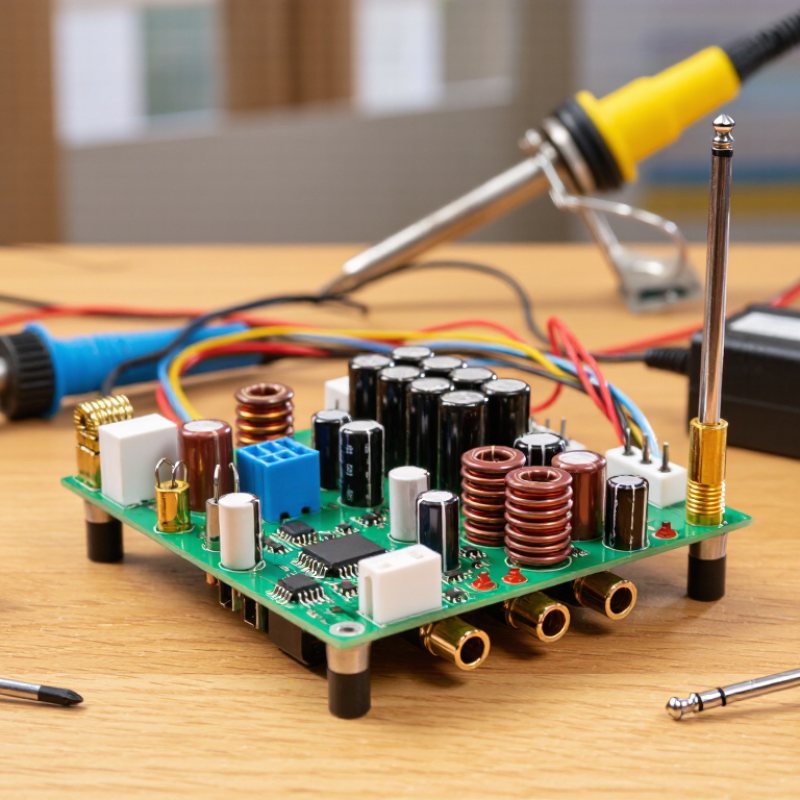
An FM radio transmitter kit is a compact set of electronic parts. It converts sound from a phone, microphone, or small mixer into a radio-frequency signal. A nearby FM receiver can then play that signal through its speaker. Typical parts include an audio input, modulator or oscillator, power supply, and antenna.
Not quite magic. Range and sound quality depend on antenna placement, interference, and circuit design. On a desk, a short wire antenna may work differently beside a wall or window. That practical variation is easy to underestimate.
The purpose is to connect audio equipment to FM receivers without a direct cable. Small venues, classrooms, and hobby demonstrations may use kits for controlled, nearby audio distribution.
Ofcom’s Media Nations 2024 report estimates weekly radio reach at about 87% among UK adults. That helps explain why FM receivers remain familiar.
A kit does not create a broadcast service by itself. Frequency stability, output strength, and local rules still matter. Use only equipment and settings permitted in your region. Kit specifications can be incomplete, so treat claimed range as an estimate, not a promise.