Jewelry may look delicate, but producing it often depends on precise tools and controlled processes. Behind a polished ring are practical tasks: measuring a band, securing a tiny stone, shaping metal, and checking a finished surface. Grand View Research valued the global jewelry market at USD 353.26 billion in 2023 and projected a 4.7% compound annual growth rate from 2024 to 2030. This figure describes the jewelry market, not equipment sales. Still, it shows the scale of the industry in which skilled makers and manufacturers work.
Jewelry Equipment covers the tools and machines used to design, form, join, finish, and inspect jewelry. A bench setup might include a jeweler’s saw, files, pliers, a torch, a polishing motor, and magnifying lenses. Larger workshops may use rolling mills, Casting Equipment, laser welders, or computer-aided design systems. Each serves a different task. A polishing motor smooths surfaces; it does not correct a poorly fitted setting. Equipment supports skilled work, but it cannot replace careful measurement or material knowledge.
The right setup depends on the item, material, production volume, and maker’s experience. A small studio may need reliable hand tools more than industrial machinery. One easy mistake is buying equipment before identifying the actual bottleneck. That deserves a second look. Industry market reports rarely explain these bench-level decisions, so their figures should not be treated as buying advice. Understanding what each tool does—and what it cannot do—helps readers assess equipment with realistic expectations.
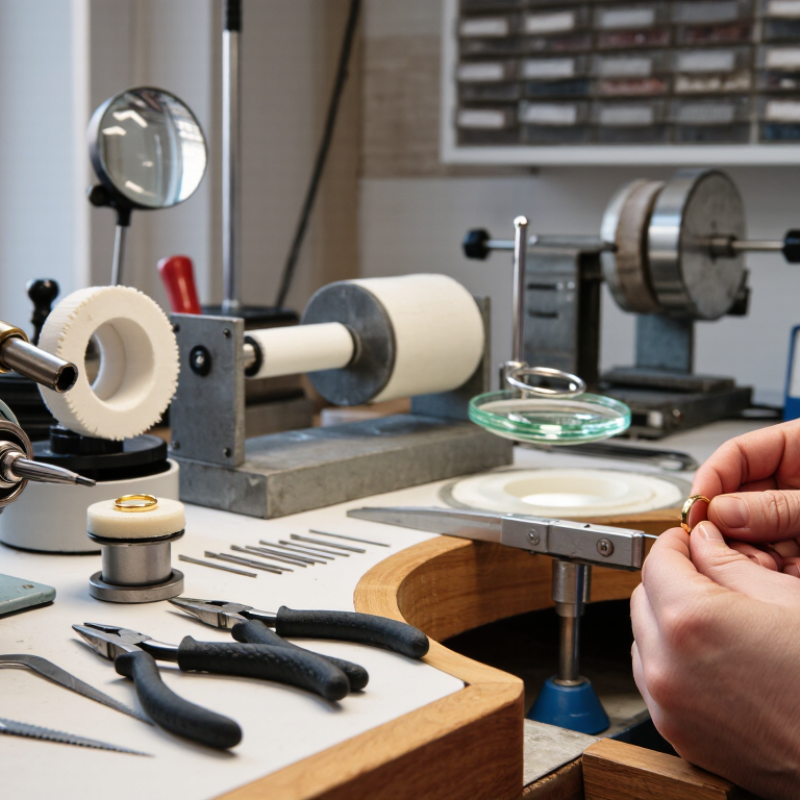
Jewelry equipment includes the tools and work surfaces used to shape, join, finish, and inspect jewelry. Pliers bend and hold wire, while files smooth rough edges left after cutting. A jeweler’s saw makes controlled cuts through thin metal sheets. For soldering, a heat-resistant bench surface and a torch help join components with precision. Each tool has a specific role, but skill matters just as much. A tool cannot correct every uneven cut.
A stable bench, bright task lighting, and magnification support careful work. Good visibility helps makers spot scratches, loose joints, and tiny gaps before a piece is finished. Small details matter.
Safety equipment is part of the setup too: eye protection guards against flying fragments, and suitable ventilation helps manage fumes during soldering.
Tools should be selected for the materials and tasks at hand, then kept clean and in working order. A worn file or loose plier joint can make precise work frustrating. The setup is rarely perfect; even experienced makers may adjust their tools as a design changes. That small inconvenience can be useful, though, because it encourages a closer look at how each step is being done.
Jewelry equipment helps makers shape, join, finish, and inspect small pieces with control. A jeweler may use a bench pin to support a ring while sawing or filing. Pliers hold wire, while a rolling mill can reduce metal thickness into even sheet or wire. Each tool serves a specific task.
Heat tools and soldering setups join metal components. A torch warms a joint until solder flows into the seam; clean surfaces and steady placement matter. Polishing motors and hand files remove scratches and soften edges. Use suitable eye protection, ventilation, and secure workholding, especially when cutting or heating metal. Small details matter.
Measuring and inspection tools help keep pieces consistent. Calipers check thickness, and a loupe reveals rough settings or uneven solder lines. Some equipment is manual; some is powered, and powered tools can save time but demand practice. Beginners sometimes buy too much at once. A simple bench, dependable lighting, and a few well-chosen tools may be more useful. Even experienced makers revisit their setup. It can be awkward, but regular cleaning and checking catches loose parts before they affect the work.
Jewelry equipment includes hand tools and machines used to shape, join, size, and finish metal or other materials. Jewelers often use a jeweler’s saw for precise cuts, files to smooth edges, and pliers to bend or hold small components. A bench pin supports the work while cutting, while a mandrel helps form rings. Small tools matter. The right tool can prevent a thin piece from bending out of shape.
Machines handle repetitive or forceful tasks. A flex-shaft tool can drill, carve, and polish with interchangeable attachments. A rolling mill presses metal into thinner sheets or patterned textures. A polishing motor helps bring metal to a bright finish, while a soldering torch joins components with controlled heat. Each machine requires practice; speed alone does not guarantee accuracy. Even experienced makers may need to redo a finish when a surface shows fine scratches.
Tips: Secure small pieces before drilling or polishing, and use the correct attachment for the material. Keep ventilation and eye protection in mind when working with dust, heat, or flying particles. Check tool settings on scrap material first. It takes a little longer, but mistakes on finished work can be costly.
Jewelers use tools and machines to cut, shape, join, cast, and finish jewelry. This chart compares the melting points of four pure metals, a useful reference when selecting soldering or casting equipment. Jewelry alloys melt across a temperature range, so their requirements may differ from those of pure metals.
Jewelry equipment changes at each production stage. During design, calipers and digital modeling tools help set dimensions before metal is cut. A wax or resin printer can turn a model into a casting pattern. For a ring, even a small sizing error may affect comfort and finishing. The sequence is not always tidy. Prototypes often reveal flaws the screen missed.
Casting equipment melts and shapes metal, while rolling mills and drawplates reduce stock into sheets or wire. Soldering tools join components; files and rotary tools refine edges and settings. Polishing motors then smooth the surface, and scales or metal-testing instruments help check weight and composition.
The World Gold Council’s Gold Demand Trends: Full Year 2024 reported global gold jewelry demand of 2,093 tonnes, down 11% from 2023. That figure describes demand, not factory output, but it shows why adaptable tools matter when orders shift.
A tool cannot replace skilled judgment. And finishing can erase detail if pressure is poorly controlled. Makers should match equipment to the material, design, and batch size, then inspect each piece between stages.
What Is Jewelry Equipment Used For?
How Jewelers Choose and Maintain Their Equipment
Choosing equipment starts with the work at hand. A jeweler making fine repairs may need a steady bench pin, bright adjustable lighting, and magnification that feels comfortable for long sessions. A maker shaping sheet metal may value a rolling mill, files, and a secure vise instead. Fit matters. Tools should suit the jeweler’s skill, workspace, and typical materials, not just look impressive. Before buying, check how easily parts can be adjusted or replaced. A tool that feels awkward after ten minutes can slow careful work and strain the hands.
Tips: Test the tool’s balance and controls before committing, when possible. Keep lenses clean, clear dust from moving parts, and inspect cords for wear. Follow the maker’s care instructions, and disconnect powered equipment before cleaning. Small checks help catch problems early.
Maintenance works best as a routine, not a repair-day scramble. Store measuring tools where they will not be knocked out of alignment, and keep sharp tools protected. Listen for new vibration or uneven movement in powered equipment; these can signal a need for inspection. Record repairs and adjustments, even briefly. No checklist catches every issue, and a tool that seems fine today may need attention tomorrow.
„Thanks to the LUVIR technology, the solder resist process could be switched directly from the previously used mask exposure to direct exposure. As an outstanding digital solution on the market, this technology has been able to demonstrate fast process times and superior quality on our certified conventional ink in production. This allowed us to fully digitize the solder mask process at low cost – without process or ink adjustments. An excellent benefit to our production in Rot am See.“
Ralf Göhringer (Head of Production WE Rot am See)
I would definitely recommend the Limata machine and team for a future company purchase
Michael Greenaway
Compunetics Inc.
“The Limata ldi has been amazing!! Best thing we did was buy this machine”
Richard Brady
GM
Circuitlabs
“Since 2019, we have been running the Limata X1000 LDI system (including LUVIR for solder mask imaging) in daily production as an addition to our current process with film. The machine was capable of properly exposing Taiyo PSR-4000 BN (DI) solder mask types on normal to high-copper boards using a new and unique direct imaging process. The machine operating interface is very user friendly which allowed for a quick technical training curve. The pre-registration processing reduced several seconds of production time at every print. Limata support and service staff is incomparable. They supported our team every step of the way at basically any time of the day or night, with literally, an immediate response time, customizing the software interface to best fit our Operations and needs.
We have exposed more than 8,000 prints since end of October, on various solder mask colors and some resist film panels. Limata, has proven to be very capable and innovative. They are a strong contender in the industry.
We have very much enjoyed this project, and working with the team!
Thank you Limata for the continued support and being a part of our growth.”
Bill Sezate
Vice President, GM
Summit Interconnect
As a replacement to our current contact exposure process with film, the LIMATA X2000 system including LUVIR-Technology was capable of properly exposing non-LDI solder mask types using a direct imaging process. The machine offers cutting edge software with a very intuitive operating interface which allowed for quick technician training curve. The dual drawer system combined with pre-registration processing reduced several seconds of production time at every machine cycle. Limata support and service staff is world class. They added software patches to keep production running at shortest possible response times, customized the software interface to best fit our in-house Operations system, and even wrote a step-by-step machine processing manual. As a result of the project, we have exposed more than 16,000 times on various product types and solder mask brands/colors. Limata, in a very short timeframe as a company, has definitely shown they are truly innovative and will be challenging the industry of direct imaging for the top spot.
Kevin Beattie
Process Engineer
TTM Technologies
Forest Grove Division
