A switch is a small component, but its rating affects how safely it handles a connected load. A 16a Switch may suit certain fixed electrical applications, yet the number alone does not prove that it is right for every circuit. Voltage, load type, wiring capacity, installation conditions, and the manufacturer’s instructions all matter. A motor or other inductive load, for example, may behave differently from a simple lighting load. Ratings deserve context.
The safety stakes are real. NFPA’s Home Fires Involving Electrical Failure or Malfunction report estimates that electrical distribution and lighting equipment was involved in about 32,000 U.S. home fires annually from 2015 to 2019. This figure covers a broad equipment category; it does not attribute those fires to switches alone. Still, it shows why component selection and sound installation practices deserve attention. A rating is not a safety guarantee.
This guide explains what a 16A rating means, where it may be appropriate, and which details to check before choosing one. Look closely at the switch label, the intended load, and the circuit specifications. If any of these are unclear, have a qualified electrician verify compatibility. It is tempting to treat a higher number as an automatic upgrade. That shortcut can mislead. The right switch is the one correctly matched to the complete installation.
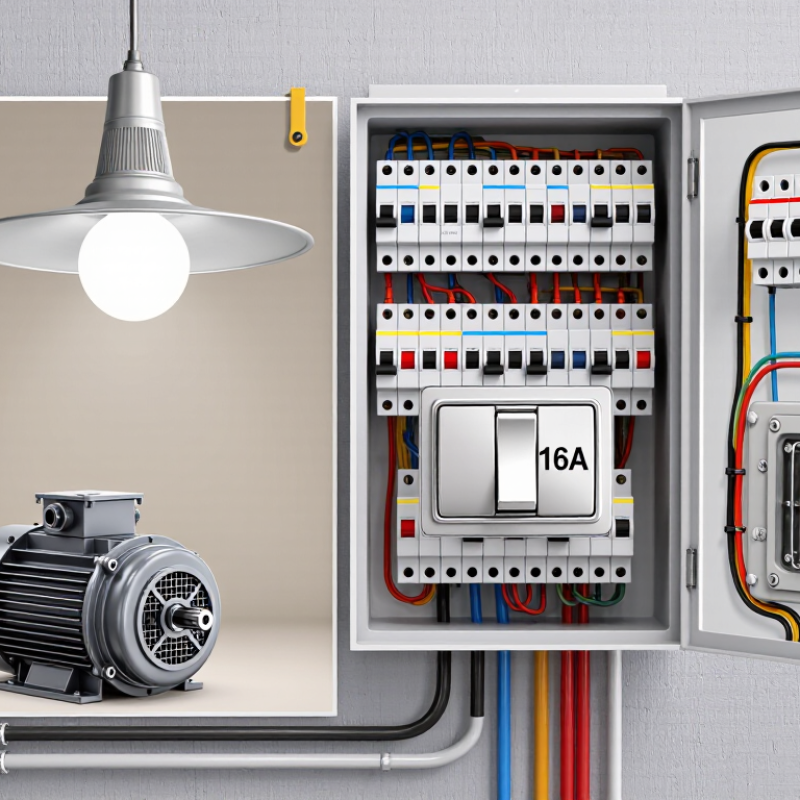
A 16A switch is rated to carry a current of up to 16 amperes under its specified operating conditions; the number is not a promise that every connected appliance is suitable.
At 230V, 16A corresponds to a theoretical 3,680 volt-amperes, calculated as voltage multiplied by current. For a mainly resistive load, that is roughly 3,680 watts, but motors and other inductive devices can draw higher starting currents. Check the switch’s voltage and load-type markings, not just its headline amp rating.
The relevant technical reference is IEC 60669-1, the international standard for switches used in household and similar fixed electrical installations. Its requirements address switch construction and performance; they do not replace checking a particular product’s ratings or installation conditions.
In practice, a warm switch face, loose terminal, or repeated tripping deserves attention. Small signs matter. Cable size, enclosure, ambient temperature, and switching frequency can affect safe operation.
I would not treat 16A as an automatic allowance for continuous full-load use; the circuit design and manufacturer’s instructions still matter. For a real installation, have a qualified electrician verify the load and wiring.
Why Choose a 16A Switch for Your Electrical Projects?
A switch’s 16A rating describes the current it is designed to carry under specified conditions. It does not mean every connected appliance is automatically suitable. A kettle marked 2,000 watts draws about 8.7 amps on a 230-volt supply, but the same wattage draws more current at a lower voltage. Check the appliance label and supply voltage. Numbers can mislead.
The load type matters, too. Heating elements usually draw a fairly steady current, while motors and some electronic devices can briefly draw more when starting. That surge may stress a switch even when the normal running current appears acceptable. The switch’s voltage and load ratings, wiring capacity, and installation conditions all need to fit the circuit. A rating is not a substitute for checking the whole setup.
In practical work, I would compare the device’s specifications with the switch instructions rather than choosing by amperage alone. I would also leave room for uncertainty: labels can be hard to read, and older wiring may not match assumptions. If the load or circuit is unclear, ask a qualified electrician to assess it before installation. A small check matters.
| Load or Rating | Example at 230 V | Approximate Current | How a 16 A Switch Relates |
|---|---|---|---|
| 16 A switch, resistive-load reference | 16 A × 230 V | 16 A; approximately 3,680 W | This is a theoretical reference for a resistive load at the stated voltage. The switch’s approved load type and installation conditions still apply. |
| LED lighting, 100 W total | 100 W ÷ 230 V | Approximately 0.43 A | Well below 16 A in steady operation. LED drivers can have brief inrush current, so check the switch’s rating for LED or capacitive loads. |
| Electric kettle, 2,000 W | 2,000 W ÷ 230 V | Approximately 8.7 A | Below 16 A as a single resistive load at 230 V. Confirm the appliance rating and avoid adding other loads that could exceed the circuit limit. |
| Portable heater, 3,000 W | 3,000 W ÷ 230 V | Approximately 13.0 A | Below 16 A under these assumptions, but relatively close to the switch rating. Continuous-use limits, terminal condition, and circuit protection matter. |
| Microwave, 1,500 W input | 1,500 W ÷ 230 V | Approximately 6.5 A | Use the appliance’s stated electrical input, not its cooking-output figure. Electronic equipment may have a non-unity power factor or brief inrush current. |
| Motor-driven appliance | Current depends on motor, efficiency, and power factor | Use the appliance nameplate value; starting current can be several times the running current | A general 16 A resistive rating does not by itself establish suitability for a motor. Check the switch’s motor or inductive-load rating and the manufacturer’s instructions. |
| Important selection check | A switch rating is not a substitute for circuit protection. Verify the rated voltage, load type, local electrical requirements, conductor size, protective-device rating, and installation instructions. The examples assume 230 V single-phase supply and are illustrative. | ||
A 16A switch is commonly used for appliances that draw more current than ordinary lighting circuits. Examples include electric water heaters, room heaters, and some kitchen appliances. A wall switch beside a water heater can make isolation convenient during servicing. Small details matter. The appliance’s rated current and supply voltage must still match the switch.
In garages and utility rooms, 16A switches may control ventilation fans, small pumps, or workshop equipment. A switch near a pump can help make routine shutdown easier, especially when the equipment is not used daily. However, motors can draw a higher starting current than their running current. Not every load fits. Check the appliance instructions and the switch’s load rating before choosing one.
Installation conditions also matter. Heat, moisture, dust, and the cable size can affect suitability, particularly near sinks or in damp areas. A 16A marking alone does not confirm that a switch suits every appliance or environment. It is an easy detail to overlook. Have a qualified electrician verify the circuit, protection, and installation method, especially when replacing an existing switch or adding a high-load appliance.
A 16A switch can suit a demanding circuit, but the number alone does not confirm compatibility. Check the rated voltage and the type of load, such as a heater, motor, or lighting circuit. Motors may draw extra current briefly when starting. That matters. Compare the switch’s rating with the appliance instructions and circuit design, not just its front label.
Small details matter. Check that the terminals accept the installed wire size and that the switch fits the mounting box without pinching conductors. In kitchens, workshops, or other damp areas, confirm the enclosure’s protection rating is appropriate. Also look for recognized safety certification and clear manufacturer specifications. If those details are missing, choose a clearly documented product instead.
A common oversight is assuming the switch rating sets the safe capacity of the whole circuit. It does not. Cable size, protective devices, installation conditions, and local electrical requirements all affect suitability. Do not guess. A qualified electrician can verify the circuit and connections, especially when replacing an existing switch or controlling a high-starting-current appliance. The 16A marking is useful, but it is only one part of the decision.
A 16A switch is suitable only when its rating matches the circuit, supply voltage, and connected load. Check the marked rating on the switch, not just the number printed on its packaging. Motors, transformers, and some LED drivers can create brief starting surges, so their actual switching requirements may differ from their steady current. Compatibility matters. Confirm the switch is rated for the load type and intended use, and that the circuit’s protective device and wiring are appropriately specified. A 16A switch does not make an undersized cable or unsuitable circuit safe.
Before installation, isolate the circuit and verify it is de-energized with a suitable tester. If you are unsure how to test safely, stop and call a qualified electrician. Match the terminals to the wiring diagram, use the correct conductor size, and secure connections without damaging the wire strands. Loose terminals can heat up; cramped or unsuitable enclosures can create other problems. Small details matter. After fitting, check that the switch operates smoothly and that no copper is exposed outside the terminals. Local electrical requirements vary, so confirm the applicable rules for your location. Even experienced people can overlook a mismatch when replacing an old switch; checking the load and circuit again is worthwhile.
„Thanks to the LUVIR technology, the solder resist process could be switched directly from the previously used mask exposure to direct exposure. As an outstanding digital solution on the market, this technology has been able to demonstrate fast process times and superior quality on our certified conventional ink in production. This allowed us to fully digitize the solder mask process at low cost – without process or ink adjustments. An excellent benefit to our production in Rot am See.“
Ralf Göhringer (Head of Production WE Rot am See)
I would definitely recommend the Limata machine and team for a future company purchase
Michael Greenaway
Compunetics Inc.
“The Limata ldi has been amazing!! Best thing we did was buy this machine”
Richard Brady
GM
Circuitlabs
“Since 2019, we have been running the Limata X1000 LDI system (including LUVIR for solder mask imaging) in daily production as an addition to our current process with film. The machine was capable of properly exposing Taiyo PSR-4000 BN (DI) solder mask types on normal to high-copper boards using a new and unique direct imaging process. The machine operating interface is very user friendly which allowed for a quick technical training curve. The pre-registration processing reduced several seconds of production time at every print. Limata support and service staff is incomparable. They supported our team every step of the way at basically any time of the day or night, with literally, an immediate response time, customizing the software interface to best fit our Operations and needs.
We have exposed more than 8,000 prints since end of October, on various solder mask colors and some resist film panels. Limata, has proven to be very capable and innovative. They are a strong contender in the industry.
We have very much enjoyed this project, and working with the team!
Thank you Limata for the continued support and being a part of our growth.”
Bill Sezate
Vice President, GM
Summit Interconnect
As a replacement to our current contact exposure process with film, the LIMATA X2000 system including LUVIR-Technology was capable of properly exposing non-LDI solder mask types using a direct imaging process. The machine offers cutting edge software with a very intuitive operating interface which allowed for quick technician training curve. The dual drawer system combined with pre-registration processing reduced several seconds of production time at every machine cycle. Limata support and service staff is world class. They added software patches to keep production running at shortest possible response times, customized the software interface to best fit our in-house Operations system, and even wrote a step-by-step machine processing manual. As a result of the project, we have exposed more than 16,000 times on various product types and solder mask brands/colors. Limata, in a very short timeframe as a company, has definitely shown they are truly innovative and will be challenging the industry of direct imaging for the top spot.
Kevin Beattie
Process Engineer
TTM Technologies
Forest Grove Division
