A 90° Long Radius Elbow is often selected when a piping system needs a right-angle turn without an abrupt change in direction. Its centerline radius is typically 1.5 times the nominal pipe diameter, creating a broader curve than a short-radius elbow. That geometry can help reduce turbulence and pressure loss, though actual performance depends on flow rate, fluid properties, pipe size, and system layout. Small details matter. A rough weld, poor alignment, or unsuitable material can undermine the benefit.
George A. Antaki, a recognized piping-engineering author, has written extensively about piping design and integrity. I can’t verify a verbatim quotation from him on this specific fitting, so I won’t invent one. A practical takeaway from his engineering work is that components must be judged within the whole system—not by shape alone. That distinction is easy to overlook.
When comparing elbows, engineers should check the applicable design code, material grade, wall thickness, pressure and temperature limits, and connection type. They should also consider inspection access and installation space. A long-radius elbow may occupy more room, and it is not automatically the right choice for every line. Think of a crowded pump room: a smoother bend helps only if the piping still fits, drains correctly, and can be maintained. That deserves a second look. Before specifying a 90° Long Radius Elbow, confirm the operating conditions and procurement requirements with qualified project personnel.
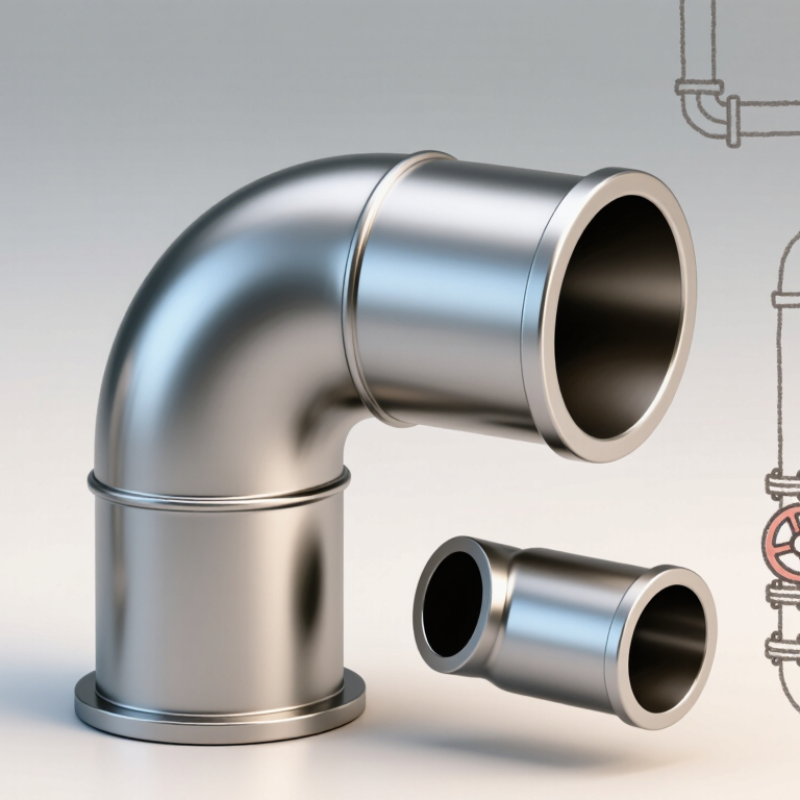
A 90-degree long radius elbow is a pipe fitting that redirects flow through a quarter turn. Its centerline bend radius is commonly about 1.5 times the nominal pipe size, though exact dimensions depend on the fitting standard. The curve changes direction more gradually than a short-radius elbow. That matters. Under comparable conditions, it can reduce abrupt flow disturbance and pressure loss, but results depend on fluid, flow rate, pipe surface, and system layout.
You may find these elbows in process piping, water lines, and HVAC systems where space allows a wider bend. The longer curve needs more room, so it may not suit a tight installation. It is not automatically the best choice. I have seen selection focus on pressure loss while overlooking clearance and support needs; that trade-off deserves a second look. Check the fitting material and dimensions against the pipe and service conditions.
Tips: Confirm the centerline radius on the drawing. Check carefully. Allow room for installation and nearby supports. When performance is critical, consult a qualified piping engineer.
A 90-degree long-radius elbow changes a pipe’s direction through a broad curve rather than a tight corner. Typically, its centerline radius is about 1.5 times the nominal pipe diameter. Exact dimensions depend on the fitting standard. This longer sweep spreads the turn over more pipe length, so the flow meets a less abrupt change in direction.
That geometry can reduce flow separation and turbulence compared with a shorter-radius elbow, potentially lowering pressure loss. It does not guarantee better performance in every system. Flow rate, fluid properties, surface condition, and nearby valves all matter. Details matter. For example, a bend placed close to a pump outlet may still experience uneven flow. A longer curve gives the stream more room to redirect, but poor alignment can undermine that benefit.
The larger bend needs more installation space and may affect support placement. Check its dimensions against the pipe schedule, pressure and temperature requirements, and joining method. Space matters. A neat curve on a drawing can look easier to install than it is in a crowded plant room. Before specifying one, consider whether the route has enough clearance and whether the smoother turn is worth the added space.
A 90-degree long-radius elbow turns a pipe through a broad curve rather than a tight bend. In a typical line, that gradual path helps keep flow attached to the wall and limits abrupt changes in direction. Less flow separation can mean lower turbulence and less pressure loss than with a short-radius elbow of the same nominal size. That matters.
But the elbow’s actual loss depends on more than its shape. Pipe diameter, internal roughness, fluid viscosity, flow rate, and nearby valves or reducers all influence the pressure drop. At higher velocities, even a smooth turn can create a noticeable loss. A pressure gauge before and after the fitting, checked under steady operating conditions, gives more useful evidence than appearance alone. Measure it.
For pump-fed systems, lower fitting losses may reduce required pump head or leave more pressure available downstream. Yet a long-radius elbow needs more installation space, which can require longer piping or awkward supports. Not always. Choose based on design flow and reliable engineering data, rather than assuming that a long-radius bend has negligible loss. Alignment and deposits can also affect performance over time; a small misalignment may look harmless, but its effect is hard to judge by eye. Better to check system readings.
A 90-degree long-radius elbow is commonly used where industrial piping must turn without an abrupt change in direction. Typical settings include steam and hot-water lines, chemical process systems, HVAC networks, and plant utility piping. ASME B16.9 specifies a long-radius elbow’s center-to-end dimension as 1.5 times the nominal pipe size. That gives designers a standard geometry to work with.
The U.S. Department of Energy’s Improving Steam System Performance sourcebook estimates that steam systems account for about 30% of energy used in U.S. manufacturing. Steam lines often run through crowded facilities, past beams, pumps, and maintenance access points. A longer bend can help manage the route while avoiding the tighter turn of a short-radius fitting. It does not guarantee lower energy use; pressure drop depends on flow, pipe size, surface condition, and the full system design. Details matter.
In water and process lines, long-radius elbows are useful when smoother routing and room for inspection are practical priorities. They also take up more space, which can be a real constraint near equipment. That trade-off is easy to miss on a drawing. Check the operating conditions and layout before selecting the fitting.
When selecting a 90-degree long-radius elbow, begin with the fluid, not the catalog description. Water, steam, and abrasive slurry place different demands on a fitting. Check operating pressure and temperature, as well as corrosion, erosion, and cleaning chemicals. Carbon steel may suit some utility services, while stainless steel or another alloy may be needed for corrosive media. That is not automatic; verify compatibility against the actual fluid and project specification. Small details matter.
For sizing, match the elbow’s nominal diameter and wall thickness to the connected pipe. A mismatch can complicate fit-up or create an unwanted restriction. Long-radius elbows commonly have a centerline radius around 1.5 times the nominal pipe size, but dimensions vary by standard. Confirm the drawing and applicable dimensional requirements before ordering. Flow rate matters, too: a larger or smaller line can affect velocity and pressure loss.
Space can change the decision. A long-radius bend needs more room than a short-radius fitting, even when both turn the pipe by 90 degrees. Check clearances, support locations, and end connections on the layout. One easy-to-miss point is the installation environment: outdoor exposure or frequent vibration may influence material and support choices. Pressure-loss estimates also depend on the wider piping system, so the elbow alone does not tell the whole story.
„Thanks to the LUVIR technology, the solder resist process could be switched directly from the previously used mask exposure to direct exposure. As an outstanding digital solution on the market, this technology has been able to demonstrate fast process times and superior quality on our certified conventional ink in production. This allowed us to fully digitize the solder mask process at low cost – without process or ink adjustments. An excellent benefit to our production in Rot am See.“
Ralf Göhringer (Head of Production WE Rot am See)
I would definitely recommend the Limata machine and team for a future company purchase
Michael Greenaway
Compunetics Inc.
“The Limata ldi has been amazing!! Best thing we did was buy this machine”
Richard Brady
GM
Circuitlabs
“Since 2019, we have been running the Limata X1000 LDI system (including LUVIR for solder mask imaging) in daily production as an addition to our current process with film. The machine was capable of properly exposing Taiyo PSR-4000 BN (DI) solder mask types on normal to high-copper boards using a new and unique direct imaging process. The machine operating interface is very user friendly which allowed for a quick technical training curve. The pre-registration processing reduced several seconds of production time at every print. Limata support and service staff is incomparable. They supported our team every step of the way at basically any time of the day or night, with literally, an immediate response time, customizing the software interface to best fit our Operations and needs.
We have exposed more than 8,000 prints since end of October, on various solder mask colors and some resist film panels. Limata, has proven to be very capable and innovative. They are a strong contender in the industry.
We have very much enjoyed this project, and working with the team!
Thank you Limata for the continued support and being a part of our growth.”
Bill Sezate
Vice President, GM
Summit Interconnect
As a replacement to our current contact exposure process with film, the LIMATA X2000 system including LUVIR-Technology was capable of properly exposing non-LDI solder mask types using a direct imaging process. The machine offers cutting edge software with a very intuitive operating interface which allowed for quick technician training curve. The dual drawer system combined with pre-registration processing reduced several seconds of production time at every machine cycle. Limata support and service staff is world class. They added software patches to keep production running at shortest possible response times, customized the software interface to best fit our in-house Operations system, and even wrote a step-by-step machine processing manual. As a result of the project, we have exposed more than 16,000 times on various product types and solder mask brands/colors. Limata, in a very short timeframe as a company, has definitely shown they are truly innovative and will be challenging the industry of direct imaging for the top spot.
Kevin Beattie
Process Engineer
TTM Technologies
Forest Grove Division
