When embarking on a new engineering project, selecting the right components is crucial. A ball screw for sale can significantly enhance precision and efficiency in machinery. Industry expert John Anderson, a mechanical engineer with over 20 years of experience, states, "Ball screws provide unmatched accuracy and reduce friction, making them ideal for applications requiring high precision."
The decision to use a ball screw should not be taken lightly. Ball screws offer advantages such as reduced wear and longer lifespan. However, potential buyers must also consider their project’s specific demands. It's important to evaluate the load capacity needed and the operational environment.
Choosing the right ball screw for sale isn’t always straightforward. Many options exist, each with unique specifications. Engineers must reflect on their project requirements and available budgets. This can create challenges, but the right choice leads to smoother, more efficient operations. Understanding these elements is key to making an informed decision.
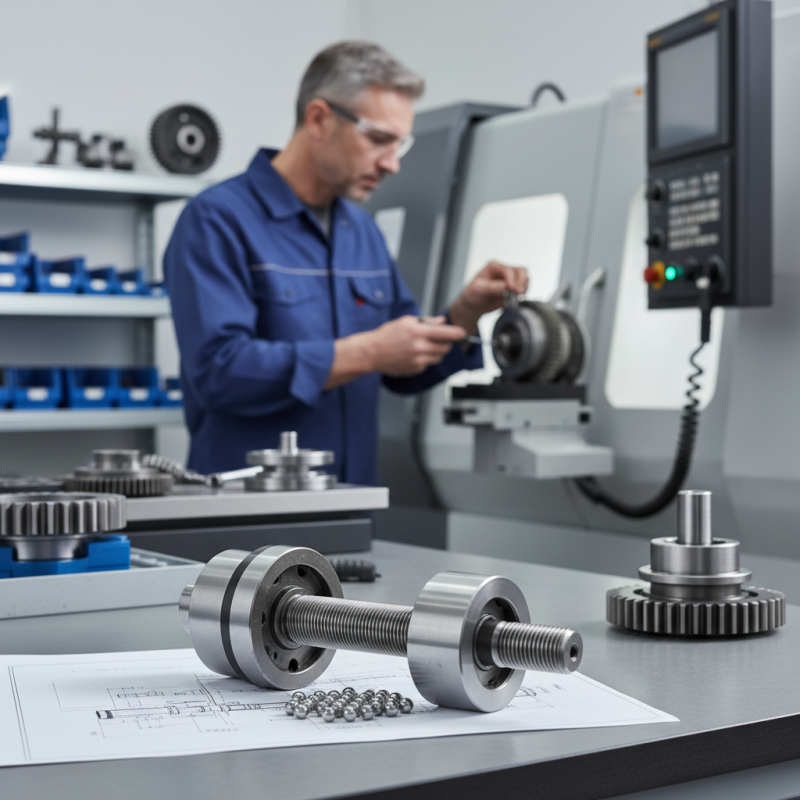
Ball screws are mechanical devices used to convert rotational motion into linear motion. They operate using a threaded shaft and ball bearings. These ball bearings circulate in a screw groove, reducing friction and enhancing efficiency. As the screw rotates, the balls move along the grooves, allowing for smooth and precise linear movement. This mechanism is beneficial in various applications, from industrial machinery to robotics.
Choosing a ball screw may seem straightforward, yet it requires careful consideration. Examine the load capacity and shaft diameter. Evaluate the intended speed and accuracy needed for your project. A slight miscalculation in these factors can lead to inefficiencies or equipment failure. Pay attention to the environment as well. High temperatures or contamination can impact performance significantly.
Tip: When selecting a ball screw, always test prototypes under real conditions. Expect variations in performance based on load and speed. Measure outcomes and adjust your specifications if needed. Keep a log of these results. This practice helps in fine-tuning your choices for better efficiency.
Ball screws are vital components in modern engineering projects. They provide high precision and reliability in motion control systems. When choosing a ball screw for your next project, several advantages stand out.
One significant benefit is their efficiency. Ball screws convert rotary motion into linear motion with minimal energy loss. The design reduces friction, which enhances performance. However, this efficiency can be compromised if not properly maintained. Regular inspection is crucial to prevent wear and tear.
Another advantage is their load capacity. Ball screws can handle heavy loads, making them ideal for industrial applications. Yet, this strength comes with a responsibility. Ensuring that your project is designed to accommodate the specific dimensions and capabilities of the ball screw is essential. Neglecting this aspect can lead to failures. Overall, while ball screws offer great benefits, careful planning and execution are necessary for optimal results.
Ball screws have become vital in various industries due to their precision and efficiency. In manufacturing, they enhance the movement of machinery and ensure accurate positioning. According to a recent industry report, the demand for ball screws is projected to grow by 5.4% annually through 2026. This growth highlights their essential role in automation systems and CNC machines.
In aerospace and automotive sectors, ball screws are integral for applications requiring high load capacities. They provide reliable force transmission for actuating mechanisms. A study showed that nearly 70% of aerospace systems utilize ball screws for their operational reliability. However, proper maintenance is crucial. Neglecting this aspect may lead to increased wear and costly downtime.
In robotics and medical devices, ball screws facilitate smooth linear motion. This accuracy is critical for surgeries and automated processes. Yet, some industries overlook the importance of customization. Standard solutions may not meet specific requirements. Adapting ball screws for unique applications can lead to better performance and efficiency. A tailored approach often results in better outcomes, reducing risks and maximizing operational benefits.
When considering a ball screw for your next project, there are several factors to keep in mind. First, you need to evaluate the load capacity. A ball screw must support the required weight without deforming. Understanding your system's weight distribution helps. Performance is also crucial; make sure the screw can handle the intended speed and precision. Some applications require high speeds, while others focus on accuracy.
Material selection is vital as well. Different materials offer varied durability and resistance to wear. A stainless steel screw may resist corrosion, but it might be heavier than alternatives. Think about the environment where the screw will operate. Will it face moisture or extreme temperatures? These conditions can significantly affect performance.
Finally, consider the screw's dimensions and threading. The length and diameter impact how well the screw will fit in your machine. A mismatch can lead to inefficiencies. It's easy to overlook these details, but they are critical for success. Reflect on your specific needs and test different options. Making informed choices now can save problems later on.
Ball screws are known for their precision and efficiency, but they require regular maintenance to perform at their best. To ensure longevity, start by keeping the screws clean and free of debris. A little dust can cause significant wear over time. Use a soft cloth to wipe away any accumulation. Lubrication is also crucial; the right grease ensures smooth operation. But beware of over-lubricating, which can attract dirt and lead to problems.
Check for any signs of wear regularly. Look for abnormal noises when the screw operates. These can signal that something is off. If you notice excessive backlash, it might indicate a need for adjustment or replacement. Don’t ignore these warning signs. Correcting issues early can save costs and improve efficiency.
Environmental factors play a role too. Operating in humid or dusty conditions may necessitate more frequent maintenance. Consider implementing a cleaning schedule tailored to your environment. Each project may present unique challenges. Reflect on your processes and adapt as necessary. Taking a proactive approach can significantly extend the lifespan of your ball screws.
| Parameter | Value | Maintenance Tip |
|---|---|---|
| Load Capacity | 5000 N | Regularly check lubrication levels. |
| Lead Screw Size | 20 mm | Keep the screw clean from debris. |
| Efficiency | 90% | Inspect for wear regularly. |
| Maximum Speed | 1500 RPM | Monitor operating temperature. |
| Material | Stainless Steel | Apply anti-corrosion treatments. |
„Thanks to the LUVIR technology, the solder resist process could be switched directly from the previously used mask exposure to direct exposure. As an outstanding digital solution on the market, this technology has been able to demonstrate fast process times and superior quality on our certified conventional ink in production. This allowed us to fully digitize the solder mask process at low cost – without process or ink adjustments. An excellent benefit to our production in Rot am See.“
Ralf Göhringer (Head of Production WE Rot am See)
I would definitely recommend the Limata machine and team for a future company purchase
Michael Greenaway
Compunetics Inc.
“The Limata ldi has been amazing!! Best thing we did was buy this machine”
Richard Brady
GM
Circuitlabs
“Since 2019, we have been running the Limata X1000 LDI system (including LUVIR for solder mask imaging) in daily production as an addition to our current process with film. The machine was capable of properly exposing Taiyo PSR-4000 BN (DI) solder mask types on normal to high-copper boards using a new and unique direct imaging process. The machine operating interface is very user friendly which allowed for a quick technical training curve. The pre-registration processing reduced several seconds of production time at every print. Limata support and service staff is incomparable. They supported our team every step of the way at basically any time of the day or night, with literally, an immediate response time, customizing the software interface to best fit our Operations and needs.
We have exposed more than 8,000 prints since end of October, on various solder mask colors and some resist film panels. Limata, has proven to be very capable and innovative. They are a strong contender in the industry.
We have very much enjoyed this project, and working with the team!
Thank you Limata for the continued support and being a part of our growth.”
Bill Sezate
Vice President, GM
Summit Interconnect
As a replacement to our current contact exposure process with film, the LIMATA X2000 system including LUVIR-Technology was capable of properly exposing non-LDI solder mask types using a direct imaging process. The machine offers cutting edge software with a very intuitive operating interface which allowed for quick technician training curve. The dual drawer system combined with pre-registration processing reduced several seconds of production time at every machine cycle. Limata support and service staff is world class. They added software patches to keep production running at shortest possible response times, customized the software interface to best fit our in-house Operations system, and even wrote a step-by-step machine processing manual. As a result of the project, we have exposed more than 16,000 times on various product types and solder mask brands/colors. Limata, in a very short timeframe as a company, has definitely shown they are truly innovative and will be challenging the industry of direct imaging for the top spot.
Kevin Beattie
Process Engineer
TTM Technologies
Forest Grove Division
