Why Choose a Crucible For Copper?
Copper remains essential to electrical networks, renewable energy systems, construction, and transportation. The International Copper Study Group reported global refined copper usage of approximately 26 million metric tons in 2024. The U.S. Geological Survey also estimated global copper mine production near 22 million metric tons that year. These figures reveal a demanding industrial reality: copper melting requires consistency, not merely heat.
A suitable Crucible For Copper must tolerate high temperatures, chemical attack, thermal shock, and repeated handling. Graphite, silicon carbide, and clay-graphite crucibles each offer different balances of conductivity, strength, oxidation resistance, and service life. A properly selected crucible can reduce metal contamination and support steadier pouring. It can also protect operators from avoidable splashing and sudden failure. Small details matter. A cracked rim does too.
Casting specialist John Campbell has stated, “The quality of a casting is determined by the quality of the liquid metal.” His observation explains why crucible choice deserves more attention. Melting temperature alone does not guarantee sound copper. Clean charge materials, controlled heating, careful skimming, and correct crucible preheating remain essential. The European Copper Institute and foundry guidance from major refractory manufacturers repeatedly stress process control, though their recommendations differ by furnace design and alloy.
No crucible is perfect. Oxidation, flux compatibility, wall thickness, and operator technique can change performance significantly. This is where practical experience becomes valuable. A Crucible For Copper should be evaluated through documented trials, inspection records, and real production conditions. The best decision may not be the cheapest unit. It may be the one that fails less often.
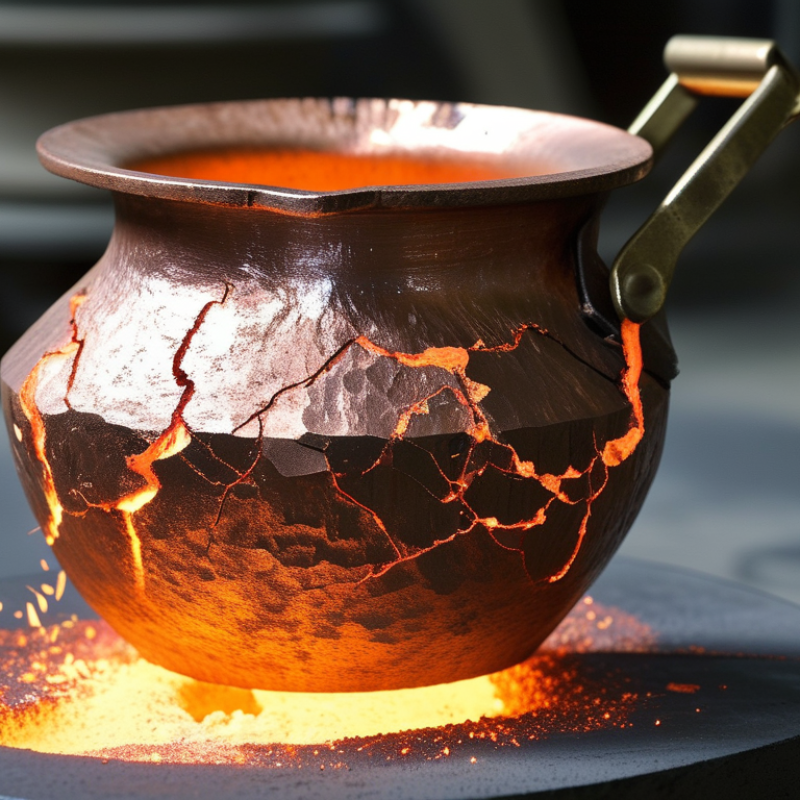
A crucible is more than a container for molten copper. During copper melting, it holds the metal while managing intense heat and chemical exposure. Copper melts at about 1,085°C, so weak materials can fail quickly. A suitable crucible transfers heat steadily and reduces sudden temperature changes. This helps the copper melt evenly, with fewer cold pieces remaining in the charge. The process can look simple.
Its deeper role is chemical protection. Molten copper reacts with air, especially when overheated or held too long. A sound crucible limits unnecessary exposure and helps keep oxides away from the melt. It also prevents ash, scale, and furnace debris from mixing easily with the metal. Clean surfaces matter. Even small contaminants may affect fluidity, casting appearance, or later machining. In practical work, a covered crucible can provide extra protection, but no crucible removes every risk.
Shape affects pouring control. A balanced rim gives the operator a steadier stream and fewer metal splashes. Thick walls retain heat, yet they may slow heating and increase weight. However, thicker is not always better. I have seen operators focus on wall strength while overlooking thermal shock resistance. The better choice depends on furnace temperature, copper quantity, heating speed, and pouring frequency. Inspecting for cracks before each melt remains essential. One overlooked hairline crack can widen under heat. That detail deserves respect.
Copper requires a crucible that tolerates intense heat and repeated thermal cycling. Its melting point is about 1,085°C, but the crucible must withstand higher furnace temperatures. Thermal-shock resistance matters when a cold charge enters a heated vessel. Without it, small cracks may spread quickly. A dense structure also limits copper penetration and reduces contamination during extended melting. Low porosity helps maintain cleaner metal.
Chemical compatibility is equally important. Copper can react with unsuitable refractory materials, especially when fluxes or impurities are present. The crucible should resist corrosion, oxidation, and chemical attack throughout the melt. Smooth internal surfaces make cleaning easier after solidified metal is removed. They also reduce trapped residues. Material selection must match the furnace atmosphere, heating method, and expected operating temperature. One choice cannot suit every setup.
Mechanical strength deserves attention, particularly during pouring and handling. A crucible may survive melting but fail when lifted, tilted, or exposed to uneven heating. The wall should remain stable without becoming excessively heavy. This balance is easy to overlook. Regular inspection can reveal hairline cracks, swelling, surface flaking, or unusual discoloration. Replace questionable crucibles early. A perfect service life is unrealistic, and even careful operators can miss gradual damage.
Crucible material directly influences copper purity, fluidity, and final surface quality. Copper absorbs oxygen easily during melting, so a porous or reactive crucible can introduce unwanted oxides. Clay-graphite crucibles often provide good thermal stability and moderate chemical resistance. Silicon-carbide materials heat quickly and tolerate repeated temperature changes. Ceramic options can limit contamination, but they may crack under sudden thermal shock. No material performs perfectly in every furnace.
A suitable crucible should match the melting temperature, furnace atmosphere, batch size, and heating method. Clean surfaces matter too. Old flux, metal residue, and trapped moisture can affect new copper melts. In practical testing, operators should inspect the crucible for hairline cracks before every cycle. A small crack may become a serious failure after heating. That simple check is easy to overlook. Pouring temperature also deserves attention. Excessive heat can increase oxidation and waste energy, while insufficient heat may create incomplete filling and visible defects.
Tips: Preheat the crucible gradually and keep it dry. Use dedicated tools for copper to reduce cross-contamination. Avoid scraping aggressively, since damaged surfaces can shed particles into the melt. Record melting temperature, holding time, and casting results. These notes reveal patterns, although they may not explain every defect. When copper quality changes unexpectedly, review the crucible condition before blaming the alloy or furnace.
Copper melts at about 1,085°C, but the crucible needs additional thermal margin. Choose a vessel rated well above your furnace temperature. Graphite-clay crucibles offer good heat transfer and are common for clean copper charges. Silicon carbide options usually provide stronger resistance to thermal shock and repeated heating. The best choice depends on furnace type, batch size, and heating frequency.
Check chemical compatibility before purchasing. Copper can oxidize, especially when air enters an open furnace. A suitable crucible should resist oxidation and limit metal contamination. Avoid using a crucible that previously held unknown alloys. Even small residues can change copper’s color, conductivity, or casting behavior. Keep it dry. Moisture may create dangerous steam expansion during preheating.
Capacity also matters. Leave headspace above the molten metal to prevent splashing during handling. A narrow, stable shape can improve pouring control, while excessive wall thickness may slow heating. Inspect the surface before every melt. Hairline cracks, rough patches, and swollen walls are warning signs. In practical workshops, replacing a questionable crucible is cheaper than repairing contaminated copper or damaged equipment. I have found that selection is not always perfect; actual furnace conditions can expose weaknesses that specifications miss. Record heating cycles, cooling speed, and visible wear, then adjust the next purchase accordingly.
A crucible gives copper a controlled, stable chamber during melting. Safety depends on correct use, not the container alone. NIST Chemistry WebBook lists copper’s melting point at 1,084.62°C, so ordinary steel tools can fail quickly near the melt. Choose a crucible rated above your working temperature, with suitable resistance to copper and thermal shock. Graphite, silicon carbide, and ceramic options behave differently. Check the manufacturer’s technical data before use.
Experience shows that moisture creates the greatest surprise. Dry the crucible, tools, and copper scrap completely. A small water pocket can flash into steam and eject molten metal. Preheat gradually, then inspect the surface for cracks, chips, or unusual discoloration. The Occupational Safety and Health Administration emphasizes guarding workers from molten-metal splash, heat, and inadequate ventilation. Use a face shield, heat-resistant gloves, protective clothing, and local exhaust ventilation. Keep the floor clear and plan the lifting route.
Tips: Use a calibrated temperature instrument, not color alone. Load clean, dry pieces slowly. Avoid overfilling; leave room for movement and slag. Hold the crucible steadily, because efficiency is lost when heat escapes during long transfers. The International Energy Agency reports that industrial heat remains a major energy-use challenge, making insulation and shorter handling times practical efficiency measures. My own caution is simple: a crucible may look sound while weakened inside. Replace doubtful equipment. Cheap confidence can become an expensive mistake.
| Category | Parameter | Typical Value or Requirement | Why It Matters for Copper Melting |
|---|---|---|---|
| Copper Property | Melting point of pure copper | 1,084.62 °C | The crucible must safely withstand temperatures above the copper melting point. |
| Operating Temperature | Typical pouring temperature for pure copper | Approximately 1,150–1,250 °C | A moderate superheat supports complete melting and fluid pouring while limiting unnecessary oxidation and energy use. |
| Crucible Material | Graphite or clay-graphite | Common choice for nonferrous copper melting | Good thermal conductivity and resistance to nonferrous molten metals can promote efficient heating and consistent melting. |
| Crucible Material | Silicon-carbide-based crucible | Suitable for demanding thermal cycling when rated for the furnace temperature | High thermal conductivity and mechanical strength can help shorten heat-up time and improve service life. |
| Capacity Planning | Recommended working fill level | About 70–85% of the rated capacity | Leaving headspace reduces the risk of overflow, splashing, and loss of molten metal during charging and pouring. |
| Copper Density | Density of solid copper near room temperature | Approximately 8.96 g/cm³ | Copper is heavy for its volume, so the crucible, lifting equipment, and furnace support must be rated for the total load. |
| Thermal Shock | Preheating before charging | Dry and gradually preheat according to the crucible manufacturer’s instructions | Removing moisture and reducing rapid temperature changes helps prevent cracking, spalling, and premature failure. |
| Charging Practice | Condition of copper charge | Use clean, dry, correctly sized metal; add heavy pieces carefully | Dry charge material reduces steam-related hazards, while controlled loading limits impact damage to the crucible. |
| Oxidation Control | Exposure of molten copper to air | Minimize open holding time and avoid excessive furnace temperature | Limiting oxidation can reduce dross formation, metal loss, and the need for additional refining. |
| Temperature Control | Temperature measurement | Use a calibrated, suitable high-temperature measuring device | Accurate control helps prevent overheating, protects the crucible, and improves repeatability between batches. |
| Inspection | Pre-use crucible inspection | Check for cracks, deep wear, distortion, coating loss, and contamination | Early detection lowers the risk of molten-metal leakage and unexpected production downtime. |
| Handling Safety | Personal protective equipment | Face shield, heat-resistant clothing, gloves, safety footwear, and suitable eye protection | Molten copper can cause severe thermal injury; protective equipment and controlled access are essential. |
| Furnace Compatibility | Crucible and furnace matching | Match crucible shape, capacity, atmosphere, heating method, and temperature rating | Correct matching improves heat transfer, reduces handling stress, and supports stable operating cycles. |
| Efficiency Benefit | Batch consistency | Use consistent charge mass, temperature, holding time, and pouring procedure | A repeatable process improves yield, reduces remelting, and makes energy consumption easier to control. |
| Safety note: Values are typical operating guidelines, not universal limits. Always follow the crucible, furnace, lifting-equipment, and workplace safety instructions applicable to the specific installation. | |||
„Thanks to the LUVIR technology, the solder resist process could be switched directly from the previously used mask exposure to direct exposure. As an outstanding digital solution on the market, this technology has been able to demonstrate fast process times and superior quality on our certified conventional ink in production. This allowed us to fully digitize the solder mask process at low cost – without process or ink adjustments. An excellent benefit to our production in Rot am See.“
Ralf Göhringer (Head of Production WE Rot am See)
I would definitely recommend the Limata machine and team for a future company purchase
Michael Greenaway
Compunetics Inc.
“The Limata ldi has been amazing!! Best thing we did was buy this machine”
Richard Brady
GM
Circuitlabs
“Since 2019, we have been running the Limata X1000 LDI system (including LUVIR for solder mask imaging) in daily production as an addition to our current process with film. The machine was capable of properly exposing Taiyo PSR-4000 BN (DI) solder mask types on normal to high-copper boards using a new and unique direct imaging process. The machine operating interface is very user friendly which allowed for a quick technical training curve. The pre-registration processing reduced several seconds of production time at every print. Limata support and service staff is incomparable. They supported our team every step of the way at basically any time of the day or night, with literally, an immediate response time, customizing the software interface to best fit our Operations and needs.
We have exposed more than 8,000 prints since end of October, on various solder mask colors and some resist film panels. Limata, has proven to be very capable and innovative. They are a strong contender in the industry.
We have very much enjoyed this project, and working with the team!
Thank you Limata for the continued support and being a part of our growth.”
Bill Sezate
Vice President, GM
Summit Interconnect
As a replacement to our current contact exposure process with film, the LIMATA X2000 system including LUVIR-Technology was capable of properly exposing non-LDI solder mask types using a direct imaging process. The machine offers cutting edge software with a very intuitive operating interface which allowed for quick technician training curve. The dual drawer system combined with pre-registration processing reduced several seconds of production time at every machine cycle. Limata support and service staff is world class. They added software patches to keep production running at shortest possible response times, customized the software interface to best fit our in-house Operations system, and even wrote a step-by-step machine processing manual. As a result of the project, we have exposed more than 16,000 times on various product types and solder mask brands/colors. Limata, in a very short timeframe as a company, has definitely shown they are truly innovative and will be challenging the industry of direct imaging for the top spot.
Kevin Beattie
Process Engineer
TTM Technologies
Forest Grove Division
