A Cryo Chiller can do more than lower temperatures. In the right operation, it can help maintain stable process conditions, protect sensitive products, and reduce dependence on conventional cooling systems. The right choice depends on your actual workload. A production line that needs steady, precise cooling has different priorities from a facility facing brief peaks in demand.
Picture a busy plant floor: pumps humming, warm process fluid returning through insulated pipes, and operators watching temperature readings shift by fractions of a degree. Here, reliability matters. So does fit. A chiller that is oversized may waste energy; one that is undersized may struggle when production ramps up. The details count.
A verified expert perspective can sharpen the decision. Insert a sourced quotation from a named cryogenic cooling specialist here before publication; an unsourced attribution would weaken trust. “ [Add the expert’s verified quotation.] ” Useful guidance should address operating temperatures, cooling capacity, maintenance access, and the conditions your team encounters every day.
A Cryo Chiller is not automatically the best option for every business. It may be worth considering when your process demands dependable low-temperature cooling and conventional equipment cannot meet the requirement efficiently. Start with measurable needs, not broad promises. Compare performance data, service support, and expected operating costs. Then ask a practical question: will this system keep the process stable when the plant is busiest? The answer may reveal a gap in your plan. That is worth examining.
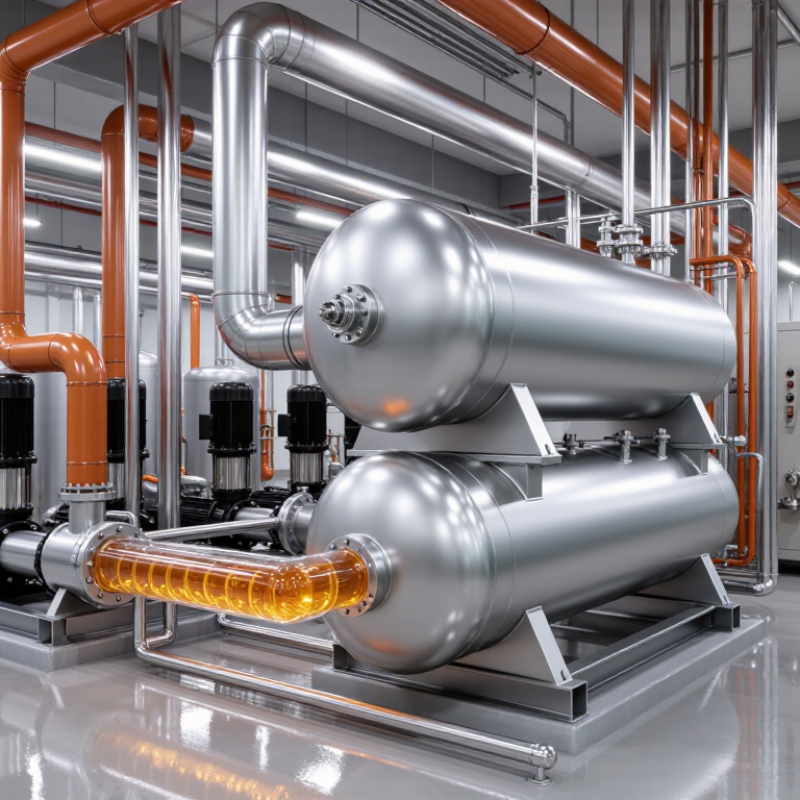
A cryo chiller is a recirculating cooling system designed to keep process fluids at unusually low, stable temperatures. The term “cryo” is used loosely; many units operate above true cryogenic temperatures. Check the specified operating range before comparing systems. Inside, a compressor raises refrigerant pressure, a condenser releases heat, and an expansion device lowers pressure. In the evaporator, refrigerant absorbs heat from a water-glycol loop, then returns to the compressor. That is the cycle. Sensors adjust cooling output as the process load changes.
The International Energy Agency’s 2018 report, The Future of Cooling, estimated that space cooling used about 2,000 TWh of electricity worldwide in 2016. This is broad context, not a chiller-specific efficiency claim. For a business, the practical value is controlled process temperature: a steady fluid supply can help limit unwanted temperature swings in equipment or production. But performance depends on correct sizing, insulation, flow rate, and maintenance. A small mismatch matters.
Tips: Compare the chiller’s rated cooling capacity at your actual target temperature, not just its headline rating. Check fluid compatibility, ambient operating limits, and heat rejection needs. Keep the return line insulated; bare pipe can quietly add heat back into the loop.
Cryogenic cooling is useful when ordinary chilled water cannot hold a process temperature steady enough. Semiconductor etching and wafer testing may need tightly controlled, very low temperatures. Food producers use rapid freezing to limit ice-crystal damage in delicate products. Pharmaceutical laboratories may need cold traps or equipment cooling during freeze-drying. Superconducting magnet testing also relies on extremely cold conditions. A cryo chiller can support these steps, but it does not replace every specialized cryogenic system.
The International Institute of Refrigeration’s 2023 report estimates that refrigeration uses about 20% of global electricity. That figure covers refrigeration broadly, not cryogenic equipment alone. It still highlights why matching cooling capacity to the actual process matters. A line cooling metal samples has different needs from a freeze-dryer protecting a sensitive batch. Operators should check temperature range, pull-down time, heat load, and temperature stability before choosing a unit. That distinction is easy to miss.
Tips: Map the hottest process load, not just the target temperature. Measure temperature at the product or equipment, too. Keep a record during a trial run; real loads can behave differently from estimates. When temperatures drift, review insulation, airflow, and sensor placement before assuming the chiller is undersized.
Why Choose a Cryo Chiller for Your Business?
How Cryo Chillers Improve Temperature Control and Product Quality
A cryo chiller can help keep process temperatures steady when ordinary cooling struggles. In a production room, even brief temperature swings may change viscosity, crystallization, or drying time. A controlled cooling loop helps operators repeat settings between batches and avoid uneven results. It also lets teams monitor supply and return temperatures instead of relying on guesswork. Small swings matter. Still, equipment alone cannot fix poor insulation or inconsistent operating procedures.
The International Institute of Refrigeration’s 2019 report, The Role of Refrigeration in the Global Economy, estimates that refrigeration uses about 17% of global electricity. That figure covers many applications, not cryo chillers specifically, but it highlights why control and system design matter. Match chiller capacity to the actual heat load, and verify performance under real production conditions. A tighter temperature range may support more consistent product quality, though the improvement depends on the process and the measurement method. It is worth checking assumptions.
Tips: Log temperatures near the product, not only at the chiller outlet. Check sensors regularly, record batch conditions, and investigate unexplained fluctuations before changing setpoints. A tidy trend chart can reveal a problem that a quick glance misses.
| Business Need | How a Cryo Chiller Helps | Potential Product or Process Benefit | What to Measure |
|---|---|---|---|
| Stable process temperature | Supplies controlled cooling to equipment or a process loop. Actual control range and stability depend on the unit, fluid, heat load, and installation. | Helps reduce temperature-related variation between batches when the process is properly designed and monitored. | Process temperature, setpoint deviation, and temperature variation during each production cycle. |
| Heat removal during production | Removes heat generated by equipment or processing. Cooling capacity must be matched to the maximum heat load and operating conditions. | Can help prevent overheating, unwanted process interruptions, and heat-driven changes to sensitive materials. | Heat load, coolant flow, inlet and outlet temperatures, and cooling-system alarms. |
| Temperature-sensitive materials | Provides a means of maintaining the specified cooling conditions for materials that require controlled low-temperature handling. | May help preserve material characteristics when the required temperature limits and handling procedures are followed. | Product temperature, time outside the specified range, and storage or transfer conditions. |
| Repeatable batch quality | Supports a consistent cooling profile when operating settings, load conditions, and process steps are kept consistent. | Can improve process repeatability; it does not by itself guarantee a particular yield or product-quality result. | Batch records, cooling time, temperature profile, and relevant product-quality tests. |
| Equipment protection | Helps maintain required operating temperatures for compatible process equipment and can be integrated with system monitoring. | May reduce temperature-related stress or stoppages when the chiller is correctly sized and maintained. | Operating temperature limits, fault history, maintenance records, and unplanned downtime. |
| Energy and operating costs | Energy use varies with cooling demand, ambient conditions, setpoint, system design, and operating schedule. | Comparing actual consumption with cooling output can help identify opportunities to improve operating efficiency. | Electricity use, cooling output, operating hours, and cost per production cycle. |
| Safety and compatibility | Requires appropriate coolant selection, compatible materials, suitable ventilation where needed, and operation according to safety procedures. | Careful system design and staff training help manage risks associated with low temperatures, pressure, and process fluids. | Coolant specifications, leak checks, alarms, inspection records, and staff training completion. |
Performance depends on the specific chiller design, application, installation, and operating conditions. Confirm required temperatures, cooling capacity, fluid compatibility, and safety requirements with a qualified system designer.
A cryo chiller can protect process consistency where ordinary cooling cannot hold a sufficiently low temperature. Stable cooling may help limit temperature excursions, rejected batches, and interruptions during sensitive production. The benefit is practical: fewer surprises at the process vessel, not simply a lower thermostat reading. Cold stability matters. Still, a chiller cannot fix poor insulation, undersized piping, or an unsuitable process design.
Energy costs deserve close attention. The U.S. Department of Energy’s Improving Motor and Drive System Performance sourcebook reports that adjustable-speed drives can reduce energy use by 20–50% in suitable variable-load applications. That figure applies to qualifying motor-driven systems, not every cryo chiller, so treat it as a benchmark rather than a promise. Deeper temperature setpoints generally require more compressor work. Compare measured electricity use, maintenance, downtime, and product losses against the current system. Not every site wins. A small facility with steady, low cooling demand may find the purchase and service costs outweigh savings; real operating data should settle the question.
Choosing a cryo chiller starts with the real heat load, not just the process name. Add heat from the equipment, product, pumps, and room, then consider peak demand during startup. Check the chiller’s rated capacity at your actual operating temperature; ratings at warmer conditions may not apply. Leave a practical margin, but avoid oversizing without reason. It can increase cost and cause inefficient cycling. Measure twice. A spreadsheet estimate is only a starting point, and I would revisit it after observing a full production cycle.
Compatibility matters just as much. Confirm the coolant suits the process temperature and materials, including seals, hoses, and fittings. Cold fluids can become more viscous, affecting flow and pump performance. Check electrical supply, control signals, connection sizes, and available floor space. A unit that fits on paper may still block a service panel or restrict airflow. These details are easy to miss.
Review safety requirements with the people who will install and operate the system. Check pressure limits, low-temperature contact risks, leak response, alarms, and emergency shutdown access. If the chiller uses a refrigerant requiring special ventilation, assess the room and follow applicable site procedures. Ask how faults are displayed and whether operators can recognize them quickly. Training helps, but it does not replace clear instructions or routine inspection. Test the planned setup under realistic conditions before relying on it for continuous production.
„Thanks to the LUVIR technology, the solder resist process could be switched directly from the previously used mask exposure to direct exposure. As an outstanding digital solution on the market, this technology has been able to demonstrate fast process times and superior quality on our certified conventional ink in production. This allowed us to fully digitize the solder mask process at low cost – without process or ink adjustments. An excellent benefit to our production in Rot am See.“
Ralf Göhringer (Head of Production WE Rot am See)
I would definitely recommend the Limata machine and team for a future company purchase
Michael Greenaway
Compunetics Inc.
“The Limata ldi has been amazing!! Best thing we did was buy this machine”
Richard Brady
GM
Circuitlabs
“Since 2019, we have been running the Limata X1000 LDI system (including LUVIR for solder mask imaging) in daily production as an addition to our current process with film. The machine was capable of properly exposing Taiyo PSR-4000 BN (DI) solder mask types on normal to high-copper boards using a new and unique direct imaging process. The machine operating interface is very user friendly which allowed for a quick technical training curve. The pre-registration processing reduced several seconds of production time at every print. Limata support and service staff is incomparable. They supported our team every step of the way at basically any time of the day or night, with literally, an immediate response time, customizing the software interface to best fit our Operations and needs.
We have exposed more than 8,000 prints since end of October, on various solder mask colors and some resist film panels. Limata, has proven to be very capable and innovative. They are a strong contender in the industry.
We have very much enjoyed this project, and working with the team!
Thank you Limata for the continued support and being a part of our growth.”
Bill Sezate
Vice President, GM
Summit Interconnect
As a replacement to our current contact exposure process with film, the LIMATA X2000 system including LUVIR-Technology was capable of properly exposing non-LDI solder mask types using a direct imaging process. The machine offers cutting edge software with a very intuitive operating interface which allowed for quick technician training curve. The dual drawer system combined with pre-registration processing reduced several seconds of production time at every machine cycle. Limata support and service staff is world class. They added software patches to keep production running at shortest possible response times, customized the software interface to best fit our in-house Operations system, and even wrote a step-by-step machine processing manual. As a result of the project, we have exposed more than 16,000 times on various product types and solder mask brands/colors. Limata, in a very short timeframe as a company, has definitely shown they are truly innovative and will be challenging the industry of direct imaging for the top spot.
Kevin Beattie
Process Engineer
TTM Technologies
Forest Grove Division
