Hydrated lime can look deceptively simple: a pale powder moving from a storage bin into a mixer. In practice, moisture, feed consistency, and mixing time can affect whether the final blend behaves as expected. A Hydrated Lime Mixer helps businesses control these steps, reduce uneven batches, and keep material moving through production. The right choice depends on the application, capacity, and the powder’s actual behavior—not just the machine’s advertised output.
For a transparent industry perspective, consider this illustrative statement from process engineer Elena Ward; it is not a verified quotation: “A reliable lime blend begins with understanding the powder, then matching the mixer to the process.” That principle matters on the plant floor. Operators may need to check for buildup around the discharge, watch for dust during feeding, and confirm that the mixer handles changing batch sizes. Small details count.
A well-selected mixer can support steadier production and easier quality checks. It cannot correct every process problem. Poor storage or inconsistent feeding can still create trouble. That is easy to overlook. Before investing, compare mixer designs, review maintenance access, and test representative material when possible. Ask suppliers for performance data tied to your operating conditions. A careful choice often beats a larger machine. But the final decision should reflect real production records, not assumptions.
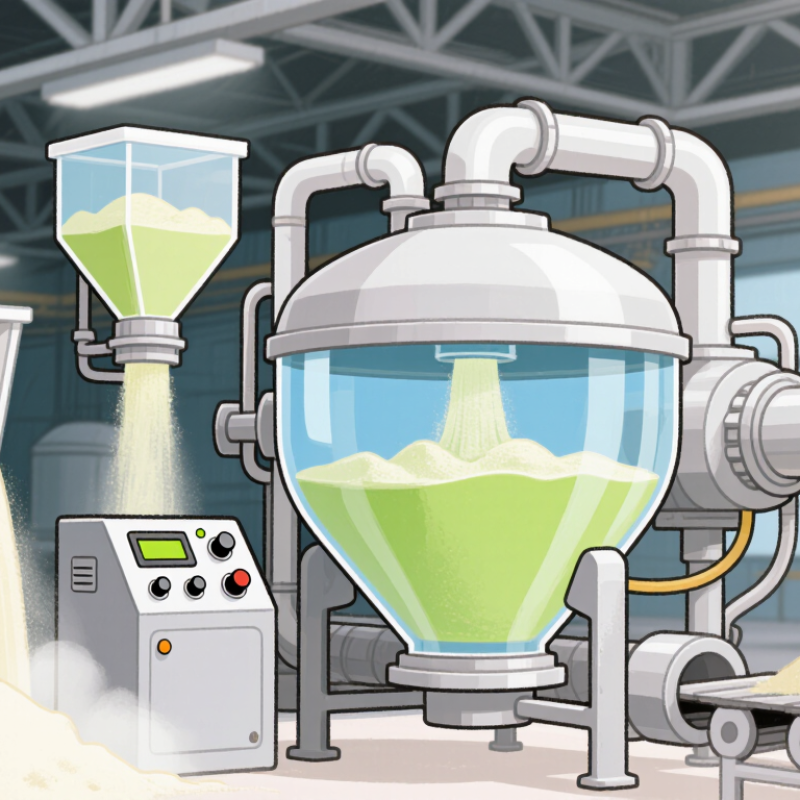
A hydrated lime mixer is equipment used to blend calcium hydroxide powder with water or other process materials. In slurry preparation, powder enters a mixing tank while measured water circulates through it. An impeller or paddle keeps the contents moving, helping wet the fine particles and reduce dry pockets. Some systems operate in batches; others feed and discharge continuously. The design depends on the required output and the thickness of the mixture. It is not one-size-fits-all.
During operation, controlled feeding and steady agitation help produce a more consistent slurry. Operators can check the mixture’s appearance and concentration before it moves to storage or the next process step. A pale, even mixture is a useful visual sign, though appearance alone cannot confirm quality. Enclosed feed points and dust collection can limit airborne powder, while routine inspection helps catch buildup on blades or tank walls.
Small details matter. Adding water too quickly may encourage lumps, and a mixer that works well at one scale may perform differently at another.
I would not assume that stronger agitation always means better mixing; the right speed depends on the equipment and material.
A hydrated lime mixer depends on a few well-matched parts: a tank, agitator, motor and gearbox, powder feeder, and dust-control hood. Baffles help limit swirling, while the agitator moves powder through the water instead of letting it settle at the bottom. The USGS Mineral Commodity Summaries 2025 estimates U.S. lime production at about 17 million metric tons in 2024, reflecting the scale of industrial handling behind reliable mixing systems.
During operation, operators meter hydrated lime into water at a controlled rate. The impeller then disperses the powder and helps form a consistent slurry. Feed rate, water flow, and mixing time all affect the result.
A sample from the outlet can reveal dry pockets or unwanted settling. Small parts matter. Even a strong motor cannot fix poor powder feeding. A clear-looking surface is not proof of uniformity; that assumption deserves checking.
Tips: Start the mixer before feeding powder, and add lime gradually to reduce clumping and airborne dust. Check impeller wear, seals, and settled material during routine cleaning. Keep a simple batch log of water volume, feed rate, and mixing time; it can help explain a batch that behaves differently.
A hydrated lime mixer can make daily production steadier by dispersing powder into water at a controlled rate. Operators can monitor feed speed, liquid flow, and mixing time instead of relying on visual judgment alone. The difference shows up in practical ways: fewer dry pockets, less rework, and a more predictable slurry for dosing. Small gains matter.
The U.S. Geological Survey’s Mineral Commodity Summaries 2024 estimated U.S. lime production at about 17 million metric tons in 2023. That scale makes reliable handling important, though the figure is not a measure of mixer performance. A well-designed system can also reduce open transfers and contain airborne dust near charging points. Enclosed feeding, accessible inspection ports, and cleanable surfaces help crews manage routine work. No mixer removes every exposure or maintenance need.
For a business, the strongest benefit is often process control rather than a dramatic speed claim. Consistent slurry concentration can support downstream treatment and reduce adjustments between batches. Variable lime quality, moisture, and operator habits still affect results; equipment cannot erase those factors. A practical evaluation should check batch size, required slurry concentration, washdown access, and spare-part availability. Also inspect the mixer during a real cleaning cycle. That is where weak design tends to show.
On a pure-chemical basis, hydrated lime can theoretically neutralize about 27.0 mol of hydrogen ions per kilogram. A well-designed mixer helps disperse lime consistently in a process; actual performance depends on product purity, particle size, water quality, and operating conditions. Values are calculated from molecular masses and stoichiometry, not measured plant results.
Hydrated lime mixing supports water treatment, flue-gas cleaning, soil stabilization, and masonry production. In water plants, operators use it to adjust pH; a poorly dispersed batch can leave pale clumps in a tank and uneven treatment. In construction, consistent mixing helps produce workable lime slurry for soil improvement or mortar. The need is substantial: The U.S. Geological Survey’s Mineral Commodity Summaries 2024 estimated that environmental applications accounted for about 24% of U.S. lime consumption in 2023. That category includes water treatment and pollution control, though the figure covers lime broadly, not hydrated lime alone.
A suitable mixer helps distribute powder into water without persistent lumps and supports repeatable batches across shifts. Wastewater facilities may prioritize dependable dosing and easy cleaning, while soil-treatment operations often need equipment that handles larger, abrasive batches. The best choice depends on throughput, moisture control, particle behavior, and cleaning access—not simply motor power. There is no universal setup. Operators should test their actual material before purchase.
Tips: Feed powder gradually, keep the mixing zone free of dead corners, and check slurry consistency at the discharge. Dust matters. Use suitable local extraction and protective equipment, and record batch time, water ratio, and observed clumping. A small trial batch can reveal problems that a specification sheet may miss.
Choose a hydrated lime mixer around the material’s actual flow and your production rate, not just the largest batch you expect to run. Check whether the lime arrives dry or contains small clumps, and confirm that the mixer can handle its bulk density. A ribbon or paddle design may suit different batch sizes and mixing goals; ask a qualified supplier to review your process before selecting one. Check the motor rating, access for cleaning, and compatibility of contact surfaces with lime. Dust control matters. A tight cover and suitable extraction connection can reduce airborne powder near the loading point. Leave room for maintenance, too.
Before purchase, ask to see how operators reach the seals, bearings, and discharge gate. These details shape routine upkeep. Keep a log of unusual noise, rising motor load, leakage, or residue around seals. Inspect wear parts at intervals suited to operating hours and the material’s abrasiveness, rather than waiting for failure. Clean according to the equipment instructions and your site procedures; avoid introducing moisture unless the process specifically permits it. Lime dust can irritate eyes and airways, so use appropriate protective equipment and follow the site’s handling guidance. Small oversight. One limitation is easy to miss: a mixer that works well during a short trial may behave differently during continuous production. Recheck performance after installation, and adjust feed rate only after observing the actual blend.
| Decision Area | What to Assess | Selection Guidance | Maintenance and Verification |
|---|---|---|---|
| Process objective | Determine whether the mixer will blend dry hydrated lime, prepare a lime slurry, or perform both duties. | Choose equipment for the actual process. Dry blending and liquid slurry preparation involve different material handling and mixing requirements. | Check the mixer and connected equipment against the process specification whenever the product or operating procedure changes. |
| Batch or continuous operation | Review production rate, batch size, operating hours, and how the mixer connects to upstream and downstream equipment. | Select batch equipment for discrete recipes and continuous equipment for a steady, controlled feed. Confirm capacity using the supplier’s stated operating conditions. | Compare actual throughput and cycle times with the process targets; investigate recurring delays or inconsistent output. |
| Mixing performance | Define the required uniformity and, for slurry, the acceptable solids concentration and consistency. | Request a material trial or documented performance data using representative hydrated lime and the intended operating conditions. | Use a consistent sampling plan to check product uniformity or slurry concentration against the site specification. |
| Powder handling and dust control | Assess filling, discharge, transfer points, and the potential for airborne lime dust. | Consider enclosed transfer points and appropriately designed dust collection. Confirm that the complete installation suits the site’s exposure-control requirements. | Inspect seals, connections, extraction ducting, and dust-collection components. Clean using approved methods that avoid dispersing dust. |
| Feed consistency | Check how the lime is stored and fed, including the risk of bridging, uneven flow, or moisture exposure. | Specify a suitable feeding arrangement and confirm that the mixer can handle the expected material condition and feed pattern. | Inspect hoppers, feeders, and transfer points for buildup or flow problems; keep the material storage area dry as required by the process. |
| Materials and wear parts | Identify all wetted or product-contact parts and the service conditions, including slurry exposure where applicable. | Confirm material compatibility and wear-part selection with the equipment supplier for the actual lime, water, and operating conditions. | Inspect the vessel, mixing elements, liners, and seals for corrosion, abrasion, deposits, or damage according to the maintenance plan. |
| Drive and operating load | Review expected operating load, start-up conditions, duty cycle, and access to electrical and mechanical services. | Size the drive and controls for the specified duty. Confirm that guards, interlocks, and emergency-stop provisions meet applicable site requirements. | Monitor abnormal noise, vibration, temperature, and current draw. Isolate energy sources before inspection or servicing. |
| Cleaning and changeovers | Determine how often the mixer must be cleaned and whether product changeovers or slurry drainage are required. | Consider access for inspection and cleaning, as well as practical drain and discharge arrangements for the process. | Follow the equipment instructions and site procedures for cleaning. Verify that the mixer is safely isolated before opening or entering any guarded area. |
| Operator safety | Account for hydrated lime’s alkaline, irritating dust and the possibility of eye or skin contact. | Provide suitable enclosure, safe access, guarding, and dust controls as part of the installation design. | Use the site risk assessment and safety data sheet to determine required PPE and handling procedures. Keep eyewash and emergency arrangements accessible where required. |
| Routine maintenance planning | Review inspection access, spare-part availability, service intervals, and the maintenance skills available on site. | Compare lifecycle needs, not only purchase cost. Obtain operating, cleaning, and maintenance instructions before commissioning. | Record inspections, lubrication, repairs, and replaced parts. Set service intervals using the manufacturer’s instructions and actual operating experience. |
„Thanks to the LUVIR technology, the solder resist process could be switched directly from the previously used mask exposure to direct exposure. As an outstanding digital solution on the market, this technology has been able to demonstrate fast process times and superior quality on our certified conventional ink in production. This allowed us to fully digitize the solder mask process at low cost – without process or ink adjustments. An excellent benefit to our production in Rot am See.“
Ralf Göhringer (Head of Production WE Rot am See)
I would definitely recommend the Limata machine and team for a future company purchase
Michael Greenaway
Compunetics Inc.
“The Limata ldi has been amazing!! Best thing we did was buy this machine”
Richard Brady
GM
Circuitlabs
“Since 2019, we have been running the Limata X1000 LDI system (including LUVIR for solder mask imaging) in daily production as an addition to our current process with film. The machine was capable of properly exposing Taiyo PSR-4000 BN (DI) solder mask types on normal to high-copper boards using a new and unique direct imaging process. The machine operating interface is very user friendly which allowed for a quick technical training curve. The pre-registration processing reduced several seconds of production time at every print. Limata support and service staff is incomparable. They supported our team every step of the way at basically any time of the day or night, with literally, an immediate response time, customizing the software interface to best fit our Operations and needs.
We have exposed more than 8,000 prints since end of October, on various solder mask colors and some resist film panels. Limata, has proven to be very capable and innovative. They are a strong contender in the industry.
We have very much enjoyed this project, and working with the team!
Thank you Limata for the continued support and being a part of our growth.”
Bill Sezate
Vice President, GM
Summit Interconnect
As a replacement to our current contact exposure process with film, the LIMATA X2000 system including LUVIR-Technology was capable of properly exposing non-LDI solder mask types using a direct imaging process. The machine offers cutting edge software with a very intuitive operating interface which allowed for quick technician training curve. The dual drawer system combined with pre-registration processing reduced several seconds of production time at every machine cycle. Limata support and service staff is world class. They added software patches to keep production running at shortest possible response times, customized the software interface to best fit our in-house Operations system, and even wrote a step-by-step machine processing manual. As a result of the project, we have exposed more than 16,000 times on various product types and solder mask brands/colors. Limata, in a very short timeframe as a company, has definitely shown they are truly innovative and will be challenging the industry of direct imaging for the top spot.
Kevin Beattie
Process Engineer
TTM Technologies
Forest Grove Division
