Fresh food, flowers, medicines, and other temperature-sensitive goods can lose quality during a warm or delayed delivery. A Refrigeration Unit Truck helps keep cargo within a controlled temperature range as it travels between suppliers, warehouses, and customers. The right setup can reduce spoilage and support more reliable deliveries. Small details matter. An open door at a loading bay can let warm air in. Poorly arranged cartons or an undersized cooling unit may also weaken performance, even when the dashboard displays the target temperature.
Choosing a truck is not simply a matter of selecting the coldest setting. Buyers should consider the cargo’s required temperature range, load volume, route length, outside weather, insulation, and how often doors open. A unit suited to short urban trips may struggle on long summer routes with frequent stops. It happens. Compare cooling capacity, energy use, service access, and temperature monitoring before making a decision. Vehicle specifications and guidance from qualified refrigeration technicians can help confirm whether a truck fits its intended workload. No single model suits every operation, and real delivery conditions may reveal limits that a brochure misses. The sections ahead explore practical benefits, selection factors, and upkeep considerations to support a more informed choice.
Why Choose a Refrigeration Unit Truck?
What Is a Refrigeration Unit Truck?
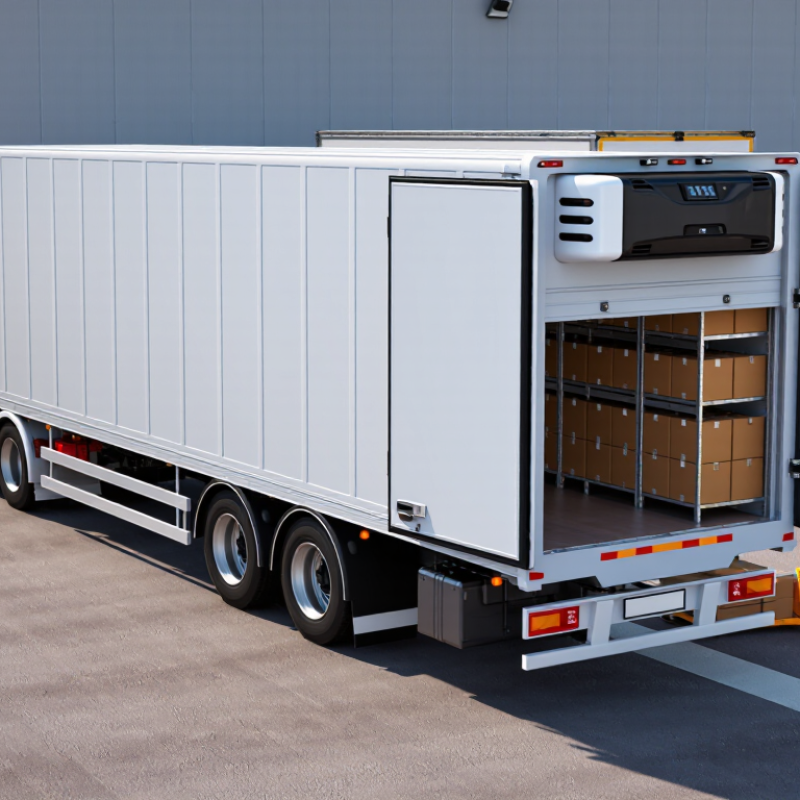
A refrigeration unit truck is a road vehicle with an insulated cargo body and a powered cooling system. The unit circulates cooled air to help keep goods within a chosen temperature range during transport. It is not simply a cold box. Insulation slows heat gain, while the refrigeration system removes heat from inside the cargo area. Performance depends on outside weather, loading, airflow, door openings, and equipment condition.
Businesses choose this setup when deliveries need temperature control across multiple stops or longer routes. It can help protect product quality and limit temperature swings compared with an uninsulated vehicle. The right truck depends on cargo type, load volume, route length, and required set point. A unit cannot reliably cool warm cargo quickly; goods should usually be loaded at their required temperature. That detail is easy to overlook.
Tips: Pre-cool the cargo area before loading. Leave space for air to circulate around boxes, and keep door openings brief. Check the displayed temperature during the route. A packed truck may cool unevenly, so loading plans matter.
Why Choose a Refrigeration Unit Truck? How Does Its Temperature-Controlled System Work?
A refrigeration unit truck manages cargo temperature by removing heat from the insulated body. Its evaporator circulates cooled air, while a compressor and condenser release heat outside. A thermostat reads sensor data and cycles the unit to maintain the selected setpoint. Airflow matters. If boxes block vents, warm pockets can form even when the display shows the target temperature.
Set the temperature according to the cargo’s needs, not a general “cold” setting. Pre-cool the cargo when appropriate; a truck unit is designed to maintain temperature, not rapidly chill warm goods. FAO’s 2019 report, The State of Food and Agriculture, estimated that about 14% of food is lost between post-harvest and retail. Transport is only one part of that chain, but steady temperatures and careful handling can help limit avoidable losses. One imperfect detail: frequent door openings can undo careful settings quickly.
Tips: Pre-cool the vehicle, leave clear air channels between cartons, and check a cargo-level thermometer during loading and delivery. Record readings at handoffs. The display alone is not proof that every pallet stayed within range.
A refrigeration unit truck carries goods that can spoil, soften, or lose quality when temperatures rise. Fresh produce, dairy products, meat, seafood, and prepared meals often need controlled conditions during delivery. Frozen foods require colder settings, while leafy greens may need a different range. One temperature does not suit every load.
Medicines and certain laboratory materials can also require temperature-controlled transport, according to their handling instructions. Before loading, staff should check the product’s required range and confirm that the truck can maintain it. A simple display reading helps, but it does not show whether air is circulating evenly. Keep vents clear, close doors promptly, and use suitable packaging. Small details matter.
A refrigerated truck is especially useful for routes with several deliveries or changing outdoor conditions. For example, a pallet of chilled yogurt can warm during repeated stops if doors remain open too long. Pre-cooling the cargo area and recording temperatures can reduce that risk. Still, refrigeration cannot fix goods that were already mishandled before loading. Even careful operators can overlook a warm corner in a crowded vehicle; checking placement takes time, but it is worth doing.
A refrigeration unit truck keeps perishable cargo within a controlled temperature range while it moves. That matters. Produce, dairy, prepared meals, and some medical supplies can lose quality when exposed to heat. A truck-mounted system supports multi-stop deliveries without repeatedly moving goods into warm air. With suitable insulation and a correctly sized unit, temperatures can stay more stable during ordinary route delays. Results still depend on loading, door openings, outside heat, and maintenance.
The practical advantage is control, not convenience alone. Drivers can monitor compartment readings and respond when temperatures drift. Separate compartments may support loads with different temperature needs, though they add cost and complexity. A refrigerated truck can reduce avoidable spoilage and extend delivery range, but it is not a magic fix. Tightly packed cartons, a worn door seal, or neglected servicing can undermine performance. The trade-off deserves a careful look.
Tips: Pre-cool the cargo space, leave air channels around cartons, and record temperatures at dispatch and arrival. Check door seals and unit alarms routinely. Small habits help. Choose capacity for the hottest route and fullest load, not just an average day; that decision is easy to get wrong.
Why Choose a Refrigeration Unit Truck?
How Do You Choose the Right Refrigeration Unit Truck?
Start with the cargo, not the truck. Fresh produce, frozen food, and medicines may require different temperature ranges and handling conditions. Confirm the required range with your product specifications, then consider how long each delivery takes. A short urban route with frequent stops creates different demands from a long highway journey. Measure twice.
Next, match the truck’s refrigerated capacity to the usable cargo space and expected payload. Thick insulation helps hold temperature, but it also reduces interior room. Check the door seals, floor, and wall panels for gaps or damage; small leaks can make the unit work harder. Ask how quickly it can pull down the temperature after loading, and whether air can circulate around tightly packed cartons. A display reading is useful, but a reliable temperature record offers a clearer picture of performance.
Consider service access, energy use, and the routes the truck will actually travel. Frequent door openings, hot loading bays, and stop-start traffic all affect cooling demand. Make sure the unit can be maintained locally and that routine checks fit your schedule. On paper, choosing capacity seems straightforward. In practice, loads change, and estimates can be wrong. Leave a sensible operating margin without paying for equipment you rarely need.
„Thanks to the LUVIR technology, the solder resist process could be switched directly from the previously used mask exposure to direct exposure. As an outstanding digital solution on the market, this technology has been able to demonstrate fast process times and superior quality on our certified conventional ink in production. This allowed us to fully digitize the solder mask process at low cost – without process or ink adjustments. An excellent benefit to our production in Rot am See.“
Ralf Göhringer (Head of Production WE Rot am See)
I would definitely recommend the Limata machine and team for a future company purchase
Michael Greenaway
Compunetics Inc.
“The Limata ldi has been amazing!! Best thing we did was buy this machine”
Richard Brady
GM
Circuitlabs
“Since 2019, we have been running the Limata X1000 LDI system (including LUVIR for solder mask imaging) in daily production as an addition to our current process with film. The machine was capable of properly exposing Taiyo PSR-4000 BN (DI) solder mask types on normal to high-copper boards using a new and unique direct imaging process. The machine operating interface is very user friendly which allowed for a quick technical training curve. The pre-registration processing reduced several seconds of production time at every print. Limata support and service staff is incomparable. They supported our team every step of the way at basically any time of the day or night, with literally, an immediate response time, customizing the software interface to best fit our Operations and needs.
We have exposed more than 8,000 prints since end of October, on various solder mask colors and some resist film panels. Limata, has proven to be very capable and innovative. They are a strong contender in the industry.
We have very much enjoyed this project, and working with the team!
Thank you Limata for the continued support and being a part of our growth.”
Bill Sezate
Vice President, GM
Summit Interconnect
As a replacement to our current contact exposure process with film, the LIMATA X2000 system including LUVIR-Technology was capable of properly exposing non-LDI solder mask types using a direct imaging process. The machine offers cutting edge software with a very intuitive operating interface which allowed for quick technician training curve. The dual drawer system combined with pre-registration processing reduced several seconds of production time at every machine cycle. Limata support and service staff is world class. They added software patches to keep production running at shortest possible response times, customized the software interface to best fit our in-house Operations system, and even wrote a step-by-step machine processing manual. As a result of the project, we have exposed more than 16,000 times on various product types and solder mask brands/colors. Limata, in a very short timeframe as a company, has definitely shown they are truly innovative and will be challenging the industry of direct imaging for the top spot.
Kevin Beattie
Process Engineer
TTM Technologies
Forest Grove Division
