An Infrared Light Device can help a business add a clearly defined light-based service, but buying one should start with customer needs, not a sales promise. For clinics, spas, and wellness studios, practical questions include wavelength, measured irradiance, treatment area, operating instructions, staff training, and after-sales support. These details shape daily use. They also affect whether a device fits the business’s services and budget.
The market offers a reason to examine the category. The Global Wellness Institute’s 2024 Global Wellness Economy Monitor valued the global wellness economy at $6.3 trillion in 2023 and projected it could reach $9 trillion by 2028. That is context, not proof of demand for any particular device. Local customers may not follow global trends. Michael R. Hamblin, a photomedicine researcher, describes photobiomodulation as “the use of light to stimulate, heal, regenerate, and protect tissue.” His definition helps explain the field, but it is not a guarantee that every device or treatment delivers the same results.
Evidence matters. So does restraint. A business should review the research for its intended use, check the manufacturer’s technical specifications, and explain realistic expectations to clients. A bright panel in a brochure may look impressive; the numbers behind it matter more. Costs, maintenance, and staff time deserve equal attention. Choosing well means weighing credible evidence against the real needs of the people who will use the service.
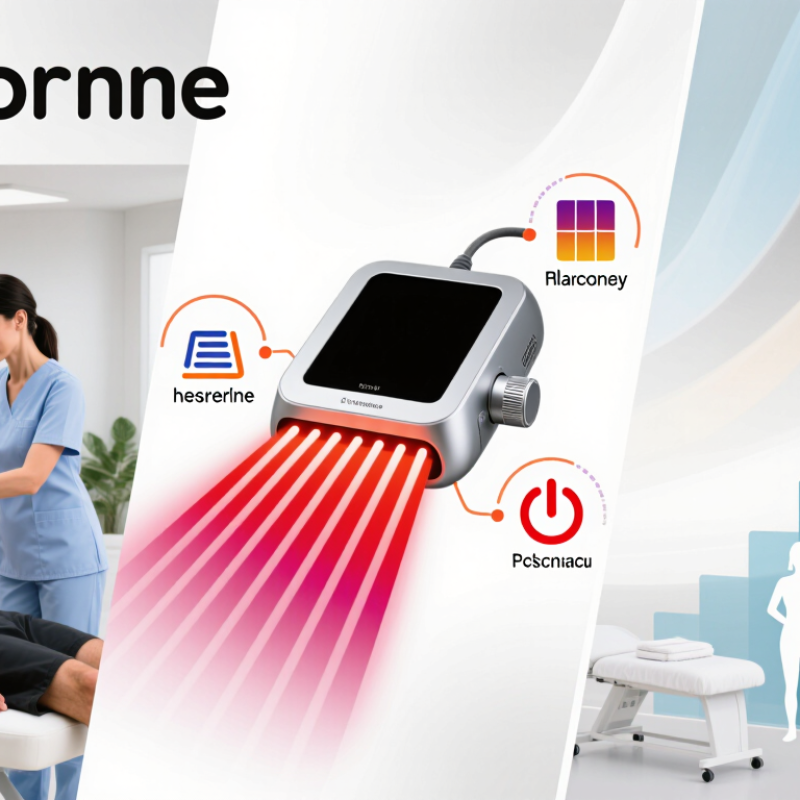
An infrared light device converts electrical energy into infrared radiation, which lies beyond the red end of visible light. You cannot see the beam. You can feel its effect when suitable materials absorb the radiation and warm up. In a workshop, for example, a panel may heat a workpiece directly while nearby air stays cooler at first. Not quite ordinary lighting.
Devices differ in wavelength, power, beam shape, and control settings. Near-infrared and far-infrared units behave differently, and their useful range depends on the task and materials involved. A unit designed for targeted process heating may not suit a room where people need steady comfort. Details matter. A glossy surface can reflect some radiation, while a darker surface may absorb more.
For a business, understanding these basics helps match the device to a real operating need. Check technical specifications, recommended distance, warm-up time, and expected energy use before installation. In a busy workspace, mounting height and nearby materials also affect where heat lands. I would double-check safety instructions, too: intense infrared exposure can create burn or eye risks. The name alone tells you little; the output data and intended use matter more.
This chart shows approximate wavelength ranges for major infrared bands. Infrared devices emit energy that can be absorbed by materials and converted into heat; the heating effect depends on the wavelength and the material. Band boundaries vary by convention.
Wavelength ranges are approximate and shown on a logarithmic scale.
Businesses use infrared devices to measure, inspect, or deliver heat without direct contact. The right type depends on the task, working distance, surface, and environment. Thermal imaging cameras show temperature patterns across electrical panels, production lines, or building surfaces. They can help teams spot unusual hot or cold areas, but they cannot identify the cause by themselves. Reflections and surface properties can affect readings. Context matters.
For quick point checks, infrared thermometers measure surface temperature from a distance. They suit routine checks on moving parts, packaging, or hard-to-reach surfaces. The measured spot grows with distance, so operators should check the device’s distance-to-spot ratio. Shiny surfaces can also produce misleading readings. For continuous monitoring, fixed infrared sensors can track a specific point and trigger an alert when readings cross a set limit. Calibration and placement need attention.
Infrared heaters and emitters serve a different purpose: they transfer radiant heat to materials or work areas. Warehouses may use zoned heaters, while manufacturers may use controlled emitters for drying or heating coatings. Choose output, mounting distance, and controls to suit the material and task. In practice, results are not always tidy. Test on a small area first, and train staff to manage hot surfaces and eye exposure. A practical trial can reveal more than headline power ratings.
Infrared technology supports practical work across manufacturing, building maintenance, food production, agriculture, and wellness services.
In factories, thermal imaging can help teams spot unusually hot bearings or electrical connections before equipment stops. It measures surface temperatures, though; it does not reveal every fault or see through walls.
Building inspectors use it to locate heat loss around window frames and damp areas that need closer checks.
Food businesses may use infrared thermometers to check surface temperatures during routine quality control.
In agriculture, infrared sensors can help monitor crop or livestock conditions, but readings need context and proper calibration.
Wellness providers may use purpose-designed infrared devices for warmth or specific, supervised services. Staff should describe intended use accurately and avoid promising medical results. The fit is not always obvious. A device that works well in one setting may be unsuitable in another.
Tips: Match the device’s wavelength, output, and measurement range to the task. Train staff on distance, exposure time, and safe handling. Keep calibration and maintenance records. Compare readings with another suitable measurement when decisions affect product quality or worker safety.
Adding an infrared light device can give a business a practical way to broaden its service menu. In a wellness studio, for example, a dedicated room can offer scheduled sessions alongside existing services. The value is not just the equipment; it is the experience around it. Clients notice clear instructions, clean surfaces, comfortable seating, and appointments that start on time. Small details matter.
Tips: Start with a defined use case and estimate space, staff time, and ongoing costs before purchasing. Check the device specifications and follow the supplier’s operating and maintenance guidance. Train staff to explain what a session involves—and what it does not promise. Keep claims factual; outcomes vary, and an infrared service should not be presented as a cure.
Businesses may also benefit from predictable scheduling and a distinctive customer offering, especially when sessions fit naturally into existing operations. Track bookings, repeat visits, cleaning time, and customer feedback for several weeks. If demand is weak, reconsider the format rather than assuming the device will sell itself. That is an imperfect part of planning, but a useful one.
| Business consideration | Potential business benefit | What to measure | Practical note |
|---|---|---|---|
| Service diversification | Can add an infrared-light service or equipment option to an existing wellness, fitness, or personal-care offering. | Bookings, repeat visits, revenue per appointment, and customer feedback. | Demand depends on the customer base, service design, and local rules; results are not guaranteed. |
| Space and scheduling | A device with a suitable footprint and defined session settings may fit into an existing room or appointment workflow. | Setup time, session duration, room utilization, and available appointment capacity. | Confirm the device’s dimensions, power requirements, ventilation needs, and manufacturer instructions before purchase. |
| Operating costs | Energy use and maintenance can be included in a straightforward operating-cost estimate. | Power consumption (kW), operating hours, electricity rate, maintenance, and consumables. | Estimate electricity cost as: power in kW × hours used × electricity price per kWh. Check actual specifications and tariffs. |
| Product and service quality | Clear, consistent device settings can support repeatable operating procedures and staff training. | Wavelength, irradiance at the stated distance, treatment area, timer settings, and device uptime. | Compare like-for-like specifications and request test data; output can vary with distance, configuration, and measurement method. |
| Safety and compliance | A documented safety process can help staff use equipment consistently and manage foreseeable risks. | Staff training completion, maintenance records, incident reports, and compliance checks. | Follow the device instructions and applicable local regulations. Medical claims and regulatory requirements depend on the device and jurisdiction. |
| Investment evaluation | A pilot period can help determine whether customer demand and operating performance justify a larger investment. | Purchase and setup costs, utilization, contribution margin, service feedback, and payback period. | Use actual business figures. A basic payback estimate is initial investment divided by monthly net contribution; it is not a revenue forecast. |
Note: Business outcomes vary by device, intended use, local requirements, pricing, and customer demand. Verify product specifications and applicable regulations before purchase or use.
Why Choose an Infrared Light Device for Your Business?
Start with the job the device must do. A clinic, fitness studio, and wellness room may have different space, scheduling, and cleaning needs. Write down who will use it, how often, and where it will sit. Measure the available floor area and check whether staff can position it consistently. Small details matter.
Ask for clear technical information, including wavelength range, measured output, recommended distance, and session guidance. Compare figures only when they were measured under similar conditions. A number without its testing method is hard to interpret. Numbers matter. Check whether the instructions explain eye protection, heat management, cleaning, and routine inspection. Ask what training staff need before using the device with clients.
Look for independent testing and specific, appropriately qualified claims. Marketing language can sound certain; the supporting evidence may be less so. Request written warranty terms, expected maintenance, replacement-part availability, and response times for service. Estimate the full cost, not just the purchase price. If possible, arrange a supervised trial during a realistic workday. Notice setup time, noise, comfort, and whether the device disrupts appointments. That is practical. I would not assume a polished demonstration reflects daily use; real schedules are messier, and a trial may still miss problems that appear after months of use.
„Thanks to the LUVIR technology, the solder resist process could be switched directly from the previously used mask exposure to direct exposure. As an outstanding digital solution on the market, this technology has been able to demonstrate fast process times and superior quality on our certified conventional ink in production. This allowed us to fully digitize the solder mask process at low cost – without process or ink adjustments. An excellent benefit to our production in Rot am See.“
Ralf Göhringer (Head of Production WE Rot am See)
I would definitely recommend the Limata machine and team for a future company purchase
Michael Greenaway
Compunetics Inc.
“The Limata ldi has been amazing!! Best thing we did was buy this machine”
Richard Brady
GM
Circuitlabs
“Since 2019, we have been running the Limata X1000 LDI system (including LUVIR for solder mask imaging) in daily production as an addition to our current process with film. The machine was capable of properly exposing Taiyo PSR-4000 BN (DI) solder mask types on normal to high-copper boards using a new and unique direct imaging process. The machine operating interface is very user friendly which allowed for a quick technical training curve. The pre-registration processing reduced several seconds of production time at every print. Limata support and service staff is incomparable. They supported our team every step of the way at basically any time of the day or night, with literally, an immediate response time, customizing the software interface to best fit our Operations and needs.
We have exposed more than 8,000 prints since end of October, on various solder mask colors and some resist film panels. Limata, has proven to be very capable and innovative. They are a strong contender in the industry.
We have very much enjoyed this project, and working with the team!
Thank you Limata for the continued support and being a part of our growth.”
Bill Sezate
Vice President, GM
Summit Interconnect
As a replacement to our current contact exposure process with film, the LIMATA X2000 system including LUVIR-Technology was capable of properly exposing non-LDI solder mask types using a direct imaging process. The machine offers cutting edge software with a very intuitive operating interface which allowed for quick technician training curve. The dual drawer system combined with pre-registration processing reduced several seconds of production time at every machine cycle. Limata support and service staff is world class. They added software patches to keep production running at shortest possible response times, customized the software interface to best fit our in-house Operations system, and even wrote a step-by-step machine processing manual. As a result of the project, we have exposed more than 16,000 times on various product types and solder mask brands/colors. Limata, in a very short timeframe as a company, has definitely shown they are truly innovative and will be challenging the industry of direct imaging for the top spot.
Kevin Beattie
Process Engineer
TTM Technologies
Forest Grove Division
