Why Choose an Explosion Proof Box for Industrial Safety?
An Explosion Proof Box is designed for areas where flammable gas, vapor, or dust may surround electrical equipment. Inside a processing plant, one loose terminal can create a hot spark. A poorly sealed cable entry can allow vapor to reach that spark. The result can be severe, especially near solvent tanks, fuel pumps, or grain-handling equipment.
Hazardous-area engineer Mark J. Miller offers a practical reminder: “An enclosure does not remove the hazard; it controls how ignition sources interact with it.” This principle explains why enclosure selection requires more than a thick metal body. The box should match the classified location, temperature rating, ingress protection level, and approved cable glands. Materials also matter. Stainless steel may resist corrosive washdowns better than painted steel. Correct grounding matters too.
A box is not a magic shield.
Reliable protection depends on installation quality and maintenance. Inspectors should check covers, threads, gaskets, fasteners, and unused entries. Dust on a hot surface can hide a developing problem. Moisture may enter after repeated pressure washing. These small details are easy to overlook, and that is where many safety plans become weaker than expected.
The right Explosion Proof Box supports safer operations, but it cannot replace hazard assessment, certified components, or trained inspection. Its value appears in ordinary moments: a secure cover, a sealed gland, and a cooler enclosure during a demanding shift. That practical discipline deserves attention. Safety equipment can fail when assumptions replace verification.
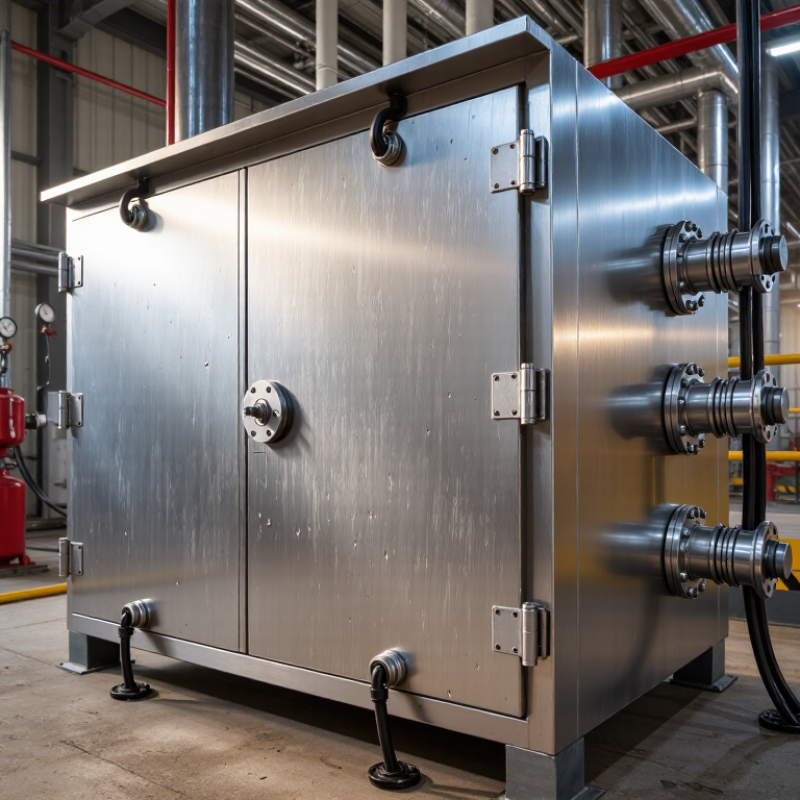
An explosion-proof box is a specially engineered enclosure for electrical equipment used where flammable gases, vapors, or dust may exist. It does not make an explosion impossible. Instead, it is designed to contain an internal ignition and prevent flames or hot gases from igniting the surrounding atmosphere.
Its strength comes from controlled construction. Thick metal walls, precision-fitted covers, sealed cable entries, and certified components work together. The enclosure must also manage heat, pressure, and dust ingress. A box suitable for gas may not suit combustible dust. Details matter. The wrong cable gland can weaken the entire protection system.
In industrial inspections, small installation errors often create serious risks. Loose bolts, damaged threads, poor grounding, or unauthorized modifications can compromise performance. Maintenance teams should check seals, fasteners, corrosion, and enclosure temperature regularly. Selection should follow the site’s hazard classification and applicable safety standards. It should also consider moisture, vibration, and cleaning methods. No enclosure is foolproof. A reliable design still depends on correct installation and disciplined maintenance. That point is easy to underestimate.
| Safety Dimension | Factual Information | Industrial Safety Value |
|---|---|---|
| Definition | An explosion-proof box is a protective enclosure designed for electrical equipment installed where flammable gases, vapors, mists, or combustible dust may be present. | Helps contain ignition hazards and protects internal components from harsh industrial conditions. |
| Primary Protection Concept | A flameproof enclosure, commonly identified by the protection concept Ex d, is designed to withstand an internal explosion and prevent flames or hot gases from igniting the surrounding atmosphere through specified joints and openings. | Reduces the likelihood that an equipment fault will trigger a larger external explosion. |
| Hazardous Atmospheres | Typical hazards include flammable gases and vapors in processing areas, combustible dust in powder-handling facilities, and solvent or fuel vapors near storage and transfer equipment. | Supports safer operation in oil and gas, chemical processing, pharmaceutical, food-processing, mining, and wastewater environments. |
| Gas and Dust Classification | Gas and vapor equipment is classified separately from dust equipment. Gas groups and dust groups reflect differences in ignition and explosion behavior, so the enclosure must match the site classification. | Prevents selecting an enclosure that is unsuitable for the specific hazardous material. |
| Temperature Class | For many gas-hazard classifications, temperature classes range from T1 to T6. T6 permits a maximum surface temperature of 85°C, while T1 permits up to 450°C under the applicable conditions. | Ensures that the enclosure and equipment surface do not exceed the ignition temperature of the surrounding atmosphere. |
| Ingress Protection | The IP code addresses protection against solid objects and water. For example, IP65 indicates dust-tight protection and protection against water jets; the IP rating does not by itself indicate explosion protection. | Helps protect equipment from dust, moisture, and washdown while avoiding confusion between environmental sealing and hazardous-area certification. |
| Construction Materials | Common enclosure materials include stainless steel, coated carbon steel, aluminum alloys, and reinforced non-metallic materials. Material selection depends on corrosion exposure, mechanical strength, temperature, and certification requirements. | Improves durability in corrosive, wet, dusty, high-impact, or outdoor installations. |
| Cable Entries and Sealing | Cable glands, conduit entries, plugs, and seals must be compatible with the enclosure protection concept, cable type, hazardous-area classification, and required ingress protection. | Prevents unsafe gaps and maintains the enclosure’s certified protective performance. |
| Applicable Standards | Common international frameworks include the IEC 60079 series for explosive atmospheres. Regional systems may use certification schemes such as IECEx or ATEX, depending on the installation location and legal requirements. | Provides a structured basis for design, testing, certification, installation, and maintenance. |
| Equipment Selection | Selection should consider the hazardous-zone classification, gas or dust group, temperature class, ambient temperature, enclosure rating, electrical load, mounting method, and local regulations. | Ensures that the complete installation—not just the box—is suitable for the actual operating environment. |
| Inspection and Maintenance | Threaded covers, flame paths, gaskets where applicable, cable glands, fasteners, earthing connections, and corrosion condition should be inspected according to the certification instructions and site maintenance procedures. | Preserves protective performance throughout the service life and helps identify damage before it becomes a safety risk. |
Important: “Explosion-proof” is not a universal rating. The enclosure must be certified and installed according to the applicable hazardous-area classification, protection concept, and local regulations.
An explosion-proof box reduces industrial hazards by controlling ignition, not by making an explosion impossible. Its reinforced enclosure contains an internal flame and limits hot gases escaping through joints. Carefully engineered gaps cool those gases before they reach surrounding vapors, gases, or dust. Sealed cable entries also reduce pathways for combustible atmospheres to enter. Small details matter.
The U.S. Chemical Safety Board recorded 281 combustible-dust incidents, causing 119 deaths and 718 injuries, between 1980 and 2005. This data shows why electrical protection deserves serious attention in dusty facilities. A suitable box must match the classified location, gas or dust group, temperature rating, and ingress-protection requirements. OSHA 1910.307 also requires electrical equipment to suit the hazards present in designated areas. Certification supports reliability, but installation quality remains critical. A damaged gasket can defeat expensive protection. Loose covers can create heat, sparks, or contamination risks. Maintenance teams should inspect threads, seals, fasteners, cable glands, and surface temperature regularly. They should also verify that internal components remain within the approved configuration. A box is not magic. Misapplication still happens, especially when dust layers are underestimated. The safer approach combines certified enclosure design, competent installation, documented inspections, and realistic hazard assessment. Industry guidance, including IEC 60079 principles, treats protection as a complete system rather than a single product.
Industries handling flammable gases, vapors, dust, or fibers need explosion-proof protection. Oil and gas facilities often face these risks near pumps, valves, storage tanks, and loading areas. Chemical plants also require protected electrical enclosures around mixing, processing, and transfer equipment. A small spark can ignite an invisible vapor cloud. The danger may not be obvious.
Pharmaceutical factories use combustible powders during blending, drying, and packaging. Food and grain facilities can create dust clouds from flour, sugar, starch, or grain particles. Mining operations face methane, coal dust, and other hazardous conditions underground. Wastewater treatment sites may collect flammable gases near tanks and enclosed chambers. These environments need carefully selected equipment. Not every sealed box qualifies as explosion-proof protection.
A suitable enclosure should match the site’s hazardous-area classification, gas or dust group, temperature rating, and installation conditions. Experienced safety teams check cable entries, grounding, maintenance access, and enclosure integrity before approval. They also follow applicable electrical and workplace safety standards. In practice, poor installation can defeat excellent equipment. That part is often underestimated.
No enclosure removes every risk. Regular inspections matter. Dust buildup, damaged seals, loose fittings, or unauthorized drilling can weaken protection. I have seen teams focus on purchasing equipment while overlooking inspection routines. That approach needs reconsideration. Reliable protection depends on the box, the installation, and the people maintaining both.
A reliable explosion-proof box must contain an internal ignition without releasing flames or hot gases. Certification should match the hazardous area, gas or dust group, and temperature class. IEC 60079-0 and IEC 60079-1 define key requirements for construction and flameproof protection. UL 1203 is also widely referenced for explosion-proof electrical equipment in North America.
In practical inspections, small details often decide performance. Look for thick metal walls, precise flame paths, secure fasteners, and durable gaskets. Cable entries should use properly certified glands, not improvised seals. The enclosure also needs grounding points, corrosion resistance, and an IP rating suited to moisture and dust exposure. A box that feels solid may still fail if heat accumulates inside. Thermal testing matters.
The U.S. Chemical Safety Board reported 281 combustible-dust incidents from 1980 to 2005, causing 119 deaths and 718 injuries. That history shows why enclosure selection cannot rely on appearance alone. A certificate does not replace correct installation or inspection. This is where many systems become vulnerable.
Tips: Check markings before purchase. Confirm the zone, group, temperature class, and ingress rating. Inspect threads, hinges, and cable glands during scheduled maintenance. Keep records. An overlooked scratch can become a serious weakness. Perfect protection is an appealing phrase, but real safety depends on the complete installation.
Why Choose an Explosion-Proof Box for Industrial Safety?
Selecting an explosion-proof box starts with the hazardous-area classification. Confirm the gas, vapor, dust, or fiber risk before checking enclosure specifications. IEC 60079-10-1 and IEC 60079-10-2 define area classifications for explosive atmospheres. Match the box certification to the zone, gas group, and temperature class. A strong enclosure is not automatically a suitable enclosure. Its cable glands, seals, terminals, and mounting method must also be approved for the same environment. OSHA 1910.307 requires electrical equipment in hazardous locations to be approved for the identified hazard. That requirement is practical, not decorative.
Maintenance protects the certification over time. Inspect covers, threads, gaskets, drain plugs, and cable entries during scheduled shutdowns. Look for corrosion, loose fasteners, cracked seals, and accumulated conductive dust. Do not drill new holes or replace parts with ordinary hardware. IEC 60079-17 recommends inspection and maintenance by competent personnel. The ILO estimated 2.93 million work-related deaths globally in 2023, reminding us that routine controls deserve serious attention. Records should include inspection dates, defects, torque checks, and corrective actions. Small omissions become difficult to defend later.
Tips: Keep the certification file beside the maintenance record. Photograph damaged seals before replacement. Use the manufacturer’s torque values, not guesswork. Recheck after vibration, cleaning, or process changes. I still see teams treating enclosure cleaning as cosmetic work; that assumption needs reconsideration.
An explosion-proof enclosure is selected according to the hazardous atmosphere, equipment certification, temperature class, ingress protection, and cable-entry requirements. The chart shows the maximum permitted external surface temperature for common IEC/ATEX temperature classes.
How to select and maintain: Choose a certified enclosure whose temperature class is below the ignition temperature of the surrounding gas, vapor, or dust. Confirm the hazardous-zone approval, IP rating, material compatibility, cable glands, and ambient-temperature range. During maintenance, isolate and lock out power, inspect seals and fasteners, keep cable entries tight, remove corrosion, and replace damaged components only with approved equivalents.
„Thanks to the LUVIR technology, the solder resist process could be switched directly from the previously used mask exposure to direct exposure. As an outstanding digital solution on the market, this technology has been able to demonstrate fast process times and superior quality on our certified conventional ink in production. This allowed us to fully digitize the solder mask process at low cost – without process or ink adjustments. An excellent benefit to our production in Rot am See.“
Ralf Göhringer (Head of Production WE Rot am See)
I would definitely recommend the Limata machine and team for a future company purchase
Michael Greenaway
Compunetics Inc.
“The Limata ldi has been amazing!! Best thing we did was buy this machine”
Richard Brady
GM
Circuitlabs
“Since 2019, we have been running the Limata X1000 LDI system (including LUVIR for solder mask imaging) in daily production as an addition to our current process with film. The machine was capable of properly exposing Taiyo PSR-4000 BN (DI) solder mask types on normal to high-copper boards using a new and unique direct imaging process. The machine operating interface is very user friendly which allowed for a quick technical training curve. The pre-registration processing reduced several seconds of production time at every print. Limata support and service staff is incomparable. They supported our team every step of the way at basically any time of the day or night, with literally, an immediate response time, customizing the software interface to best fit our Operations and needs.
We have exposed more than 8,000 prints since end of October, on various solder mask colors and some resist film panels. Limata, has proven to be very capable and innovative. They are a strong contender in the industry.
We have very much enjoyed this project, and working with the team!
Thank you Limata for the continued support and being a part of our growth.”
Bill Sezate
Vice President, GM
Summit Interconnect
As a replacement to our current contact exposure process with film, the LIMATA X2000 system including LUVIR-Technology was capable of properly exposing non-LDI solder mask types using a direct imaging process. The machine offers cutting edge software with a very intuitive operating interface which allowed for quick technician training curve. The dual drawer system combined with pre-registration processing reduced several seconds of production time at every machine cycle. Limata support and service staff is world class. They added software patches to keep production running at shortest possible response times, customized the software interface to best fit our in-house Operations system, and even wrote a step-by-step machine processing manual. As a result of the project, we have exposed more than 16,000 times on various product types and solder mask brands/colors. Limata, in a very short timeframe as a company, has definitely shown they are truly innovative and will be challenging the industry of direct imaging for the top spot.
Kevin Beattie
Process Engineer
TTM Technologies
Forest Grove Division
