Why Choose Galvanized Carbon Steel Pipe?
When a project faces rain, condensation, soil moisture, or industrial exposure, material choice becomes a daily maintenance decision. Galvanized Carbon Steel Pipe offers a practical defense because its zinc coating shields the steel from direct contact with corrosive elements. The surface often appears bright and uniform, yet its value extends beyond appearance. It can support water systems, structural frameworks, agricultural installations, and many outdoor applications where durability matters.
“The zinc coating provides both barrier protection and sacrificial protection,” explains Gregory M. Behrens, a technical expert associated with the American Galvanizers Association. His observation captures the main engineering advantage. If the surface receives a minor scratch, nearby zinc can corrode preferentially and help protect the exposed steel. That behavior is useful. It is not magic.
A sound specification still requires careful judgment. Pipe grade, wall thickness, coating quality, connection method, and service environment all influence performance. Threading, cutting, and welding can damage localized protection, so repaired areas need suitable treatment. Internal water chemistry also deserves attention, especially in systems with unusual pH or high mineral content. No pipe lasts forever. That matters.
In practical work, installers should inspect delivery surfaces, confirm dimensions, and prevent trapped moisture during storage. A pipe stacked on wet ground may develop staining before installation. Small details can become expensive failures. This is why choosing Galvanized Carbon Steel Pipe should involve more than comparing prices. Its corrosion resistance, service life, installation requirements, and maintenance expectations must be considered together. The best choice is rarely the cheapest one.
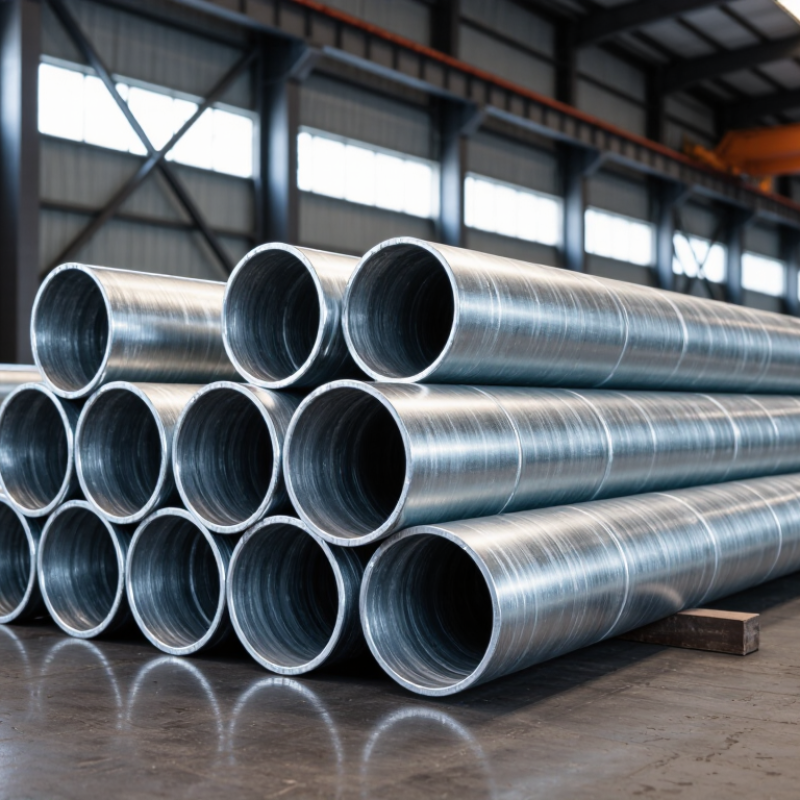
Galvanized carbon steel pipe is a carbon steel tube protected by a zinc coating. The zinc is usually applied through hot-dip galvanizing or electro-galvanizing. Hot-dip processing creates a thicker, more durable layer for demanding outdoor conditions. Electro-galvanized pipe has a thinner, smoother finish and suits lighter applications. The coating protects the steel in two ways. It blocks moisture and oxygen, while zinc can corrode sacrificially when small scratches expose the steel.
In practical work, this pipe appears in water lines, agricultural systems, handrails, and structural supports. Its familiar silver surface makes damage easier to notice during inspection. It also reduces painting and routine maintenance in many environments. However, galvanized pipe is not perfect. Cut ends, threaded areas, and welded joints may lose protection. They often need suitable repair treatment before installation. Internal corrosion can still develop in aggressive water, stagnant systems, or poorly selected applications. That detail is easy to overlook.
Choosing it requires more than checking the price. Measure the operating pressure, temperature, fluid chemistry, wall thickness, and connection method. Confirm that the pipe meets the project’s required manufacturing and coating standards. For drinking-water use, local regulations and approved materials matter. A professional inspection should check coating continuity, dents, blocked passages, and visible rust. In my experience, a bright finish can create false confidence. The pipe may look strong while its application is unsuitable. Careful selection remains necessary.
Galvanizing protects carbon steel through a practical combination of barrier protection and sacrificial action. During hot-dip galvanizing, cleaned steel enters molten zinc at about 450°C. Zinc reacts with the iron surface, forming tightly bonded alloy layers beneath a harder outer zinc layer. This bond is metallurgical, not merely painted on.
Zinc takes the hit. When moisture reaches a scratch, zinc corrodes preferentially and protects the exposed steel through cathodic action. The surface also develops stable zinc oxide, hydroxide, and carbonate films. These weathering products slow further corrosion in many atmospheric conditions. According to ISO 1461:2022, galvanized steel thicker than 6 mm requires a minimum average coating mass of 610 g/m², equivalent to approximately 85 micrometres of zinc. That measurable thickness helps engineers estimate service life rather than rely on appearance.
Field inspections often reveal a less convenient truth. Galvanizing is durable, but it is not universal protection. The International Zinc Association’s atmospheric corrosion data shows that zinc loss varies sharply with humidity, industrial pollutants, and salt exposure. A pipe beside a dry rural road may perform very differently from one near a coastal loading area. Designers sometimes overlook cut edges, trapped moisture, and poor drainage. That is a mistake. Proper venting, drainage, and compatible repair methods still matter. The chemistry helps greatly, but the installation details can decide whether the coating performs as intended.
Galvanized carbon steel pipe combines a strong steel core with a protective zinc coating. This structure supports water lines, structural frames, fencing, and industrial service applications. In practical use, the zinc layer helps slow rust when pipes face rain, humidity, or occasional splashing. That matters on outdoor projects where repainting every season is expensive and disruptive.
The coating also improves service reliability. A properly galvanized surface can tolerate handling, storage, and installation better than many painted surfaces. Small scratches may receive limited protection through zinc’s sacrificial action. However, this protection is not magic. Deep cuts, threaded ends, and welded areas still need inspection and suitable repair treatment.
Galvanized pipe can reduce maintenance demands, especially in accessible outdoor systems. Its familiar material properties also make cutting, threading, and fitting relatively straightforward for trained installers. Still, project conditions must guide the choice. Highly acidic soil, standing saltwater, and certain chemical environments can shorten coating life. Engineers should review exposure data, wall thickness, pressure requirements, and applicable standards before specifying it.
During site checks, look for uneven coating, exposed steel, blocked interiors, and damaged threads. These details are easy to miss. They can become costly later. Galvanized carbon steel pipe is durable, but performance depends on coating quality, installation practice, and realistic environmental assessment.
Galvanized carbon steel pipe serves demanding construction sites and industrial facilities. A zinc coating helps protect the steel from moisture and surface corrosion. This makes it practical for outdoor railings, temporary structures, drainage supports, and service lines. On a busy site, its familiar dimensions also simplify cutting, threading, and replacement.
Construction crews often use these pipes for handrails, fencing, scaffolding components, and fire protection systems. However, every application needs proper specification. Potable water service may require approved coatings and compliance with local standards. The coating can also suffer damage during threading or welding. Exposed areas should receive suitable repair treatment.
Industrial applications include compressed-air lines, agricultural frames, equipment guards, and low-temperature process piping. In factories, the pipe’s rigid structure tolerates vibration better than many lightweight alternatives. Engineers still need to check pressure, temperature, chemical exposure, and connection methods. Galvanized steel is not maintenance-free. Harsh chemicals, trapped moisture, and dissimilar metals can accelerate deterioration.
Field experience shows that storage matters. Pipes placed directly on wet ground may develop staining before installation. Raised supports and dry ventilation reduce that risk. Inspection should focus on threads, joints, weld zones, and damaged coating. The material is dependable, but not universally suitable. That assumption deserves checking.
Galvanized carbon steel pipe combines a strong steel core with a protective zinc coating. The zinc helps slow corrosion through barrier and sacrificial protection. However, coating quality matters more than appearance. Inspect the surface for bare spots, heavy buildup, peeling, or rough threaded ends. A dull finish is not always a defect, but uneven coverage deserves attention.
Start with the service environment. Outdoor structures, agricultural water lines, and general utility systems may benefit from galvanized pipe. Constant moisture, salt air, acidic fluids, or buried soil can shorten its service life. Zinc also performs poorly under certain high-temperature conditions. Check the pipe’s operating temperature, pressure, and fluid compatibility before ordering. Do not assume it fits every water application.
Dimensions require equal care. Confirm the nominal size, wall thickness, connection type, and required length. Threaded joints can simplify installation, while cutting may expose uncoated steel and create weak points. Use suitable repair methods after cutting, following applicable standards. Ask for coating thickness records, material certificates, and pressure ratings. Reliable documentation reduces uncertainty.
The lowest price can mislead. Compare expected maintenance, replacement labor, and downtime. No coating lasts forever. I would also question whether galvanized steel is necessary for a dry indoor system; painted or uncoated steel may be more practical there. A careful choice balances corrosion risk, installation conditions, inspection results, and long-term cost.
„Thanks to the LUVIR technology, the solder resist process could be switched directly from the previously used mask exposure to direct exposure. As an outstanding digital solution on the market, this technology has been able to demonstrate fast process times and superior quality on our certified conventional ink in production. This allowed us to fully digitize the solder mask process at low cost – without process or ink adjustments. An excellent benefit to our production in Rot am See.“
Ralf Göhringer (Head of Production WE Rot am See)
I would definitely recommend the Limata machine and team for a future company purchase
Michael Greenaway
Compunetics Inc.
“The Limata ldi has been amazing!! Best thing we did was buy this machine”
Richard Brady
GM
Circuitlabs
“Since 2019, we have been running the Limata X1000 LDI system (including LUVIR for solder mask imaging) in daily production as an addition to our current process with film. The machine was capable of properly exposing Taiyo PSR-4000 BN (DI) solder mask types on normal to high-copper boards using a new and unique direct imaging process. The machine operating interface is very user friendly which allowed for a quick technical training curve. The pre-registration processing reduced several seconds of production time at every print. Limata support and service staff is incomparable. They supported our team every step of the way at basically any time of the day or night, with literally, an immediate response time, customizing the software interface to best fit our Operations and needs.
We have exposed more than 8,000 prints since end of October, on various solder mask colors and some resist film panels. Limata, has proven to be very capable and innovative. They are a strong contender in the industry.
We have very much enjoyed this project, and working with the team!
Thank you Limata for the continued support and being a part of our growth.”
Bill Sezate
Vice President, GM
Summit Interconnect
As a replacement to our current contact exposure process with film, the LIMATA X2000 system including LUVIR-Technology was capable of properly exposing non-LDI solder mask types using a direct imaging process. The machine offers cutting edge software with a very intuitive operating interface which allowed for quick technician training curve. The dual drawer system combined with pre-registration processing reduced several seconds of production time at every machine cycle. Limata support and service staff is world class. They added software patches to keep production running at shortest possible response times, customized the software interface to best fit our in-house Operations system, and even wrote a step-by-step machine processing manual. As a result of the project, we have exposed more than 16,000 times on various product types and solder mask brands/colors. Limata, in a very short timeframe as a company, has definitely shown they are truly innovative and will be challenging the industry of direct imaging for the top spot.
Kevin Beattie
Process Engineer
TTM Technologies
Forest Grove Division
