A live event can feel flat when the audience cannot see the speaker, performance, or key details. Led Screen Rental offers a flexible way to make visual content clear across a conference hall, outdoor stage, or exhibition floor. Instead of buying permanent equipment, organizers can choose screen sizes and configurations suited to the venue and event schedule. That flexibility matters when rooms change, attendance grows, or a program includes both presentations and live video.
The difference is visible. A bright screen can show readable slides from the back row, while a modular LED wall can support close-up camera footage on a wide stage. Still, bigger is not automatically better. Viewing distance, ambient light, content resolution, and installation space all affect the result. A reliable rental provider should assess these conditions, explain technical limits, and confirm setup and testing times before the event. Ask about pixel pitch, brightness, signal connections, and on-site support. Small details count.
There is a trade-off. Rental equipment depends on careful coordination, and a late content change can create extra pressure. I have seen plans look perfect on paper, then feel crowded once the stage is built. That deserves a second look. With realistic planning and a qualified crew, LED screen rental can help deliver sharper communication without adding permanent equipment to an organization’s inventory.
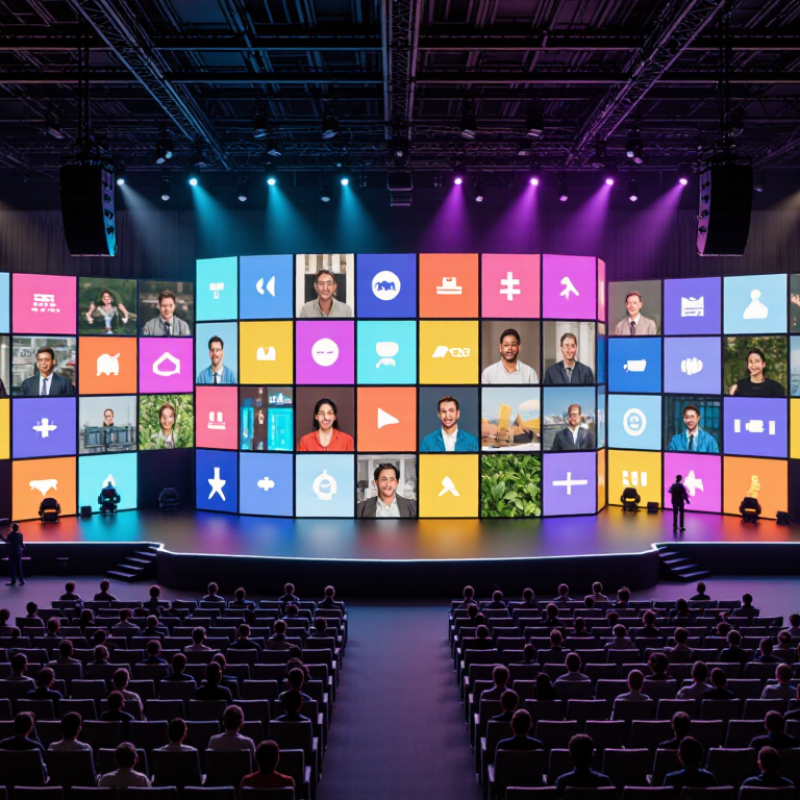
LED screen rental is more than delivering panels to a venue. A provider typically reviews the room dimensions, audience size, viewing distance, ambient light, and event schedule. Those details guide screen size, pixel pitch, brightness, and mounting choices. For example, a close audience may need finer pixel pitch, while a sunlit outdoor stage needs a brighter display. The process also covers power, signal distribution, playback equipment, rigging, setup, testing, and dismantling. AVIXA’s 2024 Industry Outlook projected global professional audiovisual revenue could reach $325 billion by 2029. That figure covers the wider AV sector, not rentals alone, but it shows the scale of professional production work behind modern events.
At a live event, an LED screen is more than a large display. A laptop or media server sends video to a processor, which scales the image and maps it across the screen’s cabinets. Small details matter. The processor must match the screen’s resolution and layout, or text can look stretched and edges may disappear. Each cabinet contains rows of tiny red, green, and blue LEDs. Together, they create the moving images and colors guests see.
The signal travels through data cables to receiving cards inside the cabinets. These cards control which LEDs light up and when. For smooth motion, technicians check refresh settings and test video playback with cameras, which can reveal flicker that guests might not notice directly. Brightness needs attention too. A screen facing afternoon sun may need stronger output than one in a dim ballroom. Too much brightness indoors can be harsh.
Before doors open, the crew checks content at the actual viewing distance. Fine text may look crisp on a laptop but become hard to read across a crowded hall. Rehearsal helps catch timing errors, black frames, and unexpected cropping. It is not foolproof. A late change to a slide can still disrupt the run, so keeping a backup playback device nearby is a practical safeguard. The best result often comes from simple, legible visuals rather than crowded designs.
Renting LED screens lets event teams match display size to the room, audience, and program without buying equipment for occasional use. A bright, seamless wall can keep slides legible across a wide ballroom, while smaller panels suit a product demo or registration area. Rental packages may also include delivery, rigging, processors, and on-site technicians. That matters when a schedule is tight and a screen must work before doors open. Less equipment to store, insure, and maintain is a practical benefit. A real one.
The wider market is investing in audiovisual capability: AVIXA’s 2023 Industry Outlook and Trends Analysis projected global professional AV revenue to reach about $402 billion by 2028. That forecast does not prove every event needs LED, but it reflects the growing role of visual technology. Renting can provide access to current panels and technical support without committing to a fixed setup. Still, rental is not magic. Outdoor sunlight, viewing distance, pixel pitch, power access, and rigging limits all affect results. Ask for a site survey and a written brightness and resolution specification. A screen that looks impressive in a showroom may feel too small—or too bright—in the actual venue. That trade-off deserves thought.
Choosing the right LED screen starts with the room, not the equipment list. Measure the audience area and note the farthest viewing position. A screen that looks sharp up close may appear cramped from the back row. Pixel pitch matters: tighter spacing usually suits close viewing, while larger venues can often use a wider pitch. It matters.
Check the venue’s ambient light, too. A bright screen near a sunlit window may need more output than one used in a dim ballroom. Ask where the screen will stand, how it will be mounted, and whether power access is nearby. A narrow stage can make a large display feel overwhelming. I have seen event plans overlook this until the stage layout is already set.
Match the screen shape to the content. Slides, live camera feeds, and short videos may need different layouts, so confirm the aspect ratio before the files are finished. For outdoor events, ask about weather protection and visibility in daylight. Get the rental team to test the screen with your actual content, not just a color pattern. Test it early. One small detail is easy to miss: captions and fine text that look readable on a laptop can disappear across a large room. Walk to the back seats and check them there.
Common Event Uses for LED Screen Rentals
LED screens are useful when guests need to see details from across a room. At conferences, they can display speaker slides, live captions, and close-up camera views. For a product launch, a bright, carefully timed visual can reveal features to the whole audience. Keep text large; small labels often disappear from the back row.
Weddings and community events use screens for photo slideshows, schedules, or live video. At outdoor concerts, screens can help people farther from the stage follow the performance. Still, bigger is not always better. A screen placed near a window may look washed out, and moving graphics can distract from a speaker. Check sight lines and ambient light at the venue before choosing screen size.
Tips: Share your content format and run time with the rental team early. Test playback on-site, including sound and any live camera feed. Bring a backup copy. Small oversights happen. A simple fallback slide can prevent an awkward blank screen.
Common event uses and example display areas
LED screens can support presentations, live entertainment, exhibits, outdoor viewing, and celebrations. The areas shown are illustrative examples based on the dimensions listed—not industry averages. The right screen size depends on the venue, audience, and viewing distance.
„Thanks to the LUVIR technology, the solder resist process could be switched directly from the previously used mask exposure to direct exposure. As an outstanding digital solution on the market, this technology has been able to demonstrate fast process times and superior quality on our certified conventional ink in production. This allowed us to fully digitize the solder mask process at low cost – without process or ink adjustments. An excellent benefit to our production in Rot am See.“
Ralf Göhringer (Head of Production WE Rot am See)
I would definitely recommend the Limata machine and team for a future company purchase
Michael Greenaway
Compunetics Inc.
“The Limata ldi has been amazing!! Best thing we did was buy this machine”
Richard Brady
GM
Circuitlabs
“Since 2019, we have been running the Limata X1000 LDI system (including LUVIR for solder mask imaging) in daily production as an addition to our current process with film. The machine was capable of properly exposing Taiyo PSR-4000 BN (DI) solder mask types on normal to high-copper boards using a new and unique direct imaging process. The machine operating interface is very user friendly which allowed for a quick technical training curve. The pre-registration processing reduced several seconds of production time at every print. Limata support and service staff is incomparable. They supported our team every step of the way at basically any time of the day or night, with literally, an immediate response time, customizing the software interface to best fit our Operations and needs.
We have exposed more than 8,000 prints since end of October, on various solder mask colors and some resist film panels. Limata, has proven to be very capable and innovative. They are a strong contender in the industry.
We have very much enjoyed this project, and working with the team!
Thank you Limata for the continued support and being a part of our growth.”
Bill Sezate
Vice President, GM
Summit Interconnect
As a replacement to our current contact exposure process with film, the LIMATA X2000 system including LUVIR-Technology was capable of properly exposing non-LDI solder mask types using a direct imaging process. The machine offers cutting edge software with a very intuitive operating interface which allowed for quick technician training curve. The dual drawer system combined with pre-registration processing reduced several seconds of production time at every machine cycle. Limata support and service staff is world class. They added software patches to keep production running at shortest possible response times, customized the software interface to best fit our in-house Operations system, and even wrote a step-by-step machine processing manual. As a result of the project, we have exposed more than 16,000 times on various product types and solder mask brands/colors. Limata, in a very short timeframe as a company, has definitely shown they are truly innovative and will be challenging the industry of direct imaging for the top spot.
Kevin Beattie
Process Engineer
TTM Technologies
Forest Grove Division
