For global buyers, choosing an LED stop turn tail is more than replacing a traditional bulb. It affects visibility, installation time, maintenance, and vehicle identity across different markets. A well-designed lamp should show a sharp red stop signal, a clear amber turn signal, and a steady tail light. It must also perform during rain, dust, vibration, and sudden temperature changes.
Automotive lighting researcher Dr. John Bullough has emphasized, “Visibility is useful only when it supports safe recognition.” That idea matters here. Brightness alone does not guarantee better communication. Beam direction, lens design, color consistency, and response speed all influence how drivers understand a signal. Buyers should inspect photometric test data, sealing performance, heat management, wiring compatibility, and expected service life. Small details matter.
Installation should feel predictable.
For distributors, LED stop turn tail products can reduce bulb replacements and simplify inventory planning. They may also support a cleaner rear design, especially on trailers, trucks, buses, and specialty vehicles. However, assumptions create problems. A lamp that works perfectly on one vehicle may need a different connector, resistor, mounting bracket, or control solution elsewhere. Buyers should verify regional requirements and vehicle compatibility before placing large orders.
The strongest choice combines tested performance with practical after-sales support. It should survive real roads, not only showroom demonstrations. Some specifications remain easy to overlook, including cable length and condensation resistance. That is where careful sourcing proves its value. A reliable supplier provides measurable data, transparent testing, and samples for field evaluation. Global buyers need confidence before scaling, because a small lighting failure can create a much larger operational concern.
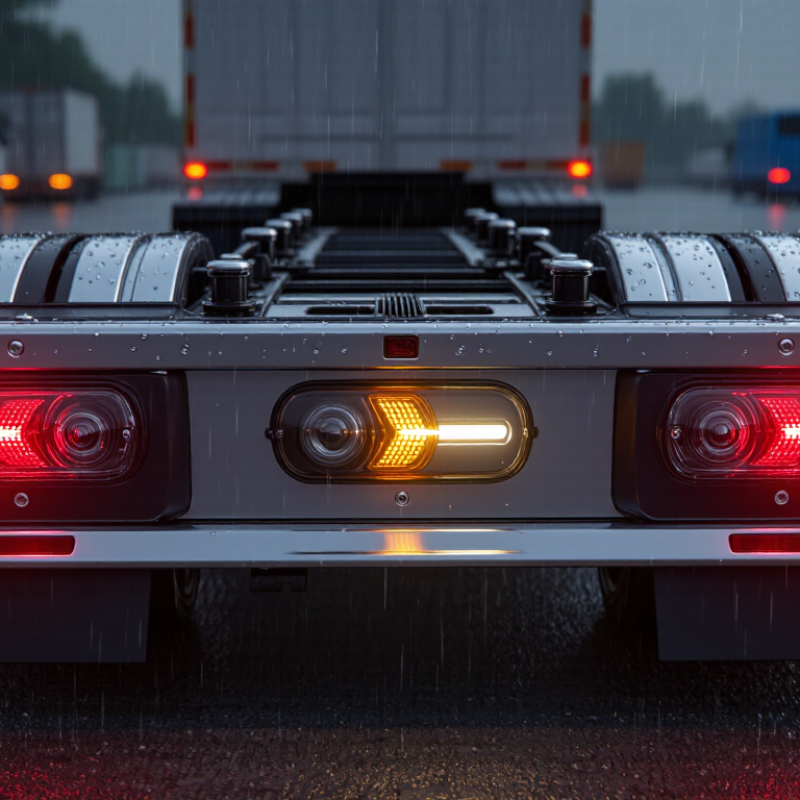
LED stop turn tail lights are rear vehicle lamps that combine three functions in one compact unit. The tail light provides a steady red glow for visibility at night. The stop light becomes brighter when the driver presses the brake pedal. The turn signal flashes to show a change of direction.
Instead of relying on a heated wire filament, an LED uses semiconductor diodes to produce light. This allows fast activation, which can give following drivers a little more reaction time. LEDs also use less electrical power and usually resist vibration better than traditional bulbs. In a practical inspection, the light should remain clear through its lens, with no dark sections or delayed flashing. A sealed housing is useful when vehicles face rain, dust, road spray, or frequent washing.
However, LED stop turn tail lights are not automatically suitable for every vehicle. The connector, voltage, mounting depth, and flasher system must match the application. An incorrect load may cause rapid blinking or warning signals. Brightness can also be judged poorly in direct sunlight. That detail is easy to miss. Buyers should check regional lighting requirements, wiring diagrams, and product test information before installation. A reliable light is not only bright; it must perform consistently after repeated braking, turning, and temperature changes.
LED stop turn tail lights use semiconductor diodes to convert electrical current into visible light. Unlike traditional bulbs, LEDs respond almost instantly when voltage reaches the circuit. This quick response gives following drivers more time to notice braking or turning.
The same lamp usually performs three functions. Tail lighting stays at a lower brightness for night visibility. Pressing the brake pedal increases current or activates a stronger lighting channel. The turn signal controller sends repeated pulses, creating the familiar flashing pattern. A circuit board manages polarity, current, and heat. The lens then spreads light across a wider viewing angle. It sounds simple, but poor heat control can reduce service life. No lamp is perfect.
Tips: Check the vehicle voltage, connector shape, mounting depth, and polarity before ordering. Confirm that the light supports the required stop, turn, and tail functions. A small mismatch can cause flickering or weak output. Test the lamp after installation in daylight and darkness.
For global buyers, consistent brightness matters as much as appearance. Quality units should use sealed housings, stable wiring, and impact-resistant lenses. Moisture may enter through damaged seals, especially after rough installation. Inspect the gasket and cable exit carefully. Also consider flash compatibility, because some vehicles may require an electronic control solution. A product can look bright on a workbench but perform differently behind a vehicle lens. That difference deserves attention.
Why Choose LED Stop Turn Tail Lights for Global Buyers?
Key Benefits for Global Buyers
Global buyers often need lighting that performs across different vehicles, climates, and road conditions. LED stop turn tail lights offer quick illumination, helping following drivers recognize braking within a short moment. That matters in heavy rain, dusty worksites, and crowded city traffic. They also consume less power than many traditional bulbs, which can reduce electrical load on commercial vehicles.
Durability is another practical advantage. Quality housings can resist vibration, water entry, and repeated temperature changes. Look for sealed connectors, strong mounting points, and a clear lens with even light distribution. Photometric testing and electromagnetic compatibility reports can provide useful evidence before purchase. However, test documents should match the exact model, not a similar product.
Global sourcing requires careful specification checks. Confirm voltage range, lamp dimensions, wiring functions, connector type, and regional color requirements. A 12-volt unit may not suit a 24-volt truck. Small differences can delay installation. In field inspections, loose terminals and weak brackets are common problems, even when the lamp itself works well. I once underestimated mounting space, and the replacement process became unnecessarily expensive. Sample testing before a large order is worth the time. It reveals brightness gaps, sealing weaknesses, and installation issues that product photos cannot show.
| Evaluation Dimension | Typical LED Stop Turn Tail Light Performance | Conventional Incandescent Alternative | Value for Global Buyers | Purchasing Consideration |
|---|---|---|---|---|
| Light Response Time | Light output begins almost immediately, generally within milliseconds. | Usually requires approximately 0.2–0.3 seconds to reach full brightness, depending on bulb design and voltage. | Faster warning illumination can provide additional reaction time for following drivers during braking. | Confirm that the lamp meets the required photometric and signaling regulations in the destination market. |
| Service Life | Commonly designed for approximately 30,000–50,000 operating hours when thermal management is adequate. | Common automotive incandescent bulbs typically have a much shorter operating life, often around 1,000–2,000 hours. | Fewer replacement cycles can reduce maintenance labor, vehicle downtime, and spare-part consumption. | Actual life depends on heat dissipation, vibration, voltage stability, sealing, and operating temperature. |
| Electrical Consumption | A typical LED stop or turn-light function may use approximately 2–8 watts, depending on the optical design and lamp size. | A common incandescent stop/turn bulb is often rated at approximately 21 watts. | Lower power demand can reduce the electrical load on the vehicle and support efficient fleet operation. | Compare complete lamp-system wattage rather than LED chip wattage alone. |
| Vibration and Shock Resistance | Solid-state light sources have no fragile filament and generally tolerate vibration better. | Filaments can be affected by repeated vibration, impact, and thermal cycling. | Useful for commercial vehicles, trailers, buses, agricultural equipment, and off-road applications. | Review mounting structure, connector retention, and vibration-test results for the complete lamp assembly. |
| Heat Management | Produces less radiant heat toward the lens, but LED junction temperature still requires proper heat dissipation. | Generates substantial heat from the filament and may increase thermal stress inside the lamp housing. | Can support longer lens and housing durability when the LED thermal design is properly engineered. | Check heat sinks, thermal paths, ambient-temperature ratings, and performance at high operating temperatures. |
| Weather Protection | Sealed LED lamp assemblies are commonly available with IP65, IP66, or IP67 protection levels. | Protection varies widely and may depend on the separate lamp housing and bulb holder. | Improved resistance to dust and water ingress can benefit vehicles used in rain, snow, coastal, and dusty environments. | The IP rating applies to the tested assembly and should be verified for the intended installation method. |
| Operating Voltage Compatibility | Many commercial designs support 12 V, 24 V, or a specified 9–32 V input range through regulated circuitry. | Incandescent bulbs are usually selected for a specific nominal voltage, such as 12 V or 24 V. | A wider input range can simplify product selection across passenger vehicles, trucks, trailers, and buses. | Verify voltage range, polarity protection, over-voltage protection, and compatibility with vehicle control systems. |
| Safety and Regulatory Fit | Can be designed to meet applicable requirements such as FMVSS 108, UNECE Regulations, or other national rules. | Compliance also depends on the complete lamp, bulb position, optical pattern, and installation. | A compliant design can support sales across multiple regions and reduce approval risks during vehicle integration. | Request destination-market test reports, photometric data, EMC information, and required approval markings. |
| Maintenance and Total Ownership Cost | Higher initial purchase cost, but potentially lower replacement and maintenance cost over the operating life. | Lower initial cost may be offset by more frequent bulb replacement and service interruptions. | Particularly attractive for fleets where labor, downtime, and access to replacement parts are significant costs. | Evaluate total cost of ownership using annual operating hours, replacement frequency, labor rates, and warranty terms. |
Why Choose LED Stop Turn Tail Lights for Global Buyers?
Compatibility is the first checkpoint, not brightness. A connector may fit and still be wrong. Verify voltage, polarity, mounting depth, connector type, and lamp function. Check whether the vehicle uses CAN bus monitoring, because LED’s lower current draw can trigger false bulb warnings. SAE J585 covers stop lamps, while UNECE Regulations 6 and 7 address direction indicators and rear position lamps. U.S. vehicles may also require compliance with FMVSS 108.
Standards do not replace practical testing. Measure the lamp’s light distribution after installation. Confirm clear visibility from the required angles. Inspect sealing around the housing, especially on trailers exposed to rain, dust, and road salt. IEC 60529 ingress ratings help describe protection, but an IP rating alone cannot prove vehicle approval. It is only one piece of evidence.
Energy savings remain attractive. The U.S. Department of Energy reports that LED lighting can use at least 75% less energy and last up to 25 times longer than incandescent lighting. That figure is a general lighting benchmark, not a guaranteed automotive result. Actual life depends on heat, vibration, driver electronics, and installation quality. Use sealed connectors, proper torque, and a brake-turn function test. I would not trust a simple plug-in claim without checking the manual, approval markings, and vehicle behavior. Sometimes, the “universal” part is not universal at all.
Compatibility depends on the lighting functions covered by regional requirements. This chart shows the number of stop, turn, or tail-related functions directly addressed by commonly referenced lighting standards. Buyers should also verify vehicle voltage, connector type, polarity, mounting dimensions, photometric performance, and the approval requirements of the target market.
ECE R6 covers direction indicators; ECE R7 covers rear position and stop lamps; SAE J585 covers stop lamps; SAE J588 covers turn-signal lamps. Standards and required markings vary by market, so product documentation should be checked before installation.
For global buyers, reliable LED stop turn tail lights begin with a reliable supplier. In practical sourcing, I check the supplier’s production experience, testing process, and communication speed. Ask for real product samples, not only polished catalog photos. Test the sample. Observe brightness, color consistency, wiring quality, and lens clarity under daylight and darkness. Details matter.
A professional supplier should provide clear technical data, including voltage range, lumen output, beam pattern, operating temperature, and ingress protection results. Request inspection records for soldering, sealing, vibration resistance, and thermal performance. Traceable batch numbers also help identify production problems quickly. Confirm whether the supplier controls key components or depends entirely on unknown subcontractors. That answer may reveal more than a sales presentation.
Reliability also depends on honest service. Discuss sample lead time, production capacity, packaging protection, spare parts, and warranty procedures before placing an order. A factory audit or video inspection can verify equipment, storage conditions, and final testing. However, documents are not everything. I have seen technically impressive samples followed by inconsistent later batches. This is an uncomfortable warning. Use a written quality agreement, pre-shipment inspection, and periodic sample checks. A supplier that accepts reasonable questions usually earns greater trust than one promising perfection.
„Thanks to the LUVIR technology, the solder resist process could be switched directly from the previously used mask exposure to direct exposure. As an outstanding digital solution on the market, this technology has been able to demonstrate fast process times and superior quality on our certified conventional ink in production. This allowed us to fully digitize the solder mask process at low cost – without process or ink adjustments. An excellent benefit to our production in Rot am See.“
Ralf Göhringer (Head of Production WE Rot am See)
I would definitely recommend the Limata machine and team for a future company purchase
Michael Greenaway
Compunetics Inc.
“The Limata ldi has been amazing!! Best thing we did was buy this machine”
Richard Brady
GM
Circuitlabs
“Since 2019, we have been running the Limata X1000 LDI system (including LUVIR for solder mask imaging) in daily production as an addition to our current process with film. The machine was capable of properly exposing Taiyo PSR-4000 BN (DI) solder mask types on normal to high-copper boards using a new and unique direct imaging process. The machine operating interface is very user friendly which allowed for a quick technical training curve. The pre-registration processing reduced several seconds of production time at every print. Limata support and service staff is incomparable. They supported our team every step of the way at basically any time of the day or night, with literally, an immediate response time, customizing the software interface to best fit our Operations and needs.
We have exposed more than 8,000 prints since end of October, on various solder mask colors and some resist film panels. Limata, has proven to be very capable and innovative. They are a strong contender in the industry.
We have very much enjoyed this project, and working with the team!
Thank you Limata for the continued support and being a part of our growth.”
Bill Sezate
Vice President, GM
Summit Interconnect
As a replacement to our current contact exposure process with film, the LIMATA X2000 system including LUVIR-Technology was capable of properly exposing non-LDI solder mask types using a direct imaging process. The machine offers cutting edge software with a very intuitive operating interface which allowed for quick technician training curve. The dual drawer system combined with pre-registration processing reduced several seconds of production time at every machine cycle. Limata support and service staff is world class. They added software patches to keep production running at shortest possible response times, customized the software interface to best fit our in-house Operations system, and even wrote a step-by-step machine processing manual. As a result of the project, we have exposed more than 16,000 times on various product types and solder mask brands/colors. Limata, in a very short timeframe as a company, has definitely shown they are truly innovative and will be challenging the industry of direct imaging for the top spot.
Kevin Beattie
Process Engineer
TTM Technologies
Forest Grove Division
