In a production line, filtration choices affect product quality, equipment wear, and maintenance time. A Stainless Steel Wire Mesh Filter offers a reusable barrier made from woven metal wire, with openings selected to retain particles of a particular size. You might see one in a pump housing, wash system, or process pipe. The mesh can be inspected, cleaned, and returned to service when its condition allows. That matters.
Its performance depends on more than the material name. Wire diameter, weave, opening size, fluid viscosity, operating pressure, and particle shape all influence filtration and flow. Stainless steel grades also differ; a grade that performs well with water may not suit every chemical or temperature. Check compatibility against actual process conditions, and confirm the mesh rating with the supplier. Guessing from appearance is not enough.
The practical appeal is straightforward: durable construction, precise openings, and the potential for repeated use can make these filters useful in demanding environments. Yet reusable does not mean maintenance-free. Fine particles can block openings, and cleaning methods can damage mesh if they are too aggressive. A small inspection under good light may reveal bent wires or trapped residue. Not every time. The right filter is a balance between particle retention, acceptable pressure drop, service life, and cleaning effort. This guide explores those factors, helping buyers and operators judge when stainless steel mesh is a sensible choice—and when another filtration approach may fit better.
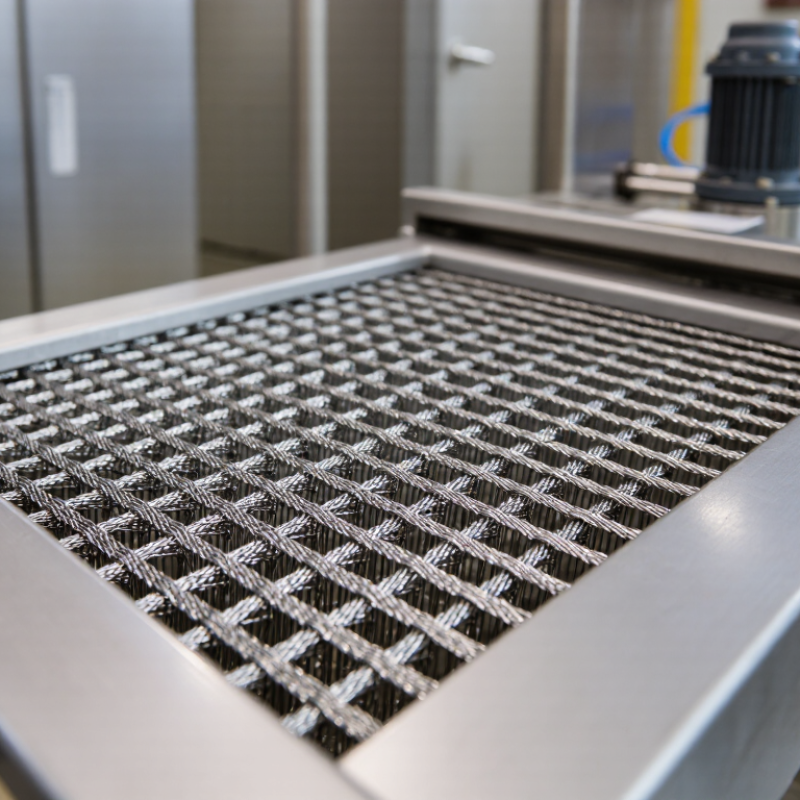
Stainless steel wire mesh filters are made from metal wires arranged into a repeated grid. The openings let air or liquid pass while retaining particles larger than the selected aperture. Small openings matter. Mesh count alone does not describe a filter fully; wire thickness and weave also affect flow and strength. Plain weave crosses each wire over and under its neighbors. Twill weave uses a staggered pattern and can accommodate thicker wires in some designs.
Production starts with stainless steel wire selected for the intended temperature, fluid, and cleaning conditions. The wire is drawn to a controlled diameter, then woven or welded into a sheet. Technicians cut the mesh and may shape it into discs, cylinders, or supported panels. Edges are formed, welded, or fitted into frames to reduce fraying and bypass around the filter. The finished part is cleaned and inspected for dimensions, visible defects, and opening consistency.
A close inspection helps, but it cannot guarantee identical performance in every installation. Actual flow depends on pressure, particle shape, and how quickly the mesh loads with debris. That detail is easy to overlook. Choosing an opening size therefore involves a trade-off: finer mesh captures smaller particles, yet may restrict flow sooner. The right construction comes from matching the mesh and support structure to the working conditions, not from relying on one specification alone.
| Topic | What It Means | Practical Details |
|---|---|---|
| What a wire mesh filter is | A filter made from interwoven stainless steel wires that form openings through which fluid or air can pass while larger particles are retained. | It is a physical screening medium. Its performance depends on the opening size, wire diameter, weave, filter construction, and operating conditions. |
| Common stainless steel grades | Type 304 is widely used for general-purpose applications. Type 316 and 316L contain molybdenum and are often selected for improved resistance to chloride-containing environments. | Grade selection should account for the process fluid, temperature, cleaning chemicals, and exposure conditions. No grade is resistant to every corrosive environment. |
| Mesh count and opening | Mesh count generally describes the number of openings per linear inch. The clear opening also depends on wire diameter. | For a regular square weave, approximate opening in millimetres = (25.4 ÷ mesh count per inch) − wire diameter in millimetres. This estimate does not apply to every weave or filter construction. |
| Common weave styles | Plain weave uses an alternating over-and-under pattern. Twill weave passes each wire over two or more wires before going under, while Dutch weaves use different wire sizes or spacing to create a tighter filtering structure. | Weave choice affects strength, flow, opening geometry, and particle retention. The appropriate design depends on the required filtration duty. |
| How it is made: wire preparation | Stainless steel wire is selected and drawn or supplied to the required diameter. The wire is checked for dimensions and surface condition before weaving. | Wire diameter and consistency influence the finished mesh opening and mechanical strength. |
| How it is made: weaving | Warp wires are held lengthwise while weft wires are woven across them on a mesh loom according to the selected weave pattern. | Weaving controls mesh count and structure. Some filter designs use sintered or layered mesh, which involves additional processing beyond ordinary weaving. |
| How it is made: finishing | The woven mesh may be cut, formed, welded, or attached to a support or frame. Edges can be finished to suit the filter assembly. | Finishing methods vary with the product design and intended service conditions. |
| How it is made: inspection | Finished mesh may be checked for dimensions, weave consistency, visible defects, and conformity with specified requirements. | For critical applications, buyers can specify inspection criteria and request documentation appropriate to the product and process. |
| Why it is used | Stainless steel mesh can provide mechanical strength, corrosion resistance in suitable environments, and tolerance of repeated cleaning. | Reusability and service life depend on the alloy, mesh design, contaminants, cleaning method, and operating conditions. |
| Typical applications | Applications include liquid and gas straining, process filtration, screens, and protective or separation elements in industrial equipment. | Mesh filters are not automatically suitable for fine or absolute filtration; the required retention level and system design should be verified for each application. |
Stainless steel wire mesh filters separate particles through openings that act as physical cutoffs. Liquid or gas flows through the woven wires; particles larger than an opening are retained, while smaller ones may pass. The result depends on more than nominal mesh size. Wire diameter, weave, flow speed, and particle shape all affect capture. A flat grain may slip through an opening that stops a round grain. Real filters are less tidy than diagrams suggest.
ASTM E11-24 lists nominal sieve openings of 150 micrometres for No. 100 and 75 micrometres for No. 200. These figures help explain how aperture size relates to separation, though sieve ratings do not guarantee identical filter performance. For hydraulic filter testing, ISO 16889:2022 uses a multipass method and particle counts to determine the beta ratio. A beta ratio of 200 corresponds to 99.5% efficiency at the specified particle size, using the upstream-to-downstream count relationship. Small details matter. In practice, trapped material can build up on the mesh, raising pressure drop and changing flow. Cleaning also needs care: aggressive brushing can distort fine openings, and a damaged mesh may pass particles it once retained.
Stainless steel mesh combines strength, corrosion resistance, and cleanable surfaces. In a filter housing, that means wires can hold their shape under flow while resisting many wet, hot, or chemically active environments. The alloy still matters. ASTM A240/A240M lists chromium at 18–20% for Type 304 and 16–18% for Type 316; Type 316 also contains 2–3% molybdenum. These figures describe flat-rolled products, so treat them as grade benchmarks, not wire-mesh certification. Molybdenum can improve resistance to chloride-related pitting, but no grade is immune in every fluid.
Aperture consistency supports predictable separation. ASTM E11 specifies standard sieve openings down to 20 μm, offering a useful reference for how carefully opening sizes can be defined. It does not certify a filter’s performance in a process line. Pressure, particle shape, and cleaning cycles also affect results. That detail is easy to overlook.
Tips: Match the alloy to the fluid, then confirm mesh opening and wire diameter with the supplier’s test data. Check a sample under operating conditions; a catalog rating alone is an imperfect shortcut. After cleaning, inspect the wires for distortion or blocked openings.
In food and beverage processing, stainless steel mesh filters help remove particles from liquids such as syrups, oils, and wash water. Mesh openings can be selected to retain larger debris while allowing the process fluid to pass through. In breweries and dairies, cleanability and resistance to repeated wash cycles matter as much as filtration. Operators often check the mesh for residue, wear, or blocked openings between production runs. Small details matter. A filter that is too fine may slow flow or clog quickly.
Chemical processing and water treatment use mesh filters to protect pumps, valves, and downstream equipment from scale, fibers, or other coarse solids. In automotive and machinery plants, mesh elements may filter lubricants or cooling fluids for reuse. They are also used in mining, pulp and paper, and general manufacturing, where process conditions vary widely. Stainless steel can suit hot or corrosive environments, but the alloy, mesh size, and support structure must match the fluid and operating conditions. There is no universal specification. Even a well-made filter may perform poorly if cleaning intervals, pressure changes, or particle loads are overlooked. That part deserves attention.
Choosing a stainless steel mesh filter starts with the process, not the mesh count. Define the smallest particle you need to retain, then check flow rate, pressure, temperature, and fluid chemistry. A finer opening can capture smaller particles, but it may clog faster and restrict flow. Mesh count alone is not enough. ASTM E11-24 lists test-sieve openings from 125 millimeters down to 20 micrometers; these provide a useful sizing reference, but test sieves are not automatically equivalent to process filters. Confirm the supplier’s stated aperture and tolerance. Also match the steel grade to the fluid and cleaning method. The World Stainless Association reported 58.4 million tonnes of global stainless-steel production in 2023. That figure shows the material’s scale, not the suitability of every grade for every application.
Maintenance should follow operating conditions. Record the clean filter’s pressure drop, then compare it with readings during service. A rising value can indicate blockage; a sudden change may signal damage or a poor seal. Clean the mesh using a method compatible with its alloy and process residue. Avoid aggressive scraping. It can distort fine wires. Inspect under good light for broken strands, corrosion, flattened areas, and trapped deposits. Replace the element if openings have changed or cleaning no longer restores flow. One detail is easy to miss: a filter that looks clean may still have stretched wires. Keep inspection notes, including cleaning dates and pressure readings. They make replacement decisions less dependent on guesswork.
„Thanks to the LUVIR technology, the solder resist process could be switched directly from the previously used mask exposure to direct exposure. As an outstanding digital solution on the market, this technology has been able to demonstrate fast process times and superior quality on our certified conventional ink in production. This allowed us to fully digitize the solder mask process at low cost – without process or ink adjustments. An excellent benefit to our production in Rot am See.“
Ralf Göhringer (Head of Production WE Rot am See)
I would definitely recommend the Limata machine and team for a future company purchase
Michael Greenaway
Compunetics Inc.
“The Limata ldi has been amazing!! Best thing we did was buy this machine”
Richard Brady
GM
Circuitlabs
“Since 2019, we have been running the Limata X1000 LDI system (including LUVIR for solder mask imaging) in daily production as an addition to our current process with film. The machine was capable of properly exposing Taiyo PSR-4000 BN (DI) solder mask types on normal to high-copper boards using a new and unique direct imaging process. The machine operating interface is very user friendly which allowed for a quick technical training curve. The pre-registration processing reduced several seconds of production time at every print. Limata support and service staff is incomparable. They supported our team every step of the way at basically any time of the day or night, with literally, an immediate response time, customizing the software interface to best fit our Operations and needs.
We have exposed more than 8,000 prints since end of October, on various solder mask colors and some resist film panels. Limata, has proven to be very capable and innovative. They are a strong contender in the industry.
We have very much enjoyed this project, and working with the team!
Thank you Limata for the continued support and being a part of our growth.”
Bill Sezate
Vice President, GM
Summit Interconnect
As a replacement to our current contact exposure process with film, the LIMATA X2000 system including LUVIR-Technology was capable of properly exposing non-LDI solder mask types using a direct imaging process. The machine offers cutting edge software with a very intuitive operating interface which allowed for quick technician training curve. The dual drawer system combined with pre-registration processing reduced several seconds of production time at every machine cycle. Limata support and service staff is world class. They added software patches to keep production running at shortest possible response times, customized the software interface to best fit our in-house Operations system, and even wrote a step-by-step machine processing manual. As a result of the project, we have exposed more than 16,000 times on various product types and solder mask brands/colors. Limata, in a very short timeframe as a company, has definitely shown they are truly innovative and will be challenging the industry of direct imaging for the top spot.
Kevin Beattie
Process Engineer
TTM Technologies
Forest Grove Division