Choosing among the top 10 solder mask PCB manufacturers requires more than comparing prices or factory photographs. Solder mask protects copper traces, controls insulation performance, and influences assembly yield. A small color mismatch may seem cosmetic. It can still reveal process variation.
Industry data shows why supplier evaluation matters. The IPC International Technology Roadmap for Electronics highlights rising design complexity, finer features, and stronger reliability expectations across electronic products. IPC’s 2024 electronics industry research also describes continued pressure on capacity, delivery stability, and regional supply chains. Meanwhile, Fortune Business Insights estimates that the global printed circuit board market will continue expanding through the decade, driven by automotive electronics, communications equipment, industrial controls, and consumer devices. These trends increase demand for consistent solder mask application, not merely higher board volume.
This guide reviews ten manufacturers serving international buyers. The comparison considers production scale, surface finishes, multilayer capability, inspection systems, certifications, engineering support, and export experience. Relevant benchmarks include IPC-6012, IPC-SM-840, ISO 9001, and, where applicable, automotive quality requirements. Buyers should also verify UL recognition, material traceability, RoHS alignment, and realistic lead times directly with each supplier.
No ranking fits every project. A prototype developer may value rapid engineering feedback, while an automotive buyer may prioritize documented process control and long-term reliability. Based on supplier disclosures, technical documentation, and practical purchasing criteria, this overview aims to support a more careful shortlist. Some public information remains incomplete. That limitation deserves attention. Direct audits and sample testing should still guide the final decision.
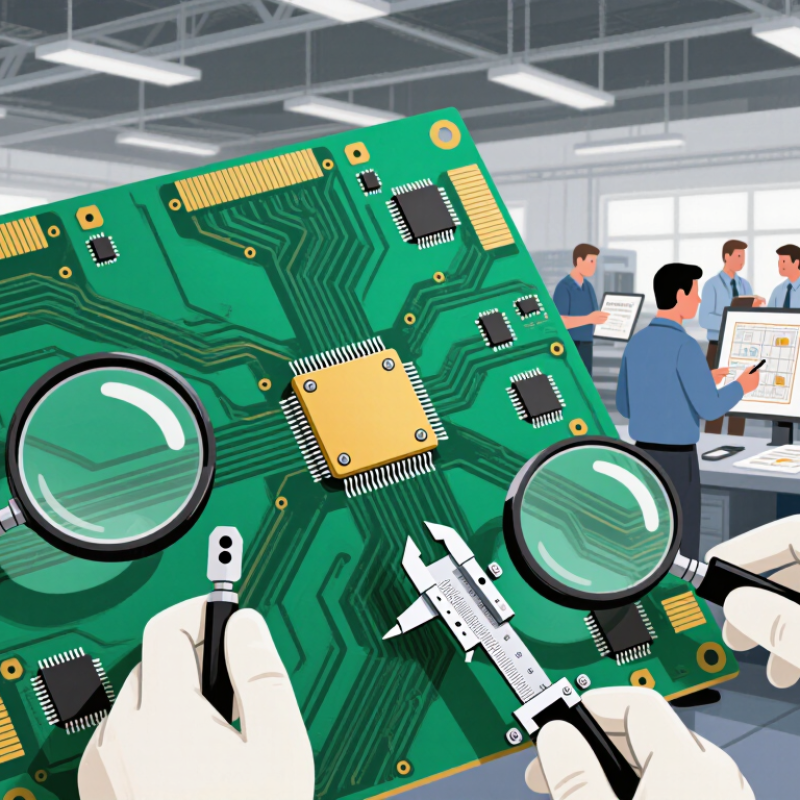
A solder mask PCB is a circuit board covered with a thin insulating coating. The coating usually appears green, but other colors are available. It protects copper traces from oxidation, dust, moisture, and accidental solder bridges. Only selected pads and test points remain exposed for assembly and inspection.
In practical production, solder mask quality affects more than appearance. Accurate registration keeps the coating away from contact pads. Consistent thickness improves insulation and reduces uneven solder flow. Small defects matter. A pinhole near a fine-pitch component can create contamination or electrical risks over time. During supplier reviews, global buyers should examine mask type, color tolerance, surface finish, curing process, and inspection records. Clear documentation is valuable when boards cross borders and production teams work in different time zones.
Solder mask also supports durability in industrial controls, medical equipment, automotive systems, and communication devices. However, it is not a complete shield against every operating condition. Excessive heat, harsh chemicals, or poor storage can still damage the board. It is easy to overstate its role. A reliable manufacturer should provide sample data, dimensional control results, and traceability for each batch. Buyers should also confirm design-rule support before ordering. A narrow mask opening may look efficient on paper, yet cause assembly problems later. Careful review remains necessary, even when the prototype performs well.
Selecting the top ten solder mask PCB manufacturers requires evidence, not impressive websites. We reviewed process capability, inspection records, delivery consistency, and international compliance. IPC-SM-840E defines requirements for permanent polymer coatings, including adhesion, electrical insulation, and chemical resistance. Manufacturers were therefore assessed against documented solder mask controls, not marketing claims.
Quality teams examined sample panels under magnification. They checked edge coverage, exposed copper, pinholes, registration, and cured surface uniformity. We also compared IPC-6012 qualification practices, material traceability, and lot-level inspection reports. IPC’s 2024 North American PCB Statistical Program tracks sales, bookings, and book-to-bill performance. Its reported market fluctuations reinforced one lesson: capacity claims must be verified against recent delivery data.
Commercial scoring included prototype speed, volume scalability, engineering support, and response quality. We requested corrective-action records, because perfect suppliers rarely exist. That is important. A supplier reporting minor defects openly may be more reliable than one showing flawless charts. We also reviewed RoHS and REACH declarations, factory audit evidence, and realistic lead-time commitments. Some rankings remain judgment-based; regional data is incomplete, and published statistics cannot measure every factory floor. Each manufacturer therefore needed consistent technical proof, transparent communication, and repeatable performance across sample and production orders.
Leading solder mask PCB manufacturers worldwide differ in strengths, not just production volume. High-capacity Asian facilities often offer fast prototype-to-mass-production transitions, automated coating lines, and broad panel sizes. European manufacturers usually emphasize traceability, controlled chemistry, and demanding industrial applications. North American suppliers often stand out in engineering support, quick design feedback, and low-to-medium volume production. Regional specialists may provide flexible scheduling and strong communication, though their capacity can be limited.
A reliable manufacturer should document solder mask thickness, color consistency, surface cleanliness, and registration accuracy. Ask for inspection records, material certificates, and sample panels before placing a large order. Production teams should explain curing profiles, exposure methods, and defect controls clearly. Vague answers deserve caution. No factory is ideal. Even experienced suppliers can face pinholes, uneven coverage, or slight color variation during complex builds. The important point is how quickly and honestly they respond.
Tips: Compare suppliers using the same drawing, stack-up, tolerance list, and delivery target. Check whether their process supports fine-pitch pads and high-density layouts. Request recent quality data, not only polished product photographs. A useful audit includes factory capacity, operator training, equipment maintenance, and corrective-action records. Avoid choosing by price alone. The cheapest coating may create rework, delayed assembly, or poor long-term reliability. Small sample testing can reveal problems that sales documents miss.
Selecting among the top 10 solder mask PCB manufacturers requires more than comparing quoted prices. Prismark’s 2024 PCB Industry Forecast estimates global PCB revenue at about US$73.6 billion, increasing pressure on factories to deliver consistent output. Buyers should compare panel size, minimum trace spacing, mask registration, via plugging, and monthly capacity. Ask for measured capability data, not only brochure claims. Small details matter, especially around dense BGA pads and exposed copper edges.
Quality evidence should include IPC-A-600 acceptance criteria, IPC-6012 qualification, and documented IPC-TM-650 test methods. ISO 9001 supports controlled production, while IATF 16949 and ISO 13485 may suit automotive or medical programs. UL recognition can add confidence for specific laminate and flammability requirements.
Still, certificates do not guarantee stable solder mask adhesion. Request recent cross-section images, solderability results, and corrective-action records. Real factory experience is visible in the answers.
Pricing comparisons need equal specifications. A low quotation may exclude tooling, electrical testing, engineering review, or delivery protection. Compare total landed cost, not the first spreadsheet number. The World Bank’s Logistics Performance Index 2023 shows major differences in supply-chain reliability across markets, making lead-time data commercially important. Ask for prototype and mass-production prices separately. Also check payment terms and replacement policy. I would not rank suppliers by price alone; that shortcut often fails. Supplier data can be incomplete, and buyers should revalidate it before approval.
Choosing the right solder mask PCB supplier requires more than comparing prices. A reliable supplier should explain mask thickness, color tolerance, surface finish, and registration limits clearly. Ask for recent inspection records, cross-section images, and test data from similar boards. Standards such as IPC-SM-840 and IPC-6012 can support a more objective review.
Do not judge quality from a beautiful sample alone. A sample can look perfect. Production consistency matters more. Request a small pilot batch and inspect solder mask coverage around fine-pitch pads, vias, and board edges. Check whether the supplier controls humidity, curing temperature, and contamination during production. Confirm material traceability, electrical testing, packaging, and shipment records. Some suppliers promise short lead times, but their backup capacity may be unclear. That deserves a direct question.
Tips: Compare at least three qualified suppliers using the same drawing and acceptance criteria. Request a written quotation with tooling, testing, packaging, and delivery details included. Verify certificates with the issuing organization when practical. Discuss change-control procedures before placing an order. Ask how rejected boards are analyzed and reported. Do not ignore communication quality; unclear answers often become costly delays. A lower unit price may hide inspection gaps or weak process control. Review the evidence, not the sales language.



„Thanks to the LUVIR technology, the solder resist process could be switched directly from the previously used mask exposure to direct exposure. As an outstanding digital solution on the market, this technology has been able to demonstrate fast process times and superior quality on our certified conventional ink in production. This allowed us to fully digitize the solder mask process at low cost – without process or ink adjustments. An excellent benefit to our production in Rot am See.“
Ralf Göhringer (Head of Production WE Rot am See)
I would definitely recommend the Limata machine and team for a future company purchase
Michael Greenaway
Compunetics Inc.
“The Limata ldi has been amazing!! Best thing we did was buy this machine”
Richard Brady
GM
Circuitlabs
“Since 2019, we have been running the Limata X1000 LDI system (including LUVIR for solder mask imaging) in daily production as an addition to our current process with film. The machine was capable of properly exposing Taiyo PSR-4000 BN (DI) solder mask types on normal to high-copper boards using a new and unique direct imaging process. The machine operating interface is very user friendly which allowed for a quick technical training curve. The pre-registration processing reduced several seconds of production time at every print. Limata support and service staff is incomparable. They supported our team every step of the way at basically any time of the day or night, with literally, an immediate response time, customizing the software interface to best fit our Operations and needs.
We have exposed more than 8,000 prints since end of October, on various solder mask colors and some resist film panels. Limata, has proven to be very capable and innovative. They are a strong contender in the industry.
We have very much enjoyed this project, and working with the team!
Thank you Limata for the continued support and being a part of our growth.”
Bill Sezate
Vice President, GM
Summit Interconnect
As a replacement to our current contact exposure process with film, the LIMATA X2000 system including LUVIR-Technology was capable of properly exposing non-LDI solder mask types using a direct imaging process. The machine offers cutting edge software with a very intuitive operating interface which allowed for quick technician training curve. The dual drawer system combined with pre-registration processing reduced several seconds of production time at every machine cycle. Limata support and service staff is world class. They added software patches to keep production running at shortest possible response times, customized the software interface to best fit our in-house Operations system, and even wrote a step-by-step machine processing manual. As a result of the project, we have exposed more than 16,000 times on various product types and solder mask brands/colors. Limata, in a very short timeframe as a company, has definitely shown they are truly innovative and will be challenging the industry of direct imaging for the top spot.
Kevin Beattie
Process Engineer
TTM Technologies
Forest Grove Division
